
Twitter as an Election Oracle: Predicting the Spanish Ballot via Microblogging
Twitter as a Tool for Predicting Elections Results
The paper presents "TaraTweet," a specialized web application designed to monitor and analyze Twitter conversations during political campaigns. By extracting mentions of parties and candidates across three Spanish elections (2011-2012), the authors demonstrate that microblogging volume correlates significantly with actual electoral outcomes, achieving near-SOTA predictive alignment in several provinces.
TL;DR
Can 140 characters forecast the future of a nation? This paper introduces TaraTweet, a tool that monitors the "Twittersphere" to predict election results. By analyzing three major Spanish elections, the researchers found a striking correlation between how much a party is mentioned and the number of votes it actually receives, proving that social media volume is a potent, albeit noisy, indicator of political reality.
Problem & Motivation: The Slow Decay of Traditional Polling
Predicting elections has traditionally been the domain of sociologists and pollsters. However, traditional polls face three major hurdles:
- Latency: They are snapshots of the past, not the present.
- Cost: Large-scale surveying is resource-intensive.
- The "Hidden Vote": Many voters are reluctant to share their true intentions with a human pollster.
The authors argue that Twitter offers a "data transparency" that traditional methods lack. By observing organic conversations, we can bypass the observer effect inherent in formal interviews. The core question: Does "pointless babble" on Twitter actually reflect the offline political landscape?
Methodology: The TaraTweet Framework
To test their hypothesis, the team built TaraTweet, a full-stack web application designed for real-time monitoring.
The Engine Under the Hood:
- Data Capture: Using the Twitter Search API to track specific hashtags (e.g.,
#20n,#elecciones). - Filtering Logic: Counting mentions of political parties (PP, PSOE, IU, etc.) and candidates.
- User Behavior Analysis: Tracking "mentions per user" to identify whether a party's popularity is driven by a broad base or a few hyper-active activists (trolls).
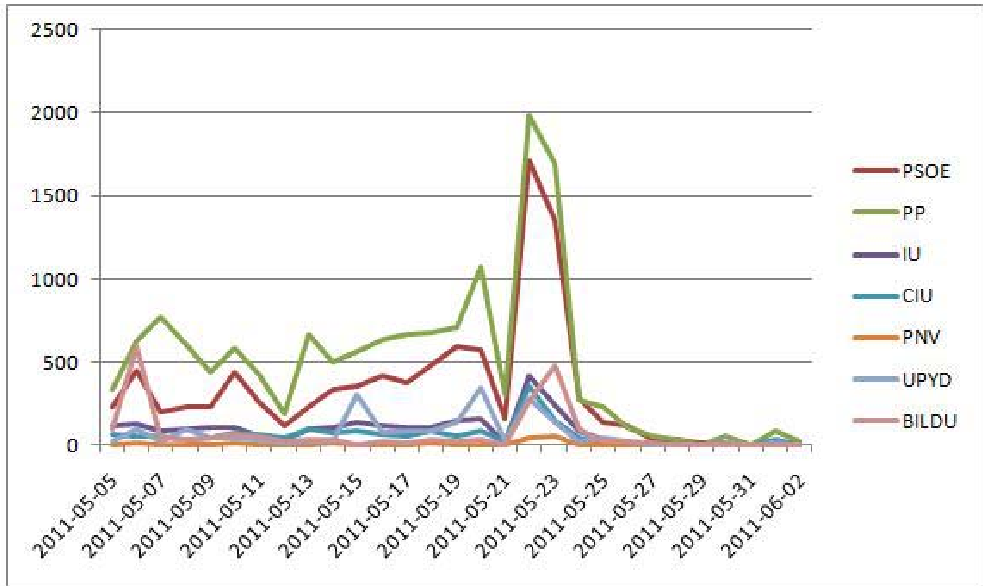 Figure 1: The interface of the TaraTweet tool showing real-time keyword distribution.
Experiments: Testing in the Wild
The researchers conducted three large-scale experiments spanning 2011 to 2012:
- Regional Elections (May 2011): ~105k tweets.
- General Elections (Nov 2011): ~259k tweets.
- Andalucia Elections (Mar 2012): ~176k tweets.
Key Insight: The Correlation is Real
In the Regional Elections, the results were startlingly close. The PP (Popular Party) received 44.82% of Twitter mentions, and went on to win 46.89% of the real-world votes.
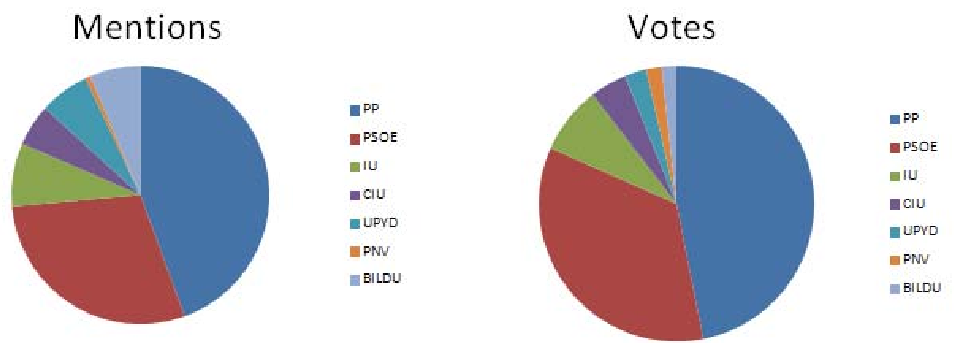 Figure 2: Statistical alignment between Twitter mentions and actual electoral counts.
| Party | Twitter Mentions % | Actual Votes % |
|---|---|---|
| PP | 44.82% | 46.89% |
| PSOE | 29.18% | 34.73% |
| IU | 7.92% | 7.95% |
The Anatomy of Bias: Trolls and Over-representation
While the correlation is strong, the paper identifies critical "noise" factors:
- The Activism Bias: Smaller, newer parties like UPyD were consistently over-represented on Twitter (7.86% mentions vs 5.11% votes). This suggests that Twitter users are generally younger and more "digitally militant" than the average voter.
- The Troll Detection: In the Andalucia experiment, the authors identified a specific user,
@JuanJdeAlcazar, who created an account just before the campaign, tweeted hundreds of times for the PP party, and deleted the account immediately after.
Critical Analysis & Conclusion
Takeaways
The paper confirms that Twitter is a valid tool for social researchers. It is not just "babble"; it is a reflection of current political sentiment. The sheer volume of mentions acts as a proxy for a party's "mindshare" in the public consciousness.
Limitations
- Demographics: Twitter represents the "internet-active" population, not the whole nation.
- Sentiment Blindness: This specific study counted mentions, not whether those mentions were positive or negative. A party could be "trending" because of a scandal, which would inflate its "popularity" in this model.
Future Work
The authors suggest that the next evolution of TaraTweet must include Sentiment Analysis—distinguishing between a supportive tweet and a sarcastic one—and better mechanisms to filter out automated bots and trolls that attempt to manipulate the "digital poll."
Senior Editor's Note: This work serves as a foundational case study in "Social Sensing." While we now have more complex LLMs to parse sentiment, the core finding—that attention in social media correlates with action in the real world—remains a cornerstone of digital political science.