
Twitter vs. The Ivory Tower: Decoding Big Data in the #FeesMustFall Movement
The Effectiveness of Twitter as a Tertiary Education Stakeholder Communication Tool: A Case of #FeesMustFall in South Africa
This research investigates the effectiveness of Twitter as a communication and activism tool during South Africa's #FeesMustFall student movement (2015-2016). By analyzing over 567,000 tweets through the lens of the Big Data V-Model (Volume, Variety, Velocity, Veracity, and Value), the study identifies how microblogging facilitates decentralized political organizing in tertiary education.
TL;DR
In 2015, a digital wave reshaped South African politics under the banner of #FeesMustFall. This study analyzes half a million tweets to ask: Is Twitter actually an effective tool for university stakeholders, or just a chaotic echo chamber? Using the Big Data V-Model, the research reveals that while Twitter excels at rapid mobilization, its "Veracity" (accuracy) issues and lack of local context suggest a need for bespoke, campus-focused communication platforms.
Background: Contextualizing the Digital Uprising
The #FeesMustFall movement was more than a protest against tuition hikes; it was a "multi-cultural, multi-racial, and multi-partisan" demand for the decolonization of South African higher education. For researchers, this created an unprecedented Big Data repository. The authors position this work as a bridge between social science and information systems, moving from "headlines to trend lines."
The "V-Model" Framework: Why Metadata Matters
Instead of just reading what students said, the authors analyzed how the data behaved. They applied the Big Data V-Model to dissect the movement's mechanics:
- Volume: Analyzing the massive scale of engagement and "clout baiting" (users jumping on trending hashtags for visibility).
- Variety: Examining the devices (iOS vs. Android vs. Web) and languages used.
- Velocity: Measuring the speed of retweets, which peaked at nearly 70% in 2015.
- Veracity: Highlighting "Dark Data"—missing locations and timezones that complicate decision-making.
Methodology: High-Tech Social Auditing
The study utilized MeCodify to mine data from 2015 and 2016. By ranking variables, the researchers could distinguish between genuine student activism and the later shift toward national political discourse.
The Data Analysis Pipeline
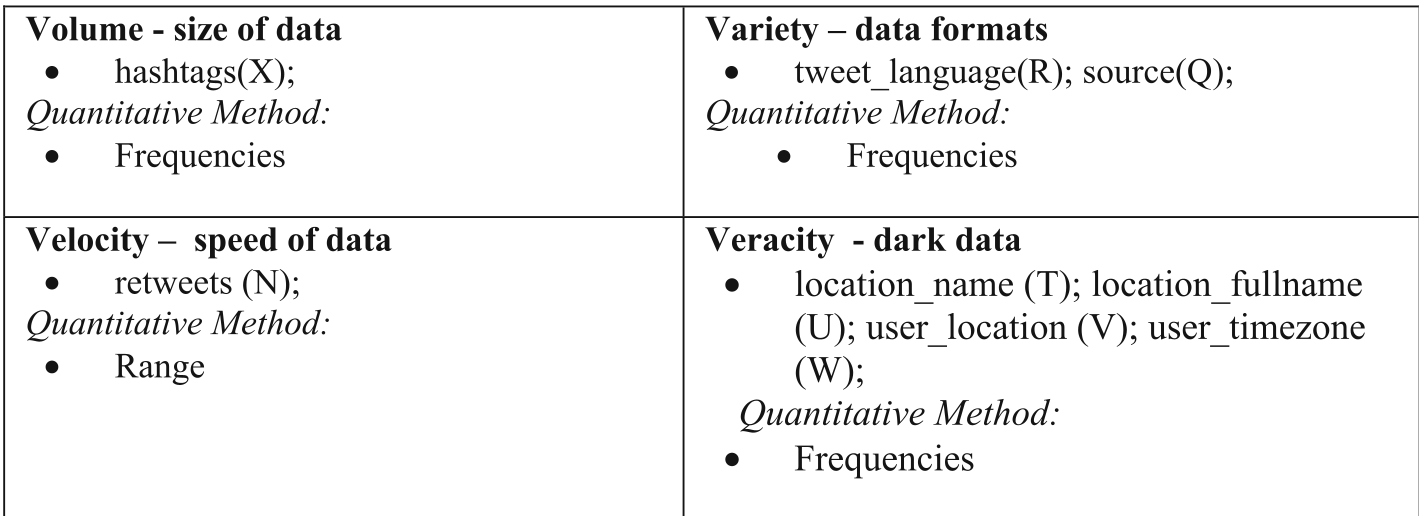 The table above illustrates how the Big Data constructs were mapped to specific quantitative variables from the Twitter API.
Key Insights: From Activism to Politics
The findings suggest a clear evolution in the movement's digital footprint:
- Mobile vs. Desktop: Despite the rise of smartphones, a significant number of "Twitter Web Client" users were identified, suggesting that administrators, media, and parents played a massive role as "empathizers" from their desks.
- Linguistic Blind Spots: Twitter's lack of Afro-centric translation tools often misclassified code-switching (mixing English with isiXhosa), showing a technological gap in representing local nuances.
- The Shift in Rhetoric: In 2015, hashtags were centered on "Higher Education Transformation." By 2016, the discourse shifted to national politics, including calls for the presidency to change.
The Veracity Crisis
One of the most striking findings was the unreliability of geographical data.
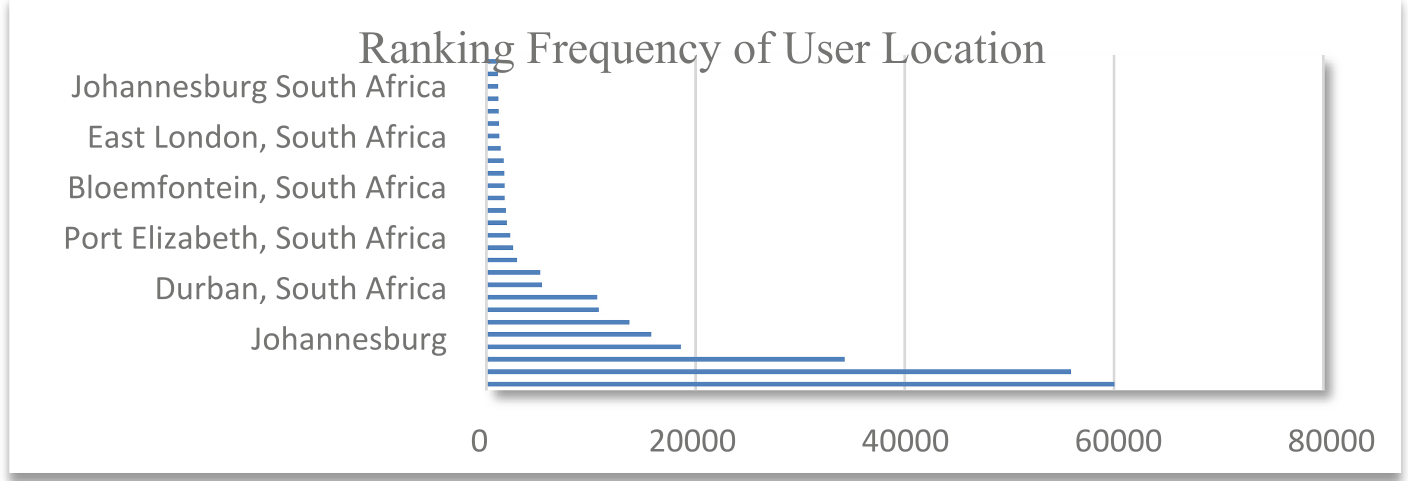 The high percentage of 'Null' or generic 'South Africa' location tags (as seen in Figure 5) makes it nearly impossible for university administrators to use Twitter as a localized conflict-resolution tool.
Critical Analysis & Conclusion
The Takeaway
Twitter is a double-edged sword. It provides a "choreography of assembly" (as seen in the Arab Spring) but lacks the granular data security and local linguistic support required for long-term institutional stability.
Limitations
The study acknowledges the "Operationalization" limit of the REST API, where a significant portion of the conversation remains "Dark Data"—collected but unusable due to privacy settings or missing metadata.
Future Outlook
The authors advocate for inter-campus microblogging platforms. Rather than relying on a US-based corporate entity like Twitter, South African universities should collaborate on bespoke platforms that prioritize local data management, ensuring that student voices are heard without being lost in the global "noise" of clout baiting.
Keywords: #FeesMustFall, Big Data, Twitter Activism, South Africa, Higher Education, V-Model.