
Decoding Social Cohesion: How Homophily and Adaptiveness Shape Community Structure
Two Phase Transitions in the Adaptive Voter Model Based on the Homophily Principle
This paper introduces a generalized adaptive voter model to investigate the coevolution of node opinions and network topology. By formalizing the Homophily Principle, it identifies two distinct phase transitions—Global Consensus and Fragmentation—governed by adaptiveness and homophily parameters.
TL;DR
Why do some social networks merge into a unified consensus while others shatter into tiny, isolated echo chambers? This paper explores this via a generalized adaptive voter model. By quantifying "Homophily" (the urge to connect with similar people) and "Adaptiveness" (the speed of network change), the research identifies the precise mathematical "tipping points" where communities emerge, persist, or die.
Background: The Coevolutionary Feedback Loop
In social dynamics, we face a dual process: Dynamics ON networks (opinions changing due to neighbors) and Dynamics OF networks (links changing because of opinions). Traditional models often focus on one, but real life is a feedback loop. Using the Homophily Principle—the sociological observation that "birds of a feather flock together"—this paper seeks to find why stable communities form instead of just one giant group or total fragmentation.
The Generalized Model: A Mathematical Bridge
The author formalizes the Homophily Principle into a stochastic algorithm with four moving parts, eventually boiled down to two critical ratios:
- Adaptiveness (): The ratio of link rewiring probability to state change probability ().
- Homophily (): The net preference for connecting to similar nodes ().
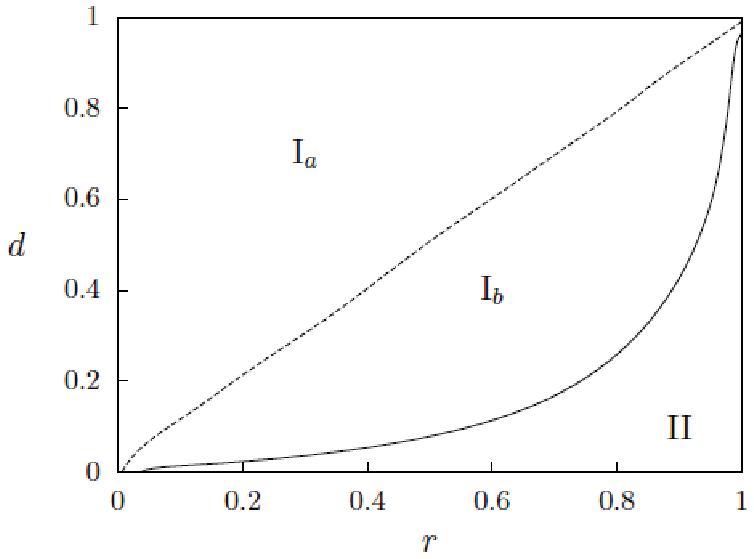 Figure 1: The framework maps how disconnection/connection probabilities (d, r) define the topological phase.
Two Phase Transitions: The Stability Window
The simulation reveals that social structures aren't linear; they undergo "Phase Transitions" similar to physical matter changing from liquid to gas.
1. Global Consensus Transition
When Adaptiveness () is extremely low (), the network almost always reaches a state where everyone shares the same opinion. Interestingly, this happens regardless of how strong the "homophily" is. At this stage, social influence is so much faster than the ability to "unfriend" people that the whole system synchronizes.
2. Fragmentation Transition
As adaptiveness increases (), a second transition appears based on Homophily (). If the urge to disconnect from "different" others is too high (), the network literally breaks apart. It shatters into isolated islands (components) that no longer communicate.
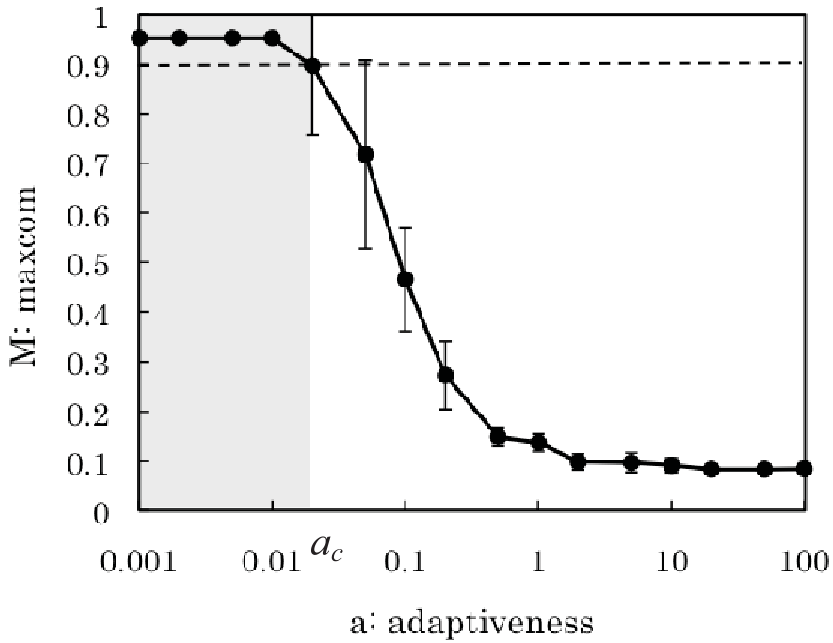 Figure 4: The drop in the largest component size (S) as homophily (h) crosses the 0.5 threshold.
Deep Insight: The "Sweet Spot" for Community
The most profound discovery is the Phase Diagram (Figure 5). Community structure—where different groups exist but remain part of one connected social fabric—only exists in the "goldilocks" zone between these two transitions.
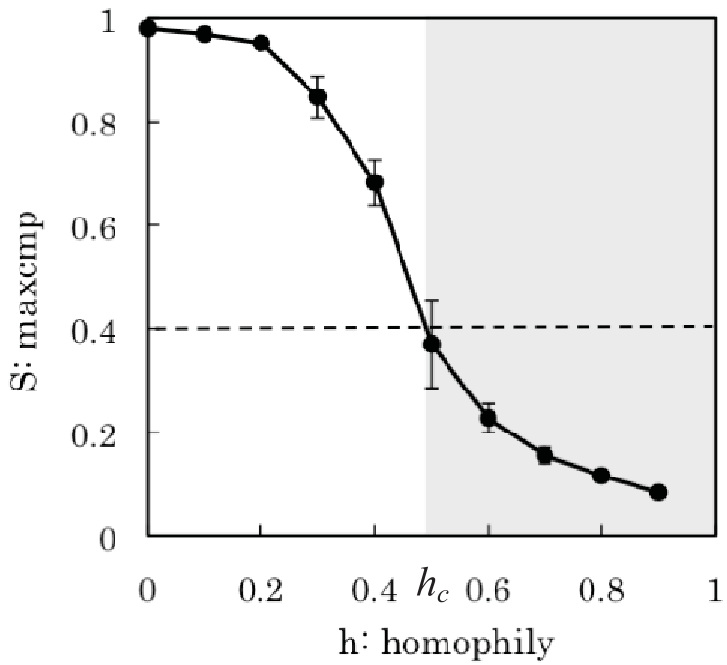 Figure 5 & 3: Showing the specialized regions for Consensus, Fragmentation, and the Emerging Community phase.
If a society is too "adaptive" (people change friends instantly) and too "homophilous" (people only talk to the like-minded), the macroscopic result is Fragmentation. This provides a rigorous explanation for the "echo chamber" phenomenon seen in digital spaces today.
Conclusion & Limitations
This work elegantly reduces complex social behavior to a few statistical parameters. It proves that the "Homophily Principle" is the primary driver of network fragmentation when coupled with high rewiring speeds.
Future Work: The current model assumes everyone has the same level of adaptiveness. In reality, some individuals are more stubborn or more selective than others. Introducing diversity in adaptiveness could reveal even more complex "meta-communities" that more closely mirror the messy reality of human society.