
Twooter: Harmonizing Social Media Through Child-Led Musical Expression
Twooter: designing a musical expression tool for use in social networks
This paper introduces Twooter, a music-based expression tool designed for social networks to facilitate non-verbal, cross-cultural communication among children. Using the Cooperative Inquiry method, the authors developed a grid-based musical composition interface that lowers the barrier to creative content generation for users without formal music theory knowledge.
TL;DR
Twooter is a web-based tool designed to bridge the gap between simple text status updates and complex musical composition. By using a grid-based interface and the "Cooperative Inquiry" method with children, the researchers created a system where "Twooting" a short musical snippet becomes as easy as sending a tweet, enabling non-verbal emotional expression in social networks.
Problem & Motivation: The Complexity of Digital Music
In 2011, the digital landscape for children was divided: social networks like Facebook and Twitter were easy to use for text and images, but creative tools for music required deep knowledge of formal notation and music theory. This created a significant "participation gap."
The motivation for Twooter stemmed from a Carnegie Hall program called Cultural Exchange. Students from New York, New Delhi, and Mexico City were interacting online but lacked a common language to share feelings. The authors realized that music could serve as a cross-cultural bridge, but only if the composition tool was intuitive enough for a 6-year-old to use without training.
Methodology: Designing with Children, Not Just for Them
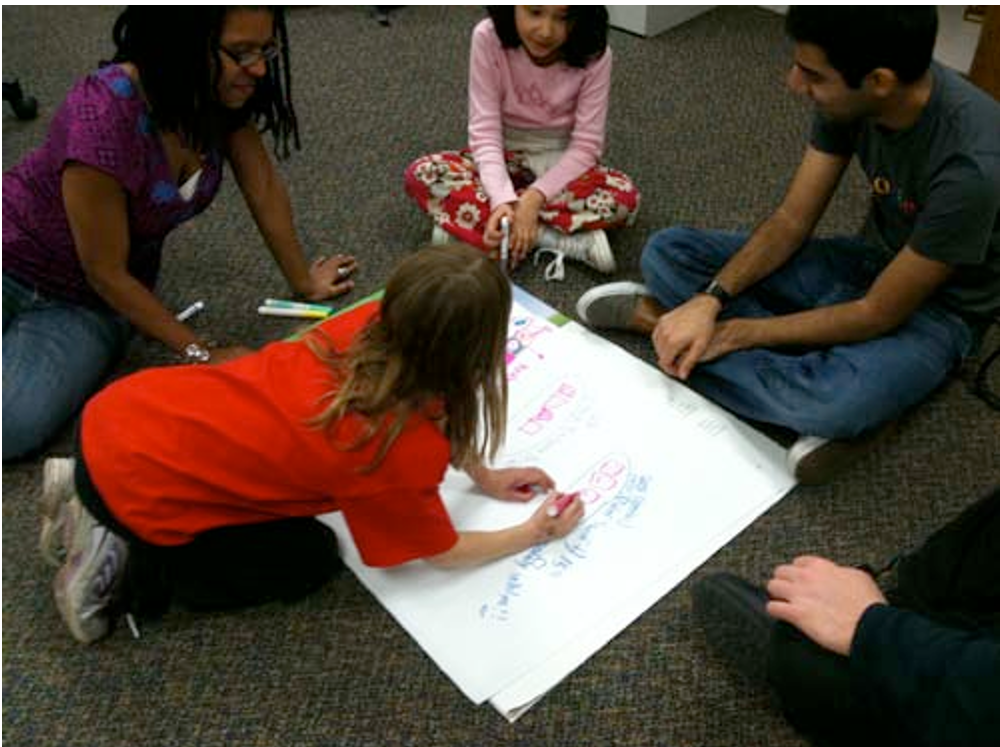
The core of this research is the Cooperative Inquiry methodology. Instead of adults guessing what children want, an intergenerational team (Kidsteam) of 9 children and 6 adults worked together.
The Twooter Prototype
The team iterated through several versions of the tool:
- Grid System: Based on a 16x16 or 8x8 matrix (inspired by ToneMatrix).
- Harmonic Safety: Using the pentatonic scale ensured that no matter which boxes a child clicked, the result would sound pleasing to the ear.
- Visual Interaction: Logic was built so that Y-axis height corresponded to pitch, and X-axis represented time/tempo.
Insights: The Synesthetic Connection
One of the most profound findings was that children do not separate audio from visuals. During play sessions, they didn't just "compose music"; they "drew" with sound. They created patterns like circles, smiling faces, and diagonal lines on the matrix to see how they would sound.
Key Design Feedbacks:
- Emotional Mapping: Children suggested using culturally significant colors (e.g., blue for sadness) to represent notes.
- Gamification: Some designers suggested unlocking new sounds based on how many "Twoots" were created.
- Social Exchange: The idea of "trading sounds" with friends in other countries emerged as a way to build a shared musical vocabulary.
Experiments & Results: Quantifying Creative Freedom
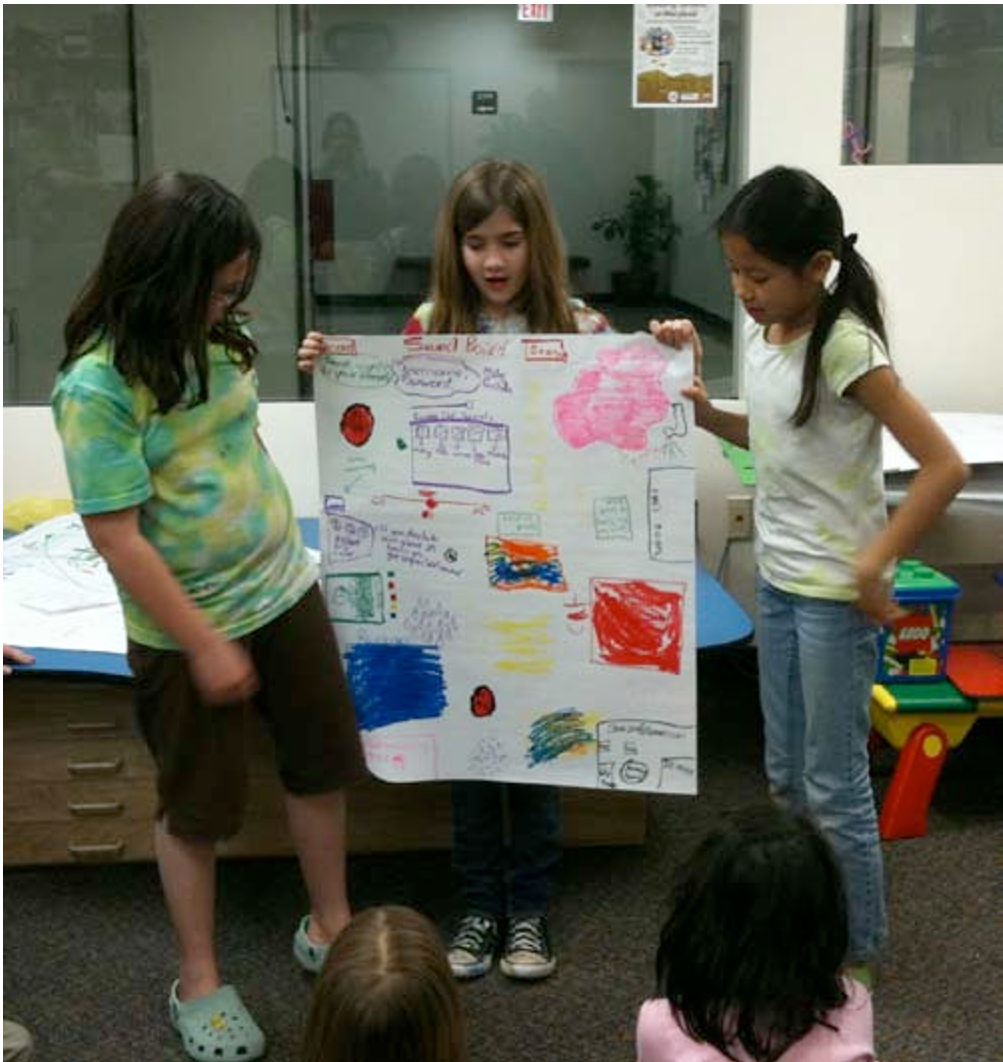
Through the "Sticky Note" evaluation technique, the researchers collected 51 notes:
- Likes (7): Focused on the new colors and shapes in the UI.
- Dislikes (8): Mostly related to software bugs or the matrix size being too small.
- Design Ideas (36): This was the largest category, proving that the simplified interface lowered the barrier to creative thinking.
The researchers observed that the interface changed the task from "learning music" to "playing with patterns," which is a significant shift in Inductive Bias for educational software.
Critical Analysis & Conclusion
Takeaway
Twooter demonstrates that specialized technical domains (like music composition) can be successfully democratized through Visual Metaphors. By removing the "wrong notes" via the pentatonic scale, the tool shifts the focus from technical proficiency to emotional expression.
Limitations & Future Work
The study noted that using the tool in a shared lab without headphones created a "cacophony," though this surprisingly encouraged social discussion. Future iterations aim to integrate Twooter into existing educational networks to test its efficacy in reducing language barriers during international student exchanges.
Twooter reminds us that in the age of complex AI-generated content, there is still immense value in tools that allow for human-in-the-loop micro-expression.