
Engineering Beyond the Lab: Social Inquiry as the "Missing Link" in Professional Formation
A case for the student researcher: Expanding the role of undergraduate research in the professional formation of engineers
This paper explores expanding Undergraduate Research (UR) in engineering beyond technical tasks into "social inquiry" using the SenseMaker methodology. By employing collaborative autoethnography, the authors demonstrate how engaging students in investigating complex socio-technical systems fosters essential professional competencies and engineering identity.
TL;DR
While traditional undergraduate research (UR) is praised for boosting retention, it often stays confined to technical silos. This paper argues for a pivot toward social inquiry. By involving students in "SenseMaker" projects—where they analyze the complex social systems of their own education—they develop the socio-technical "soft skills" (communication, empathy, systems thinking) that are actually the "hardest" part of professional engineering.
The Problem: The "S" in STEM is Overshadowing the "E"
Most UR literature treats engineering students like science students, measuring success by "science identity" or graduate school enrollment. However, engineering is a professional field.
The authors identify a critical disconnect:
- The Classroom: Rigid, theoretical, and focused on "one right answer."
- The Workplace: Messy, relationship-heavy, and full of "wicked problems" in complex human systems.
Current UR often fails to bridge this gap because it remains purely technical (e.g., modeling tidal flows). The authors suggest that students need to study people and systems as rigorously as they study fluid dynamics.
Methodology: SenseMaker and the Power of "Small Stories"
The study centers on the SenseMaker methodology. Unlike traditional surveys that ask "Rate 1-5," SenseMaker asks for a story (a micro-narrative) and then asks the storyteller to interpret it using Triads (triangular representations of competing values).
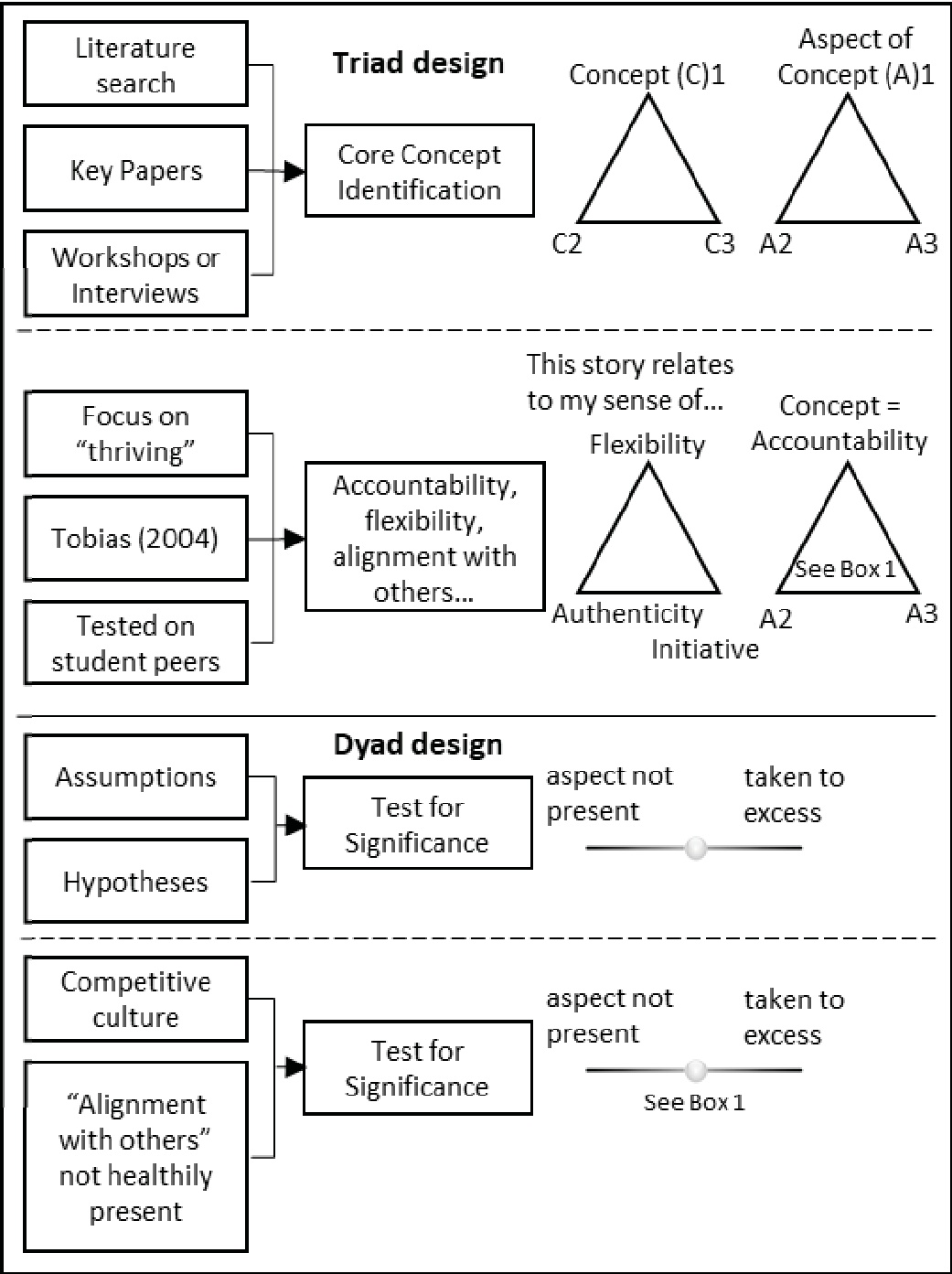
The breakthrough happened when faculty hit a "roadblock" in designing these tools. When they brought in undergraduate researchers as co-designers, the project "soared." The students stopped being "subjects" and became "experts" in their own education system, translating academic theories like "organizational thriving" into language that resonated with their peers.
Key Insight: The Cynefin Framework
A core takeaway of the paper is moving students from "Complicated" thinking to "Complex" thinking.
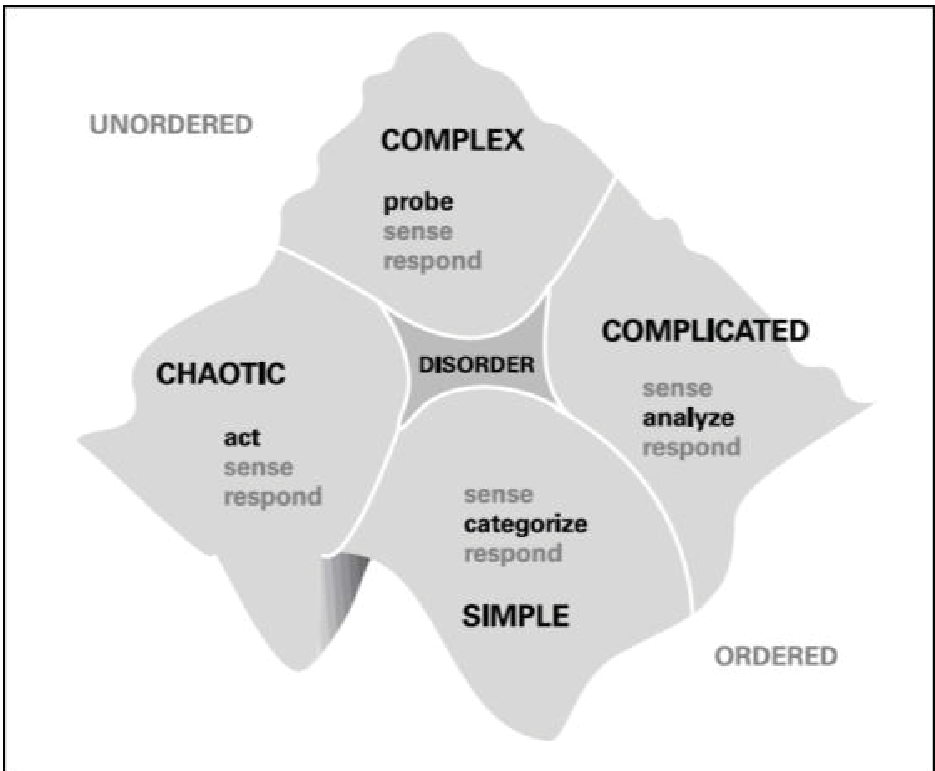
- Complicated Systems: Problems that can be solved with "experts" and "good practice" (e.g., building a bridge).
- Complex Systems: Problems where there are no clear cause-and-effect patterns (e.g., team dynamics or community resistance).
The UR experience forced students to "lean into a spirit of experimentation," realizing that in social systems, you must "probe, sense, and respond" rather than just apply a formula.
Results & Reflections
The paper uses three student narratives to highlight different "aha" moments:
- Julie: Realized that words carry immense weight. Her experience designing prompts mirrored her humanitarian work in Indonesia, where understanding a community's "language" was a prerequisite for engineering justice.
- Kathryn: Learned that "experts" can be misled by their own theories. She realized that the people living in the system daily are the true experts.
- Aubree: Saw UR as the "bridge" between the scientific tone of classes and the interpersonal reality of her corporate co-op.
Conclusion: A New Laboratory
The authors conclude that engineering education research can serve as a microcosm laboratory. By empowering students to study and improve their own educational systems, we don't just get better research data—we produce "holistic" engineers who are ready to handle the socio-technical complexities of the 21st century.
Takeaway for Educators: Don't just give students a technical task. Give them a social system to decode.