
Game Theory: The Microeconomic Engine of Modern Social Networks
6185_Understanding Microeconomic Behaviors in Social Networking An engineering view.
The paper "Understanding Microeconomic Behaviors in Social Networking" presents an engineering framework using game theory to model and analyze user interactions in social networks. It introduces three primary scenarios: noncooperative rate allocation, cooperative P2P streaming, and indirect reciprocity games for cooperation stimulation, establishing a shift from macroeconomic system design to microeconomic user-driven analysis.
TL;DR
This seminal work by Yan Chen and K.J. Ray Liu bridges the gap between social science and network engineering. It argues that social networks are not just graphs but microeconomic ecosystems where individual "selfish" decisions drive system performance. By applying Game Theory, the authors provide a toolkit for designing systems—from video streaming to packet forwarding—that are inherently fair, efficient, and resistant to cheating.
Motivation: Why Centralized Optimization Fails
In classic network engineering, we often try to maximize "Social Welfare"—the sum of everyone's utility. For example, in a video network, we might try to maximize the average PSNR (image quality).
The Problem? Users aren't variables; they are agents. If a user can get a better video by lying about their bandwidth needs, they will. Traditional models (macroeconomic view) ignore this "microeconomic" reality. Prior work like Constant Bit-Rate (CBR) or Information Theory-based (IT) approaches often result in:
- Unfairness: Neglecting users with complex video content.
- Vulnerability: Encouraging users to "overclaim" resources.
- Rigidity: Failing to adapt to the Human Visual System (HVS).
Methodology 1: Noncooperative Multiuser Rate Allocation
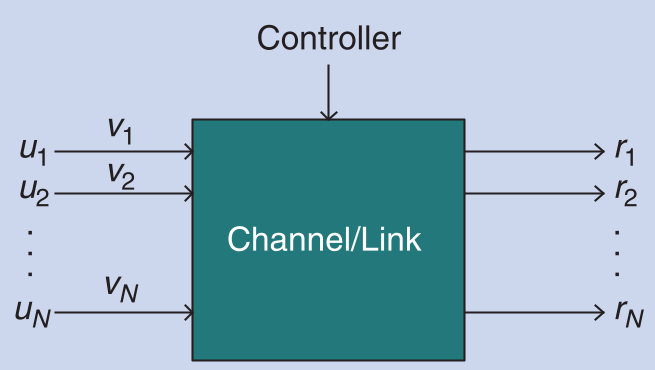
The authors model transmitters as players in a game. The utility function is defined as: The use of the logarithm of PSNR reflects the physical intuition that quality improvements are more noticeable at lower quality levels (HVS).
To prevent cheating, they introduce a Distributed Clock Auction. Instead of users reporting their needs, the controller raises the "price" of bandwidth, and users bid. The final rate is determined by what others do, making it technically impossible for a user to gain by lying—a property known as cheat-proof.
Methodology 2: Cooperative P2P Streaming via Evolutionary Games
In P2P networks, the "Free-Rider" problem is rampant. Why should I upload data (costly) if I can just download for free?
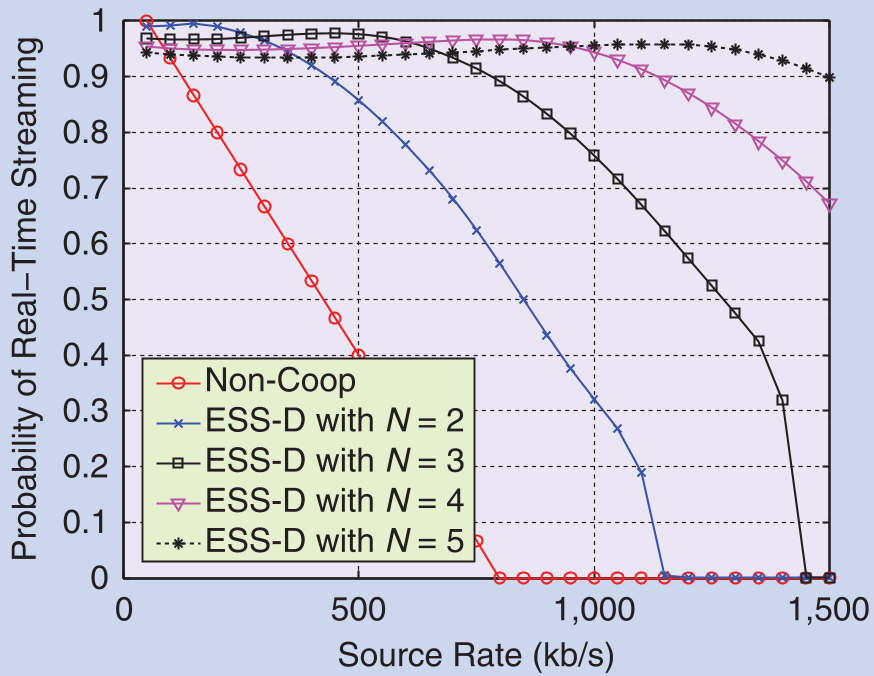
The authors use Evolutionary Game Theory and Replicator Dynamics. They show that in a heterogeneous group, users with lower costs (better hardware/bandwidth) naturally emerge as "Agents" (servers), while others become free-riders. The system reaches an Evolutionarily Stable Strategy (ESS)—a state where no "mutant" behavior can disrupt the equilibrium.
Methodology 3: Indirect Reciprocity for Cooperation
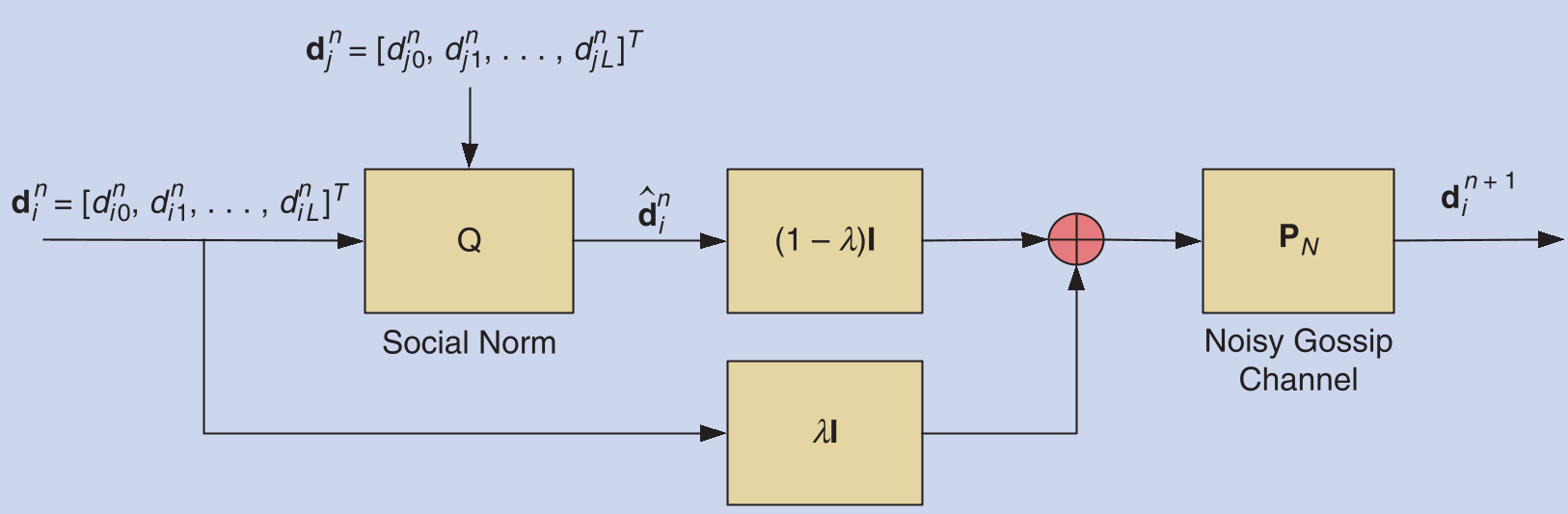
"I help you, not because you helped me, but because you helped others." This is the core of Indirect Reciprocity. By introducing a Reputation System, the authors turn a one-time interaction into a long-term game.
Using a Markov Decision Process (MDP), they derive an optimal action rule: forward packets to those who have a history of being helpful.
Experimental Validation
The results are striking. Compared to MSPSNR (Maximizing Sum of PSNR), the game-theoretic approach balances quality across all users. When tested against cheating (where a user scales their reported distortion parameters), the proposed method shows that the highest utility is only achieved when the user is honest.
In P2P simulations, the ESS-based approach outperformed traditional non-cooperative methods, especially as the source bit rate increased, proving that strategic cooperation is essential for high-performance streaming.
Critical Insight & Conclusion
This paper serves as a manifesto for the "social" in social networking. The takeaway is clear: Engineering is not just about physics and bits; it's about incentives.
Limitations: The reputation model assumes a "gossip channel" that propagates information perfectly, which is hard to achieve in massive, noisy real-world networks. However, the move toward Microeconomic Analysis provides a far more robust framework for building the decentralized systems of the future.