
Expectation vs. Reality: Reforming Mobile Privacy through Crowdsourced Mental Models
Expectation and purpose: Understanding users’ mental models of mobile app privacy through crowdsourcing
This paper introduces a "privacy as expectations" model and a crowdsourcing methodology to bridge the gap between automated app analysis and user perception. Developed by researchers at Carnegie Mellon, the study captures users' mental models of mobile privacy and proposes a new "Privacy Summary" interface that highlights unexpected resource usage, significantly outperforming the standard Android permission system in user comprehension.
TL;DR
Researchers from CMU have identified that current mobile privacy systems fail because they focus on technical access rather than human expectation. By using crowdsourcing to map out what users "think" an app does, they've created a new privacy interface that highlights "surprises"—instances where an app's behavior breaks a user's mental model.
Background: The Context Gap
In 2012, at the height of the mobile app explosion, a fundamental problem emerged: Context. Automated tools could flag that an app was accessing your contact list, but it couldn't tell you if that was "okay."
The research team argues that privacy isn't just about data flow; it's about Expectations. If you download a map app, you expect it to use your GPS. If you download a flashlight app and it triggers a GPS request, your "mental model" of a flashlight is violated, leading to discomfort and distrust.
The "Mental Model" Study
The authors conducted a massive study on Amazon Mechanical Turk (AMT) involving 5,360 valid responses to analyze the mental models of 179 Android users. They focused on two key variables:
- Expectation: Did the user expect the app to access a specific resource (GPS, Contacts, Device ID)?
- Purpose: Does knowing why the app needs the data change how the user feels?
Key Insight: The "Why" Matters
The study revealed a startling gap: users are terrible at guessing why apps need data. For example, when an app like Dictionary requested location, users assumed it was for "creepy" advertising. When told it was actually to show "trending words nearby," their comfort levels skyrocketed.
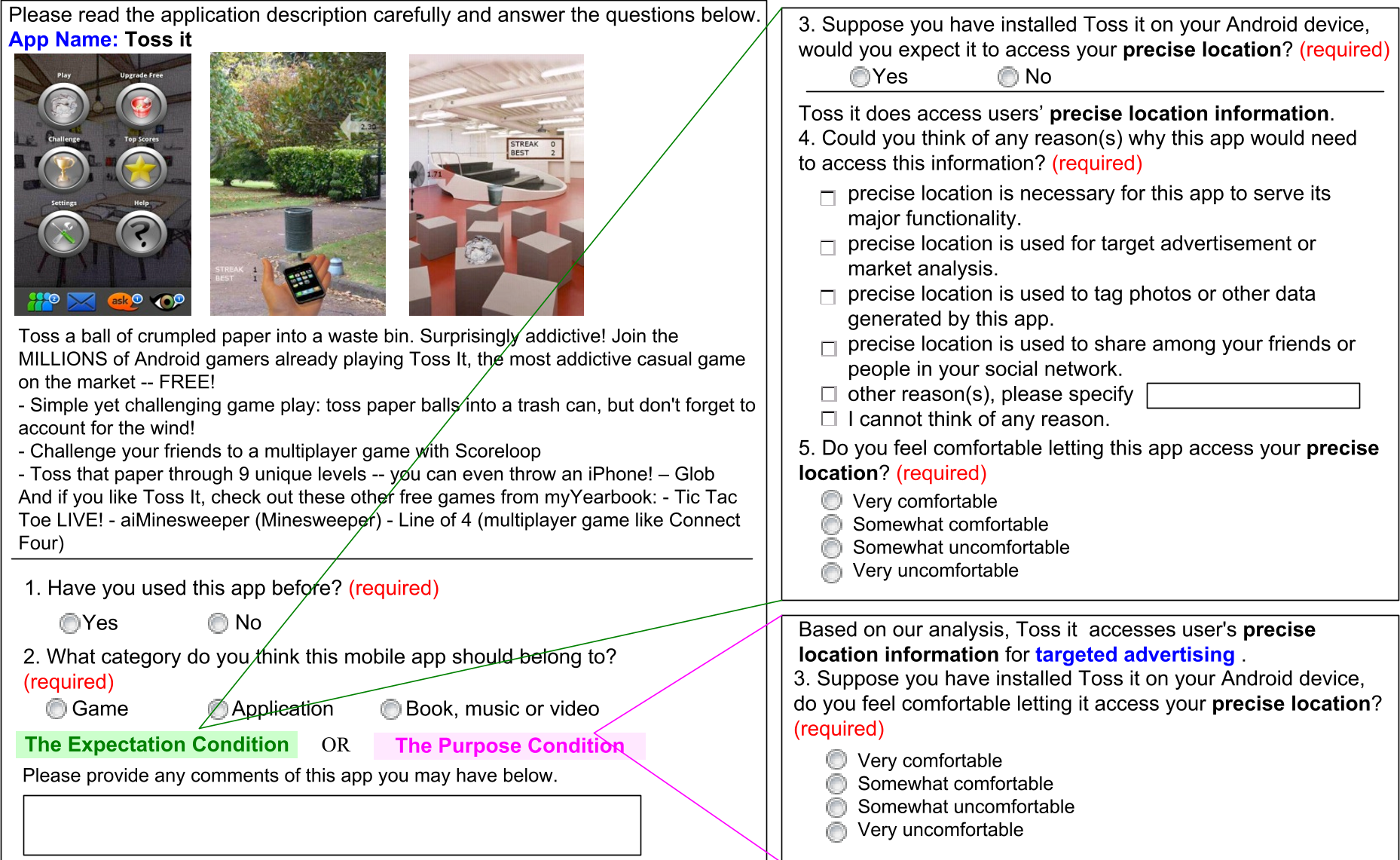 Figure 1: Comparison between the Expectation condition (user guesses) and Purpose condition (user is told the reason).
Methodology: Highlighting the Surprises
The researchers found a nearly perfect correlation (r = 0.91) between how expected an action was and how comfortable a user felt.
The "Unexpected" Hall of Shame (Table 1):
- Brightest Flashlight: Only 5% of users expected it to access Network Location.
- Talking Tom: Only 10% expected it to access Device ID.
- Pandora: Only 20% expected it to read their Contact List.
A New Design: The Surprising Privacy Summary
Moving away from the "wall of text" permissions, the authors designed a "Privacy Summary" based on Surprise Value.
- Human-readable: "Approximate location" instead of "Coarse_Location."
- Surprise Metrics: "95% of users were surprised by this."
- Purpose-driven: Directly stating "Used for showing local weather."
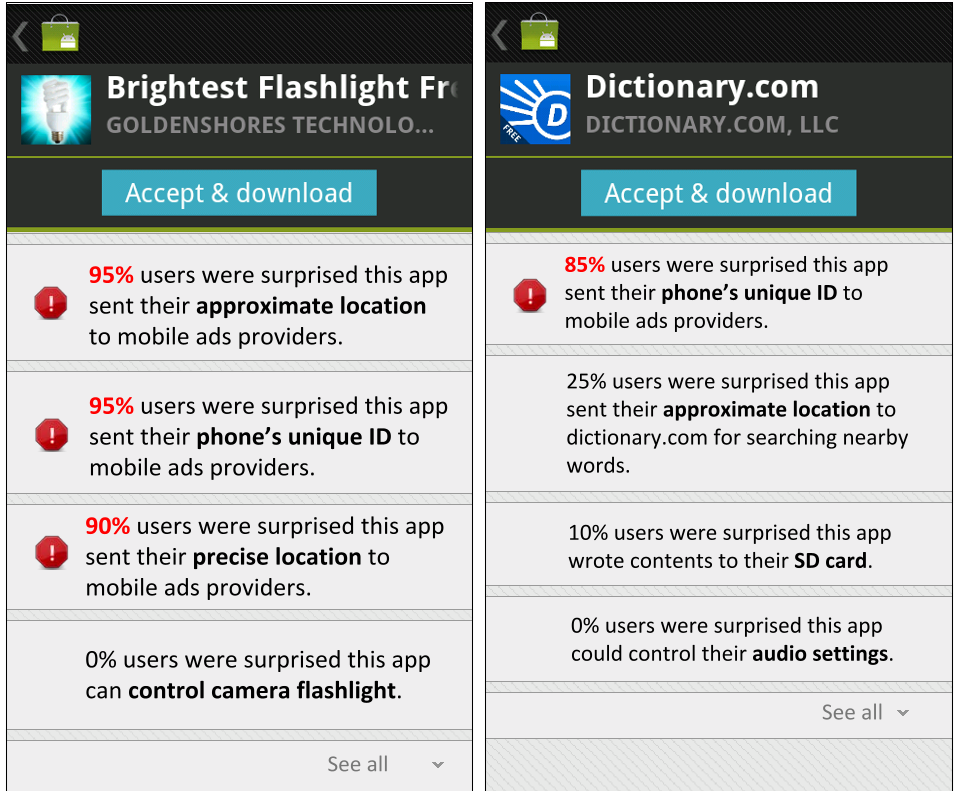 Figure 2: The proposed interface highlights surprises with warning icons, focusing user attention on the most "abnormal" behaviors.
Impact & Future Outlook
The evaluation showed that this new interface significantly increased privacy awareness. Users were more likely to mention specific privacy concerns when deciding whether to recommend an app, and they did so faster than with the standard Android screen.
Critical Takeaways:
- Transparency isn't enough: Giving users a list of 20 permissions just causes fatigue.
- Crowdsourcing works: The "crowd" is excellent at defining what is "normal" for an app category, even if they aren't security experts.
- The Developer Burden: To fix this, developers must provide "rationales" for data access—a practice that has since been adopted by modern OS versions (like iOS's permission strings).
Conclusion
This work shifted the academic focus from "How can we block data?" to "How can we align app behavior with user expectations?" By quantifying the "surprise factor," the authors provided a roadmap for building mobile ecosystems that respect the human element of privacy.