
The Indian Paradox: Why High Female Enrollment in CS Doesn't Lead to Career Longevity
The Unexpected Entry and Exodus of Women in Computing and HCI in India
This qualitative study investigates the paradoxical gender gap in India's technology sector, where women comprise 45% of CS university enrollments but experience a sharp exodus during career advancement. Using interviews and focus groups, the researchers identify socio-cultural drivers and systemic workplace barriers affecting the "leaky pipeline" in both Computer Science and Human-Computer Interaction (HCI).
TL;DR
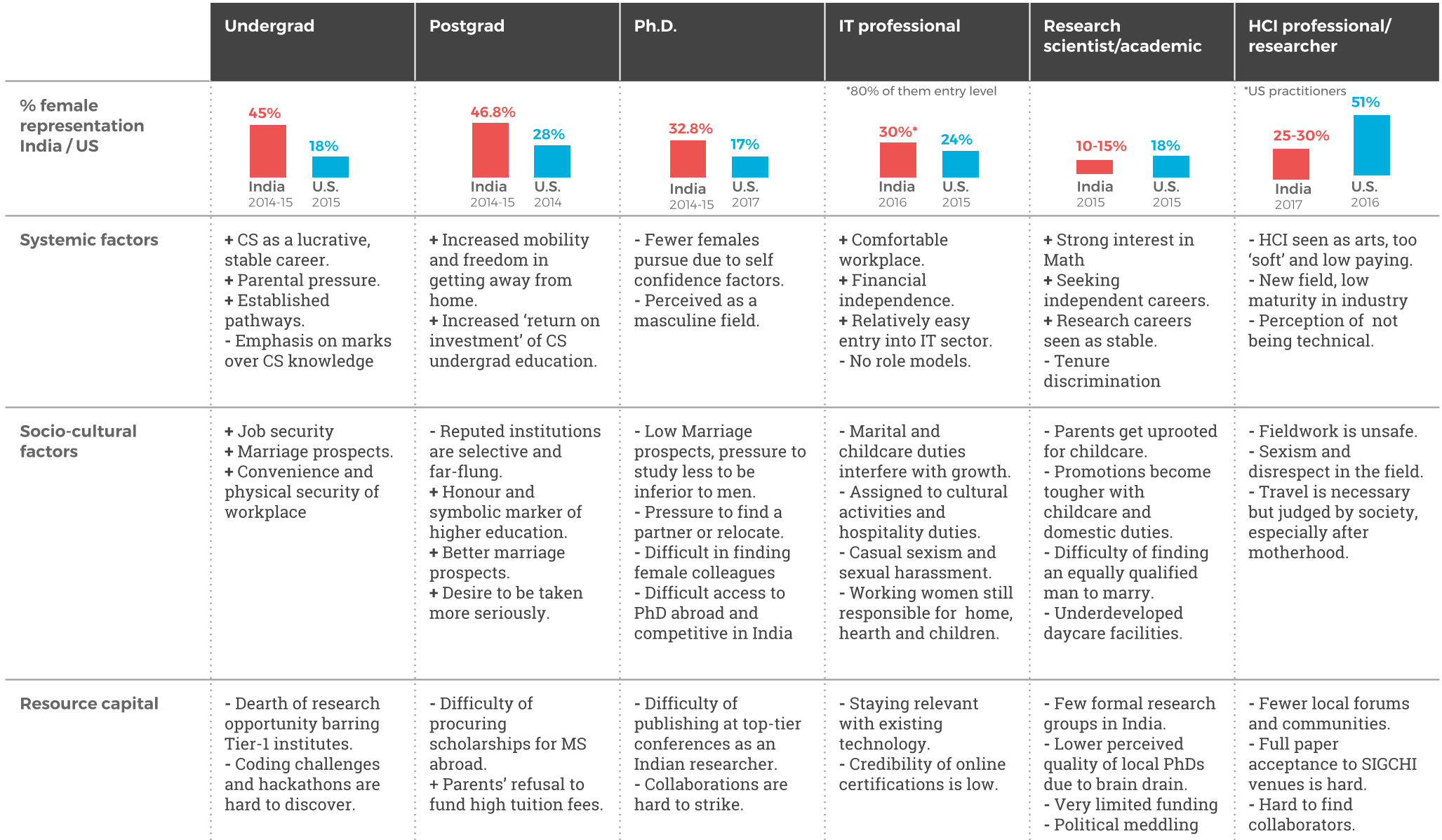
In a striking reversal of Western trends, India boasts a robust pipeline of women entering Computer Science (45% enrollment). However, this "Unexpected Entry" is met with an equally "Unexpected Exodus." This study reveals how Indian familial norms first coerce women into tech for economic stability and marriageability, only to pull them out later due to domestic burdens and a "glass ceiling" that limits women to less than 1% of executive roles.
Contextualizing the Pipeline
In the United States, the primary challenge is getting girls interested in coding. In India, the challenge isn't interest—it's survival within the system. The paper highlights that Indian CS is viewed as a "safe," air-conditioned, white-collar path that enhances a woman's "marriage profile." Yet, this support is conditional and often expires the moment a woman seeks a PhD or a leadership role.
Methodology: A Life-Stage Analysis
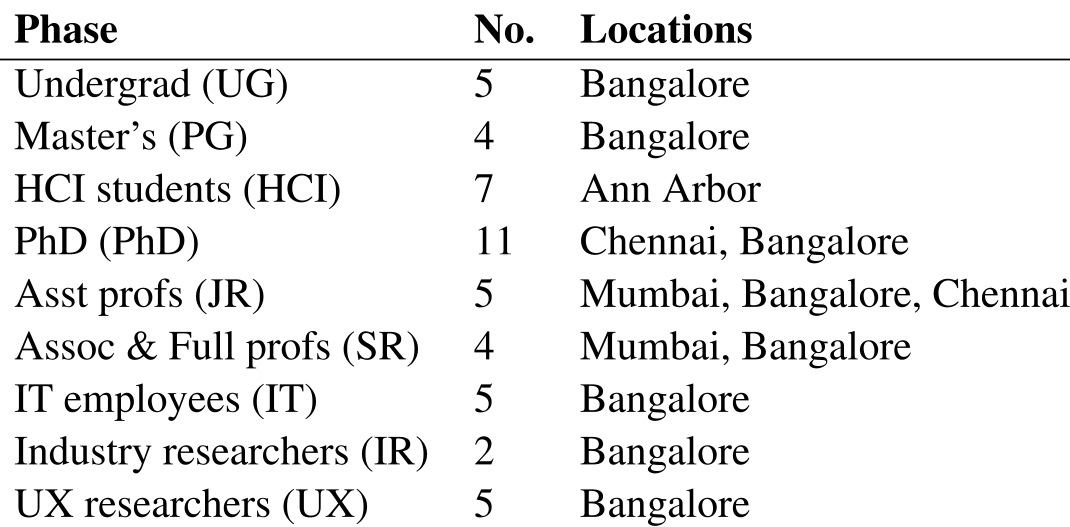
The researchers tracked the journey of Indian women across four critical phases:
- Childhood/Undergrad: High encouragement; CS is seen as a ticket to financial independence and safety.
- Masters: Often used as a socially acceptable way to delay marriage or "boost" dowry value.
- PhD: The turning point where education becomes a liability; "over-educated" women are feared to be unmarriageable.
- Career: The "Two-Body Problem" and extreme domestic labor (women spend 298 mins/day vs. men's 19 mins on chores) lead to massive attrition.
Why HCI is Different (and Harder) in India
The study uncovers a fascinating cultural nuance: HCI is perceived as "Arts." In the Indian hierarchy of prestige, Engineering is King. Because HCI is housed in design departments, it lacks the "safe engineering" branding. This leads to:
- Lower Enrollment: Only 25-30% compared to 45% in CS.
- Fieldwork Harassment: Female HCI researchers face severe safety and social stigma issues when conducting user studies in rural areas.
- The "Feminism" Stigma: The term "feminism" is often misunderstood or avoided by Indian women, complicating the growth of support networks.
The "Exodus" in Numbers
The transition from the classroom to the boardroom in India shows one of the steepest declines in the global tech industry.
- Entry Level: 80% representation in some sectors.
- Workforce Average: 30%.
- C-Suite (Executives): <1%.
Critical Analysis & Future Directions
The paper effectively argues that Western "diversity workshops" are insufficient for the Indian context.
Key Takeaways:
- Familial Engagement: Change must start by convincing parents and in-laws that a woman's career success is a family asset, not a domestic threat.
- Policy Intervention: India’s 26-week maternity leave is a double-edged sword; without robust "re-integration" policies, it often leads to women being sidelined into "testing" or "support" roles upon return.
- HCI Legitimacy: There is a dire need to rebrand HCI in India as a high-tech, viable career path to tap into the existing CS talent pool.
Conclusion
The "Indian Paradox" teaches us that cultural logic can override economic logic. While the world looks to India for its engineering volume, the human-system interface remains broken for women. Success in the next decade of Indian tech will depend not on teaching more girls to code, but on building a society that allows them to keep coding after they say "I do."