
MDCM: Bridging Ancient Wisdom and Modern AI with a Unified Smart Chinese Medicine Framework
A Unified Smart Chinese Medicine Framework for Healthcare and Medical Services
This paper introduces a unified Smart Chinese Medicine (SCM) framework based on an edge-cloud computing architecture. It proposes a Multi-modal Deep Computation Model (MDCM) that combines Stacked Auto-Encoders (SAE) and Convolutional Neural Networks (CNN) using vector outer products to fuse heterogeneous symptoms and tongue images for SOTA syndrome recognition.
TL;DR
Researchers have developed a unified framework that brings Traditional Chinese Medicine (TCM) into the AI era. By leveraging an edge-cloud computing architecture and a novel Multi-modal Deep Computation Model (MDCM), the system can digest both textual symptoms from patient inquiries and visual data from tongue inspections. This approach achieves superior accuracy in syndrome differentiation, outperforming standard deep learning baselines by utilizing tensor-based fusion.
The Problem: The Complexity of "Syndrome Differentiation"
In modern medicine, a patient with a cold is often treated with standardized medication. In TCM, however, the focus is on Syndrome Differentiation. Two patients with the same "disease" (e.g., hypertension) may possess entirely different "syndromes" (e.g., Liver Qi Stagnation vs. Abundant Phlegm-Dampness), requiring completely different prescriptions.
Historically, this diagnosis relied on a doctor's intuition and the "Four Diagnostic Methods": Inquiry, Inspection, Listening/Smelling, and Palpation. Translating this subjective, heterogeneous data into an objective AI model is remarkably difficult. Previous attempts failed because:
- They used simple linear concatenation for data fusion, which misses the subtle interactions between a patient's reported symptoms and their physical tongue manifestations.
- They lacked a scalable architecture to provide pervasive services via mobile devices without sacrificing computational power.
Methodology: High-Order Fusion via MDCM
The core innovation of this paper is the Multi-modal Deep Computation Model (MDCM). The architecture treats different diagnostic inputs as distinct modalities that must be fused intelligently.
1. The Dual-Pathway Extraction
- Structured Inquiry (SAE): A Stacked Auto-Encoder processes symptoms obtained from digital questionnaires (chills, fever, sleep patterns, etc.).
- Tongue Inspection (CNN): A Convolutional Neural Network extracts spatial features from tongue images, identifying colors, fur characters, and shapes.
2. The Vector Outer Product Fusion
Unlike common models that simply "stitch" feature vectors together, MDCM uses the vector outer product. If is the symptom vector and is the tongue feature vector, the fusion creates a matrix where every element represents a specific interaction between a symptom and a visual trait.
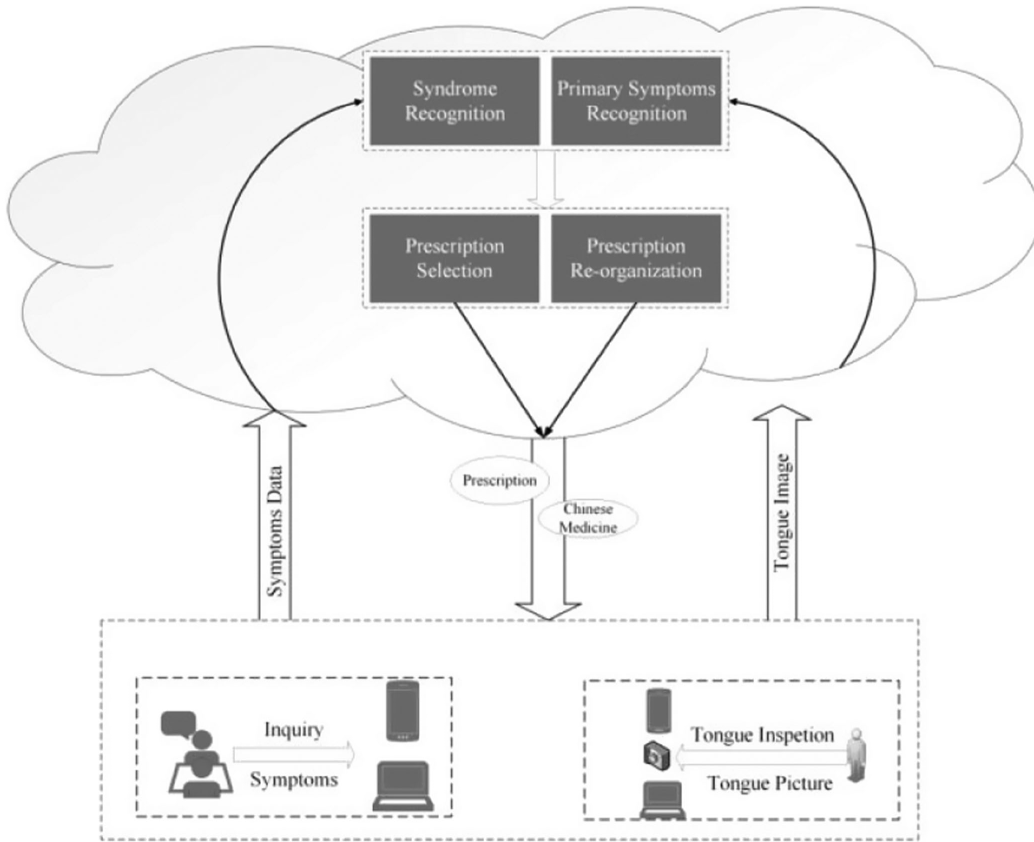 Figure 1: The proposed unified framework distributing tasks between Edge (data collection) and Cloud (heavy computation).
3. Tensor-Based Deep Computation
The resulting feature matrix is fed into a Deep Computation Model (DCM). This model extends standard neural networks to handle high-order tensors, allowing the system to learn from the "big data" of TCM experience accumulated over thousands of years.
Experimental Validation
The authors tested their model on two primary datasets: Hypertension and the Common Cold.
- Hypertension: MDCM achieved a mean accuracy of 88.8%, significantly higher than the Stacked Auto-Encoder (83.4%) and standard Multi-modal models (86.6%).
- Cold: The model reached 92% accuracy, showcasing its robustness across different disease types.
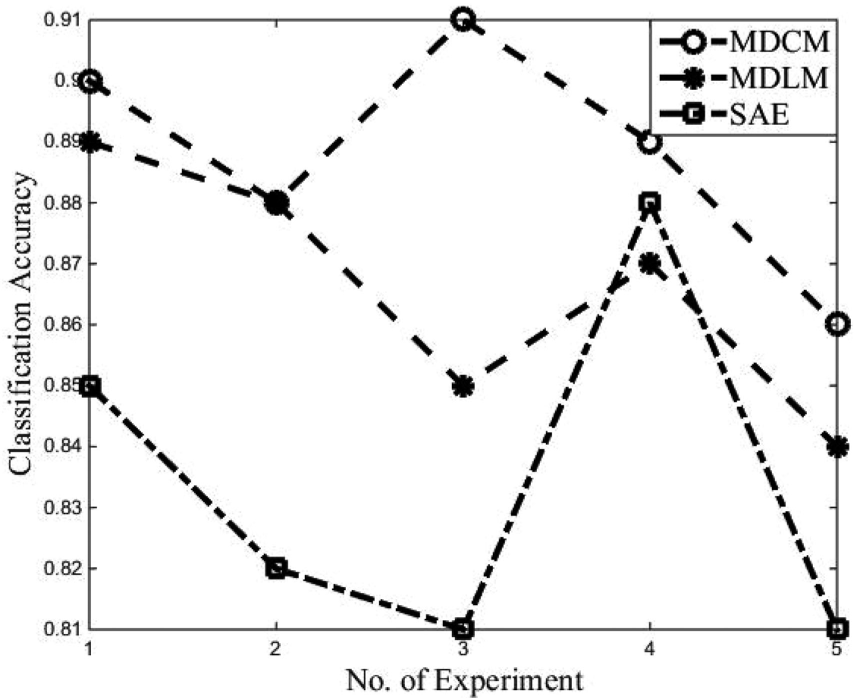 Figure 2: Classification accuracy comparison on the hypertension dataset, showing MDCM's consistent superiority.
The study also highlights that while training time is slightly higher for MDCM due to the increased parameter count from the outer product, the inference time (the time a patient waits for a result) is nearly identical to simpler models, making it viable for real-world clinical use.
Critical Insight & Future Outlook
The move toward an Edge-Cloud system is a strategic necessity. By offloading the heavy Deep Reinforcement Learning (DRL) for tongue localization and question identification to the cloud, the "Edge" (mobile apps) remains lightweight and accessible for patients globally.
Limitations: The current model focuses heavily on Cold and Hypertension. The next frontier involves Prescription Re-organization, a decision-making task where AI must not only select a base formula but also add/remove specific herbs based on minor symptom variations. This will likely require even more advanced Deep Reinforcement Learning agents (similar to AlphaGo) to master the "art" of Chinese pharmacology.
Conclusion
This paper represents a significant step toward "Healthcare 4.0" for Traditional Chinese Medicine. By moving away from simple feature stacking and toward high-order tensor computation, the MDCM framework provides a mathematically rigorous way to handle the complexity of holistic diagnosis.