
Cracking the Chaos: A Universal Attack on Image Encryption Families
Universal Chosen-Ciphertext Attack for a Family of Image Encryption Schemes
The paper presents a Universal Chosen-Ciphertext Attack (UCCA) targeting a broad family of image encryption schemes characterized by pixel-level permutation and modular addition-based substitution. The authors reveal a fundamental linearity in the differential transfer functions of these schemes, allowing for full plaintext recovery without the secret key.
TL;DR
Many modern image encryption schemes rely on a "Permutation-Substitution" (P-S) architecture driven by chaotic maps. This paper demonstrates that a huge family of these schemes share a fatal flaw: they are mathematically linear in the differential domain. By utilizing a Chosen-Ciphertext Attack (CCA), the authors show they can recover the original image with 100% accuracy, regardless of how many rounds of encryption are used or how complex the "chaos" is.
The Illusion of Chaos
In the quest for high-speed multimedia security, many researchers have turned to nonlinear dynamics (Chaos theory). The logic seems sound: chaotic systems are sensitive to initial conditions, making the key schedule seem impenetrable. These schemes typically follow a three-step process:
- Key Schedule: Generating pseudo-random sequences.
- Permutation: Shuffling pixel positions.
- Substitution: Changing pixel values using modular addition (e.g., ).
However, the authors point out a massive industry blind spot: statistical randomness does not equal cryptographic security. Even if an encrypted image looks like white noise and passes the NIST tests, it might be fundamentally broken at a structural level.
The "BAM" Vulnerability
The core of the paper lies in the discovery of the BAM properties (Bijectivity, modular Additivity, and modular Multiplicability).
The authors prove that for any encryption scheme using pixel-level permutation and modular addition, the Cascaded Differential Transfer Function (CDTF)—the mapping from the difference between two plaintexts to the difference between two ciphertexts—is linear.
Mathematically, this means: where satisfies .
Because this relationship is linear and independent of the key, an attacker doesn't need to "break" the chaos or find the key. They only need to map how "changes" propagate through the system.
Methodology: The Attack Vector
The proposed PCCA (Proposed Chosen-Ciphertext Attack) operates in five elegant steps:
- Basis Construction: The attacker generates specific ciphertexts (where is the pixel count). One is all zeros; others have a single '1' at a specific pixel index.
- Plaintext Acquisition: Using a decryption oracle (the "Chosen-Ciphertext" assumption), the attacker gets the corresponding plaintexts.
- Differential Mapping: The attacker calculates the differences between these plaintexts.
- Linear Reconstruction: Since the system is modularly linear, any new ciphertext can be expressed as a linear combination of the basis ciphertexts.
- Recovery: The original plaintext is reconstructed by summing the corresponding plaintext differences.
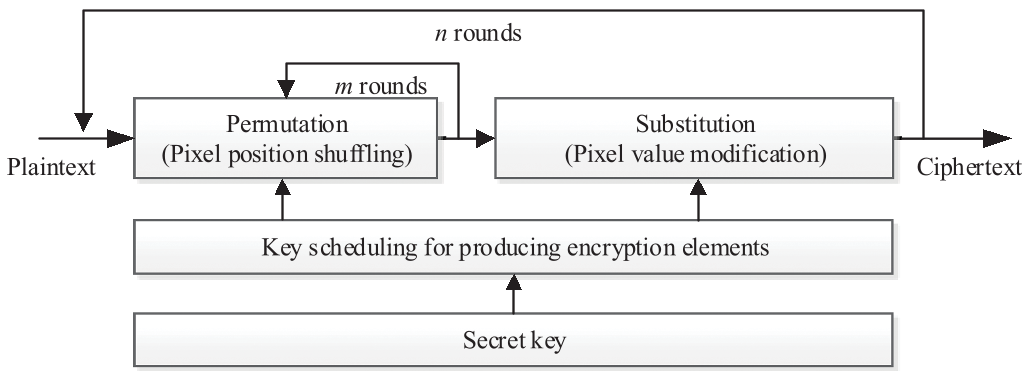 Figure 1: The standard permutation-substitution architecture found to be vulnerable.
Experimental Proof: No Scheme is Safe
The authors tested the PCCA against 10 different schemes, including TL-DEA, MIE-MA, and ICS-IE.
| Feature | Efficiency |
|---|---|
| Complexity | (Linear with image size) |
| Round Independence | Complexity does not increase with more encryption rounds. |
| Key Independence | No knowledge of the chaotic seed is required. |
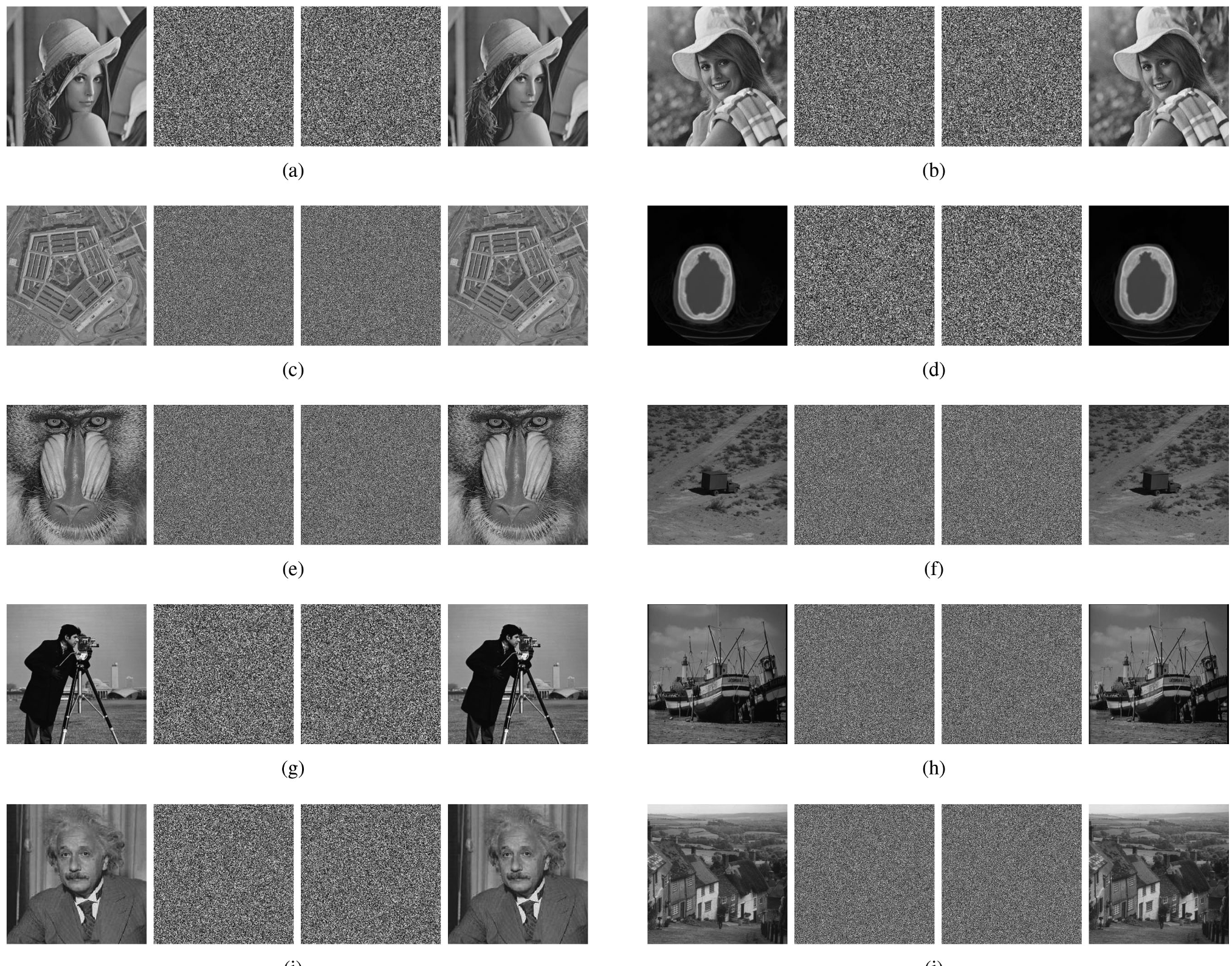 Figure 2: Visual evidence of successful recovery across various SOTA schemes.
Even schemes that tried to "hide" the linearity by adding random pixels at the edges (MIE-MA) or using cumulative "avalanche" effects in the substitution phase (linking current pixels to previous ones) fell to the attack. The PCCA simply incorporates those dependencies into the linear basis.
Critical Insight & Conclusion
The "Death Blow" dealt by this paper to the chaotic image encryption community is the realization that complexity is not security.
- The Problem: The industry has been optimizing for speed by using modular addition, which is a linear operation in the modular ring.
- The Solution: Cryptographers must include truly non-linear operations. The authors suggest using S-Boxes (Look-Up Tables) as seen in AES, or mixing bitwise XOR with modular addition in a way that breaks the BAM properties.
Takeaway: If your encryption scheme can be described solely by shuffling and adding, it can be solved as a system of linear equations. Complexity in the "chaos" generator is a facade if the "encryption" operation is commercially "fast" but mathematically "weak."