
Universal Design: The Hidden Catalyst for Radical Sustainable Innovation
Universal design as a cause of triggering innovation levels for sustainability-a deliberative concept
This paper introduces a deliberative framework that positions Universal Design (UD) as a critical catalyst for triggering various levels of innovation—Incremental, Market Breakthrough, Technical Breakthrough, and Radical—to achieve sustainability. By expanding UD beyond traditional accessibility, the authors provide a methodology for integrating UD principles into Sustainable Human-Computer Interaction (SHCI) to enhance organizational design strategies.
TL;DR
Sustainability is often misconstrued as a mere reduction in carbon footprints. This paper argues that true sustainability is a byproduct of Universal Design (UD). By leveraging the seven principles of UD, organizations can trigger different levels of innovation—ranging from incremental improvements to radical market disruptions—effectively bridging the gap between social equity and technological progress.
Background: Beyond Accessibility
For decades, Universal Design (UD) has been the "safety net" of design—ensuring that those with disabilities can navigate the world. However, the authors posit that UD is not just about accessibility; it is a design philosophy for sustainability.
The core friction in current research is the disconnect between how we design (UD) and what we achieve (Sustainability). Without a clear framework, companies struggle to see UD as a source of competitive advantage. This paper reframes UD as a "trigger" that moves a product from a mere technical breakthrough to a radical, market-dominating success.
Methodology: The Innovation Trigger Framework
The researchers utilize the Chandy and Tellis typology, which classifies innovation based on two axes: Newness of Technology and Customer Benefit.
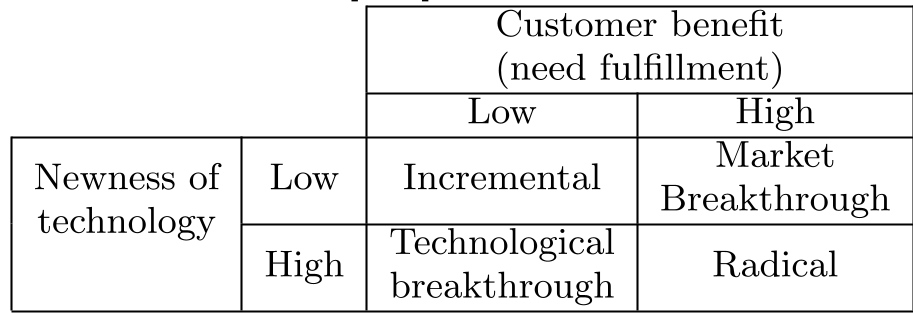
The genius of this approach lies in mapping the Seven Principles of UD to these quadrants:
- Incremental Innovation (P2, P5): Focuses on flexibility and error tolerance. Think of iterative safety improvements in modern vehicles.
- Market Breakthrough (P1): Driven by Equitable Use. When a sustainable product becomes affordable and usable by the masses, it captures the market.
- Technical Breakthrough (P7): Concerns Size and Space. For example, the transition from mechanical systems to semiconductors allowed for new design spaces previously thought impossible.
- Radical Innovation (P3, P4, P6): The "Holy Grail." By focusing on Simple and Intuitive Use and Low Physical Effort, products like the cellular phone shifted from niche tools to global necessities.
The Universal Design Space
To visualize how these concepts intersect, the authors propose a design space centered on four challenges: Design, Evaluation, Knowledge Gaps, and Persuasion.
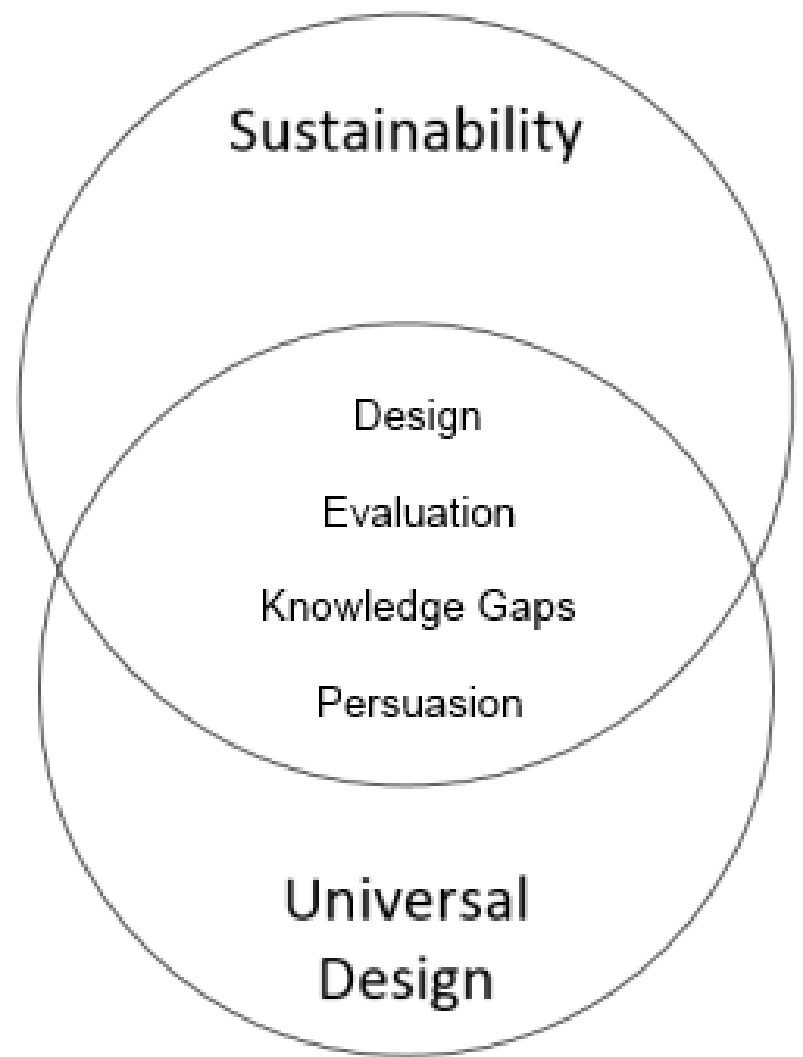
- Evaluation: Can a design be sustainable if it isn't universal? The authors suggest using UD parameters (like error reduction) as metrics for sustainability.
- Persuasion: Sustainable HCI (SHCI) aims to change user behavior. UD principles make sustainable actions "intuitive" rather than "effortful," which is the key to long-term adoption.
Critical Insight: Why UD Leads to Sustainability
Most sustainable products fail because they require too much "cognitive load" or "physical effort" from the user (e.g., complex recycling systems). By applying Principle 6 (Low Physical Effort) and Principle 3 (Simple and Intuitive Use), we remove the friction of being "green."
When the sustainable choice becomes the easiest and most inclusive choice, we move from incremental changes to Radical Innovation.
Conclusion & Future Outlook
This paper serves as a manifesto for the "Advanced Concept" of Universal Design. It shifts UD from the periphery of "special needs" to the center of "business strategy."
Key Takeaways for Developers and Designers:
- Mainstream UD: Do not treat accessibility as a post-launch audit. Treat it as a creative constraint that triggers better technology.
- Sustainable HCI: Focus on reducing the "fatigue" associated with sustainable systems to ensure adoption.
While the framework is theoretical, it provides a rigorous roadmap for organizations to gain a competitive advantage by embracing the "extreme" user, ultimately creating products that work better for everyone.