
The Rise and Fall of Social Connections: Uncovering the Universal Geometry of Network Evolution
Universal evolution patterns of degree assortativity in social networks
The paper identifies a universal "rise-and-fall" evolution pattern of degree assortativity in social networks, where connectivity between nodes of similar degrees first peaks and then plateaus. To replicate this, the authors propose a Bidirectional Selection Model incorporating Pareto-distributed social status and a controllable preference for within-status vs. across-status interactions.
TL;DR
Why do we first connect with people just like us, only to eventually branch out? This paper discovers a universal "rise-and-fall" pattern in how social networks organize themselves. By modeling social status as a Pareto distribution—just like wealth—the authors demonstrate that the evolution from high assortativity (birds of a feather) to stable disassortativity (bridging gaps) is a fundamental feature of human social dynamics.
Context: The DNA of Social Mixing
In network science, Degree Assortativity is the metric that tells us if "popular" people hang out with other popular people, or if they prefer to act as hubs for the less connected. While it was long assumed that social networks are inherently assortative, recent data suggests a more complex reality. This work moves beyond static snapshots to ask: How does this structural preference change as a network grows from its first few users to millions?
The "Insight": Social Status and Bidirectional Selection
The authors argue that social ties aren't just random or one-sided. Instead, they propose a Bidirectional Preferential Attachment mechanism fueled by Social Status.
1. The Pareto Distribution of Status
Borrowing from economics, the model assigns every node a "social status" () following a power-law (Pareto) distribution. This assumes a few "high-status" individuals and many "average" ones.
2. The Interaction Logic
The model uses a control parameter, , to balance two competing forces:
- Homophily (High ): Interactions occur mostly between people of similar status, driving the network toward assortativity.
- Bridge-Building (Low ): Interactions cross-status boundaries, leading to disassortativity.
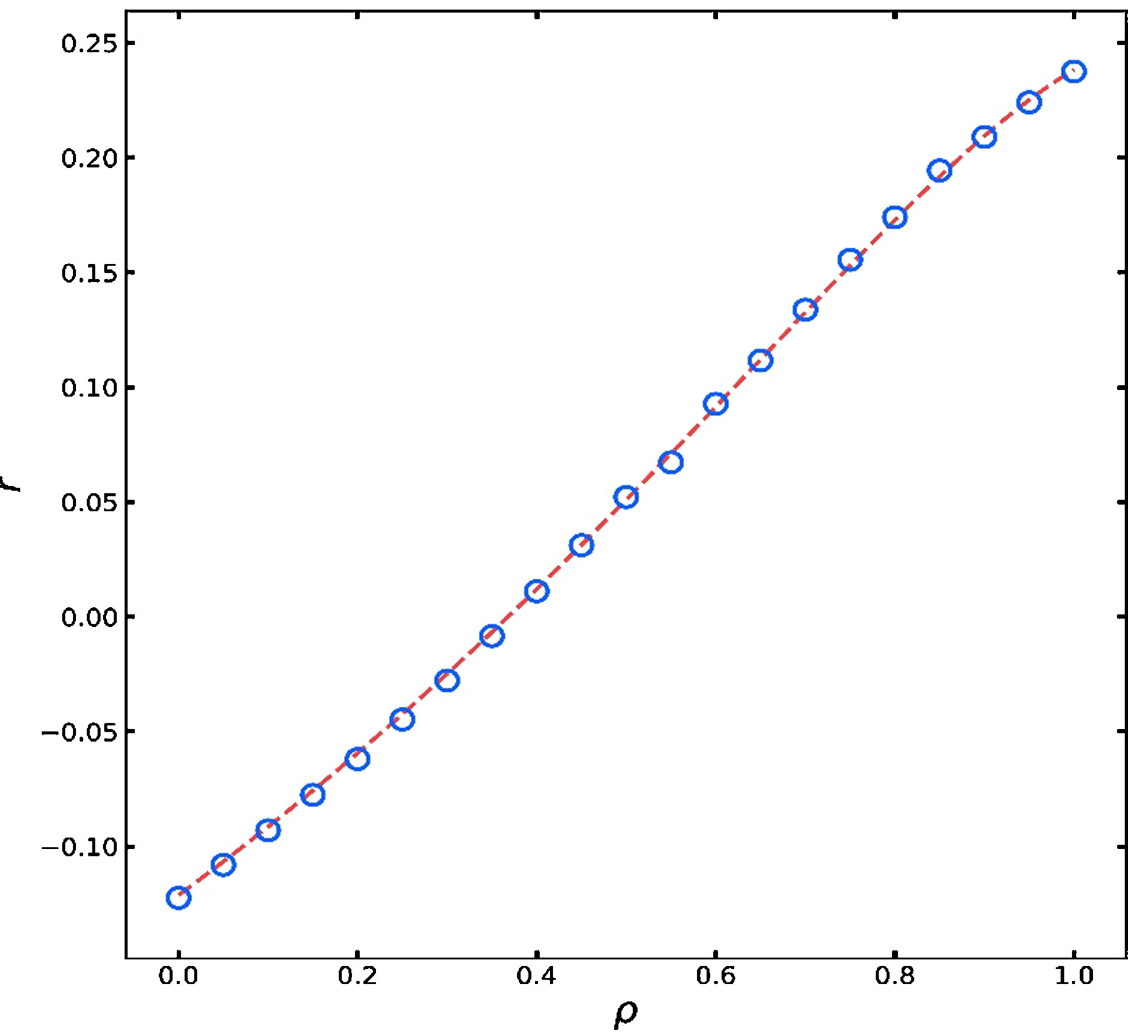 Figure: The correlation between the control parameter and degree assortativity, validated by analytical solutions.
Methodology: The Universal Three-Phase Pattern
By analyzing nine datasets—from LinkedIn-clone Wealink to Wikipedia and high school contact patterns—the authors found three distinct phases:
- Phase I (The Increase): Assortativity rises as early adopters (often similar in status/interest) find each other.
- Phase II (The Decrease): As the network swells, "high-status" nodes start connecting with a broader, more diverse population.
- Phase III (The Plateau): The network reaches a dynamic equilibrium where different-status mixing becomes a stable norm.
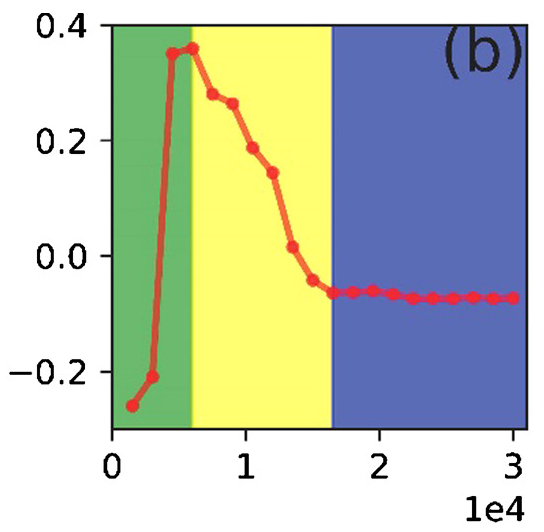 Figure: The consistent "rise-and-fall" signature seen across varying social contexts.
Experiments and "Self-Optimization"
One of the paper's most provocative findings is the role of the power-law exponent . In wealth distributions, typically falls between 1.0 and 2.5. The authors' simulations show that when is in this specific range, the network maximizes its "energy and vitality"—promoting high-efficiency information transmission between different social strata.
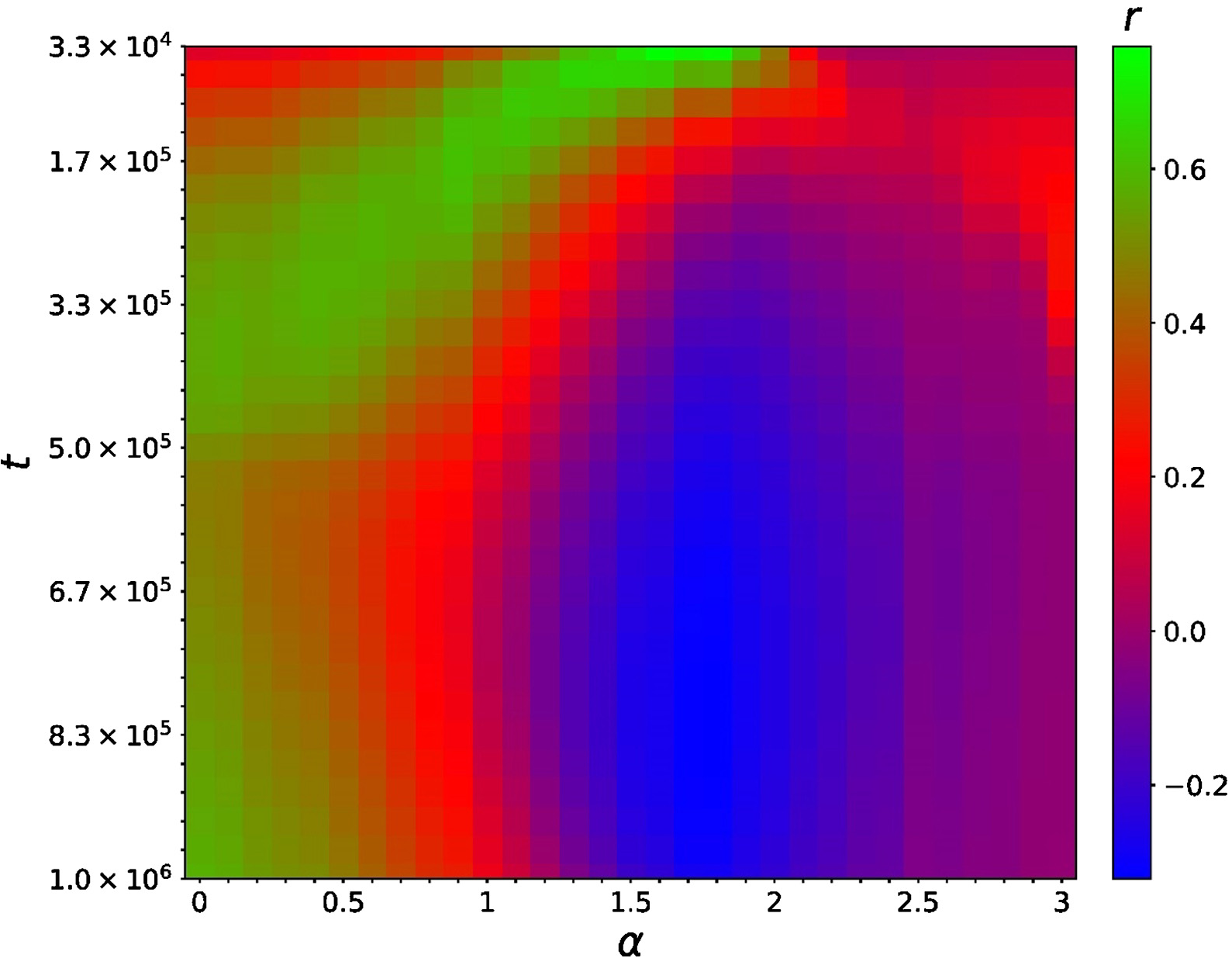 Figure: How the status distribution () governs the range and intensity of network assortativity.
Critical Insight: Why Does This Matter?
The study suggests that a "status gap" isn't just a social byproduct—it’s a driver of network structural health. Without status variance, networks remain neutral and stagnant. With it, networks naturally evolve toward a state that promotes "social climbing" and diverse interactions, which are essential for spreading information beyond echo chambers.
Conclusion
This paper provides the first unified model to explain why social networks look different at age one than they do at age ten. By linking the micro-logic of status-seeking behavior to the macro-pattern of degree correlations, it offers a powerful framework for anyone looking to build, manage, or predict the growth of social platforms.
Future Work: How might algorithmic recommendations (which often force homophily) disrupt this natural "rise-and-fall" pattern and lead to artificial echo chambers?