
Harmonizing the Social Pulse: Semantic Search and Retrieval for Web Archives
Usability Design and Testing of an Interface for Search and Retrieval of Social Web Data
The paper introduces a specialized search and retrieval interface developed within the ARCOMEM project, designed to integrate archived web content with semantic social media data. It focuses on enabling professionals like journalists and analysts to query complex sentiments and entities using a usability-driven design that simplifies multi-layered social web information.
TL;DR
This research tackles the challenge of making sense of the "billions of voices" captured in web archives. By developing a specialized user interface that fuses traditional archived pages with semantic social media analysis (sentiment, role players, and events), the authors provide journalists and analysts a way to query history through the lens of public opinion. Their findings show that for experts, a simple "opinion marker" is often more valuable than the document's title itself.
Background Positioning
In the landscape of Digital Preservation, the ARCOMEM project stands out as a bridge between static web crawling and dynamic social analysis. This paper isn't just about a UI; it’s a usability blueprint for Socially-Aware Digital Archiving, moving the field from "storing pages" to "preserving societal context."
The Problem: The Noise of the Social Web
Archivists and journalists face a "needle in a haystack" problem. When searching a web archive for a topic like the "EU Economic Crisis," they don't just need the articles; they need to know:
- What was the prevailing sentiment?
- Who were the opinion leaders?
- How did the trend evolve over time?
Prior interfaces failed by either dumping raw data or hiding the very social context that makes modern web history unique. The "Cognitive Load" was simply too high for effective retrieval.
Methodology: Designing for Expert Intuition
The researchers didn't just build a search bar; they built a Semantic Interaction Flow. They categorized social data into layers:
- Ranked User Roles: Separating opinion leaders from casual contributors.
- Sentiment Analysis: Classifying content as positive, negative, or neutral.
- Entity Tracking: Linking persons, locations, and events to specific timeframes.
Architecture & Interface Design
The design team utilized high-fidelity mockups to test how users "faceted" their search. Instead of a linear list, the interface allowed users to filter by "Intention" (e.g., "Find articles mentioned positively by people").
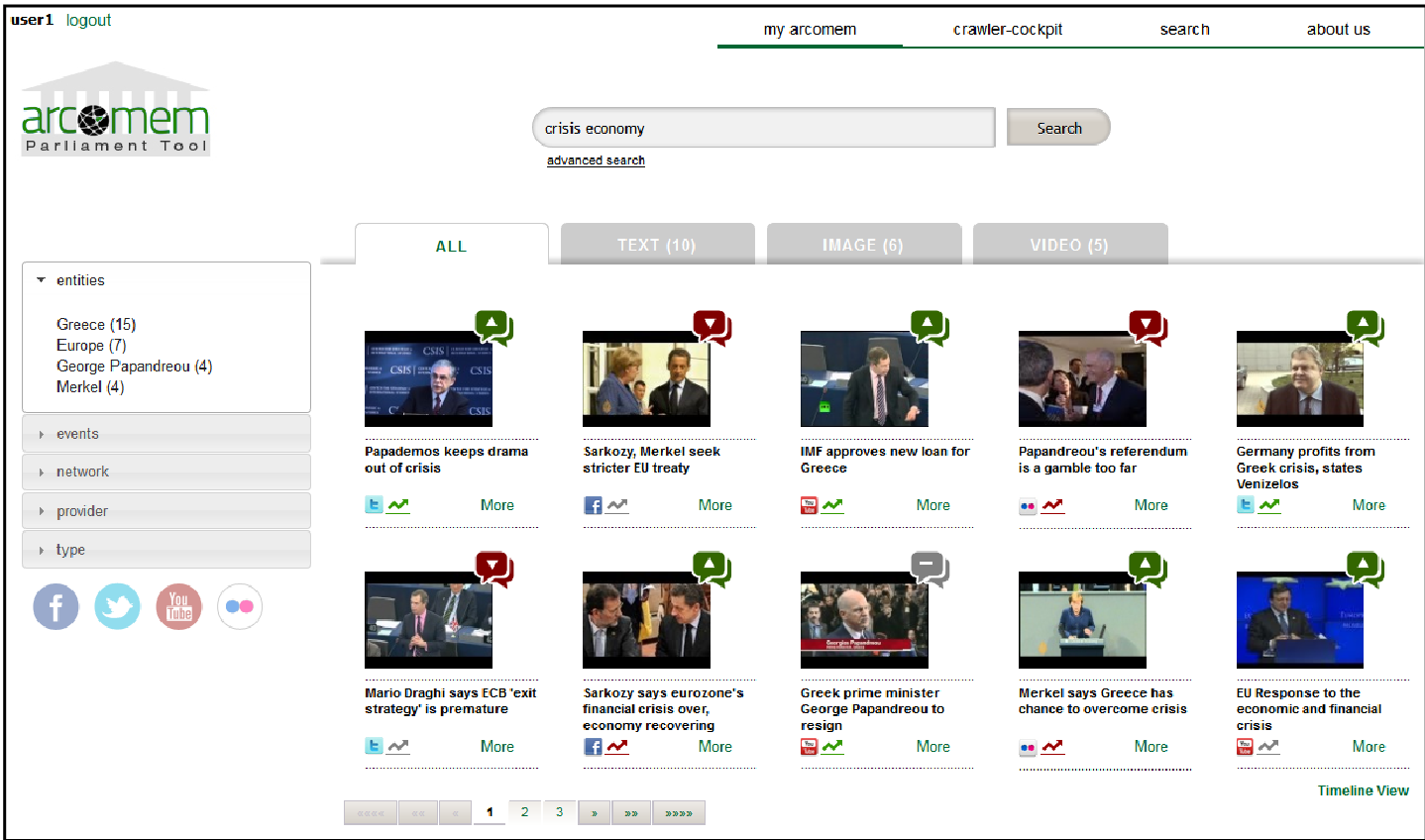 Figure 1: The interface layout highlighting the influential opinion markers at the top right of search results.
Experiments & Key Results: Perception vs. Reality
Through "Think-Aloud" sessions and system logging with 20 experts, two major insights emerged:
- The Power of Visual Cues: Users prioritized the Opinion Marker over the article title when deciding what to click. This suggests that sentiment is a primary "relevance signal" in historical research.
- Activity Distribution: While "Trending" data is flashy, the normalized interaction logs (Fig. 2) showed that users spent significantly more time interacting with Entities and Events.
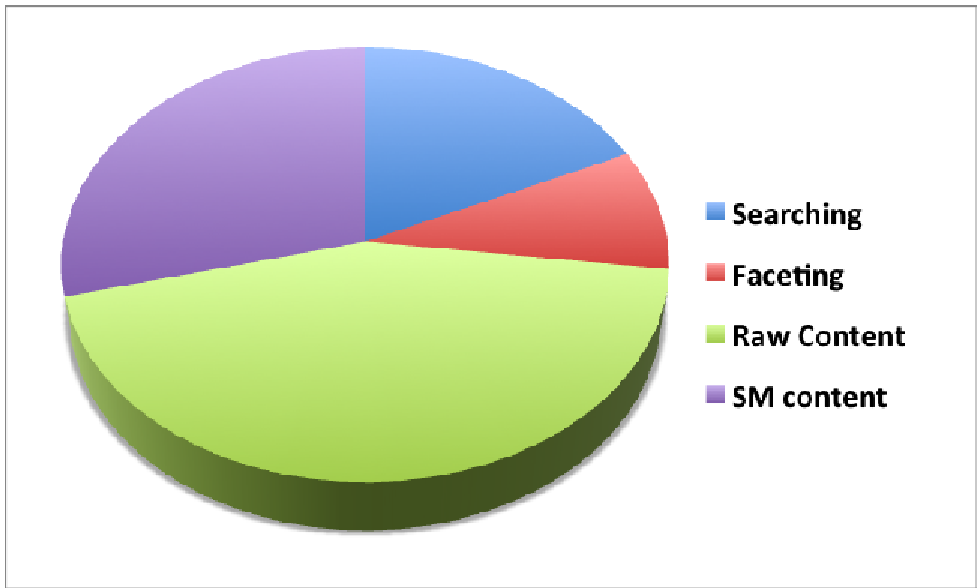 Figure 2: Users spent the bulk of their time on raw content and semantic entities/events.
On a 7-point Likert scale, the importance of semantic info for social media content was rated highly (~5.5), validating that users find integrated social metadata nearly as essential as the primary archive content itself.
Deep Insight & Conclusion
Takeaway
The study proves that semantic metadata is not just "extra info"—it is a navigation tool. For digital archives to be useful to "power users" (journalists, historians), the UI must surface social sentiment and entity roles directly in the search results list to facilitate rapid filtering.
Limitations & Future Work
The study notes that "trending" and "social media source" data were less utilized than expected. This might be due to the specific professional needs of the testers. Future research could explore how these patterns change in non-expert domains, such as education or casual genealogy.
As we move toward 2026, the integration of LLM-based summarization into such interfaces could further lower the barrier to understanding complex social web archives, turning "big data" into "distilled history."