
USDU: Bridging Identity Gaps Across Heterogeneous Social Networks via Integrated Similarity
User anchor link identification based on integrated similarity decision in multiple heterogeneous social networks
This paper introduces the Unsupervised Integrated Similarity Decision (USDU) algorithm to identify user anchor links across multiple heterogeneous social networks. By combining natural attribute similarity (name, location, content) with an improved friend relationship calculation using the KM algorithm, it achieves robust cross-network account matching.
TL;DR
The proliferation of social platforms has left individual digital identities fragmented. This paper presents USDU, an unsupervised algorithm that identifies "Anchor Links"—the hidden threads connecting the same person across different platforms like Twitter and Foursquare. By integrating natural attribute analysis with a sophisticated bipartite matching of "intimate friends," the authors achieve SOTA performance without requiring pre-labeled training datasets.
The Problem: The "Isolated Island" of Digital Identity
Modern users are rarely loyal to a single platform; they share locations on Foursquare, post opinions on Twitter, and network on LinkedIn. However, these accounts exist as isolated islands.
- Existing Limitations: Traditional supervised methods (like PALE) rely heavily on "ground truth" anchor links to train models. In the real world, finding thousands of pre-verified cross-platform pairs is nearly impossible.
- The Complexity of Heterogeneity: Different networks have different data schemas—one might use city-level location, while another uses GPS coordinates.
Methodology: Two Pillars of Identity
The author's core insight is that while a user might change their nickname, their lifestyle patterns (where they go, what they say) and their inner social circle remain remarkably consistent.
1. Multi-Dimensional Attribute Similarity
Instead of relying on a single feature, USDU builds a composite similarity score based on:
- Usernames: Utilizing Jaccard similarity to catch nickname variations.
- Spatio-temporal Footprints: User check-ins are converted into 24-hour frequency vectors (12 intervals of 2 hours), comparing the "rhythm" of a user's life via Cosine similarity.
- Content Semantics: Extracting core keywords using TF-IDF to build interest profiles.
2. The Power of "Intimate Friends" (KM Algorithm)
Not all friends are created equal. The paper argues that a user’s Top-K closest friends are the strongest indicators of identity.
- Intimacy Scoring: Frequency of interaction (mentions, comments, reposts) determines the weight of a friendship.
- KM Algorithm Matching: To compare the social circles of User A (Twitter) and User B (Foursquare), the authors treat it as a maximum weight matching problem in a bipartite graph. This ensures that even if some friends are missing on one platform, the "core group" still aligns.
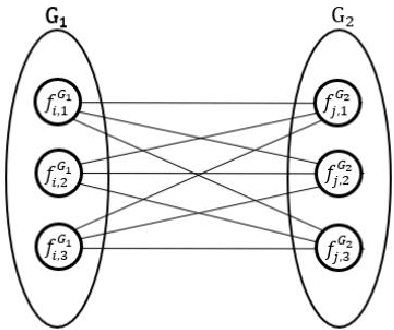 Figure 1: Conceptual visualization of user relationship mapping and the bipartite graph matching approach.
Experimental Performance
Testing against the Twitter-Foursquare dataset, USDU was compared with baselines like PALE, FRUI, and UNICOAT.
- Precision and Accuracy: USDU showed a significant lead in precision. It is much better at ensuring that when it identifies a link, it is actually correct (reducing False Positives).
- The "Ratio" Challenge: The authors tested different ratios of unknown to known users. Even as the "noise" (unknown users) increased, USDU's F1-score remained more stable than supervised counterparts which degrade when the training distribution shifts.
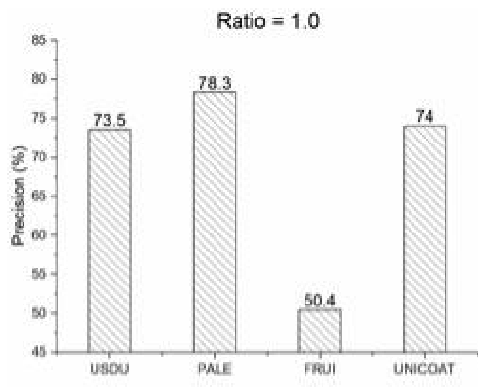 Figure 2: Performance metrics across different user ratios, showing USDU's resilience in unsupervised settings.
Critical Analysis & Takeaways
Strengths:
- Unsupervised Freedom: By removing the need for prior labels, this algorithm is ready for "cold-start" deployment in new social networks.
- Physical Intuition: Using spatio-temporal rhythms (2-hour windows) is a clever way to capture human habits rather than just raw GPS points.
Limitations:
- Top-K Sensitivity: The choice of (number of close friends) is currently static. In reality, a "power user" might have 50 intimate friends while a "lurker" has 2.
- Recall Dip: As shown in the results, the recall rate drops significantly when the search space expands. Future work could benefit from an iterative "bootstrapping" approach to expand the identified set.
Conclusion: USDU proves that the "Integrated Similarity" approach—calculating the intersection of what we say, where we go, and who we love—is a powerful tool for de-anonymizing and linking the modern digital self.