
Mining the BBS: Decoding User Behavior and Opinions in Early Social Networks
Analysis of the user behavior and opinion classification based on the BBS q
The paper presents a comprehensive framework for mining BBS (Bulletin Board System) data, focusing on user behavior patterns and opinion classification. It utilizes the Apriori algorithm for mining frequent access patterns and the Associative Rule-based Classifier (ARC-BC) to categorize user sentiments into support, oppose, and neutral classes.
TL;DR
This research establishes a dual-track data mining framework for Bulletin Board Systems (BBS). By combining temporal Frequent-set mining (using Apriori) with Associative Rule-based Text Classification (ARC-BC), the authors successfully identified distinct user archetypes and classified informal forum sentiments into Support, Oppose, and Neutral categories with high practical accuracy.
Background: Tuning into the Digital Town Square
Long before the era of modern social media, BBS forums were the primary channels for public opinion. However, analyzing this data was notoriously difficult. Unlike structured databases or formal news articles, BBS data is:
- Inconsistent: Users log on at random intervals.
- Informal: Language is oral, filled with abbreviations (e.g., "re", "sp") and emoticons.
- Dynamic: Social roles and influence change rapidly.
Problem & Motivation: The Failure of Standard Models
The authors noted that standard NLP preprocessing—specifically the removal of "stop words" like "I", "not", or "but"—actually destroys the sentiment signal in forum posts. Furthermore, raw timestamps (e.g., 2006-12-30 18:01) are too granular for mining. The research insight was simple: Generalize the time to find the routine, and preserve the "noise" to find the emotion.
Methodology: The Core Framework
1. User Behavior Mining (Frequent-set Analysis)
The system generalizes raw access times into semantic buckets like "Morning," "Noon," and "Night." By applying the Apriori Algorithm, it identifies frequent itemsets of on/off-line behaviors.

2. Opinion Mining (ARC-BC Algorithm)
To classify sentiments, the authors utilized the ARC-BC (Associative Rule-based Classifier). Unlike Blackbox models, this approach generates human-readable rules (e.g., IF {“re”, “sp”} THEN category = Support).
A key innovation here was the special processing of BBS language:
- Non-stop word retention: Keeping auxiliary words that indicate mood.
- BBS Glossary: Mapping "zan" to Support and "ft" (faint) to Oppose.
Experiments & Results: Real-World Insights
Behavior Archetypes
The study identified two fascinating user patterns:
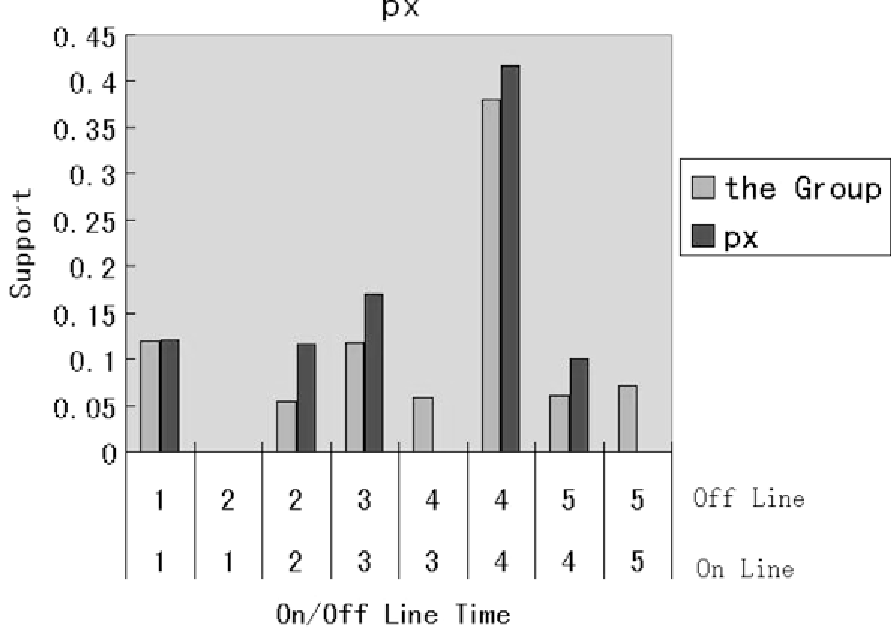
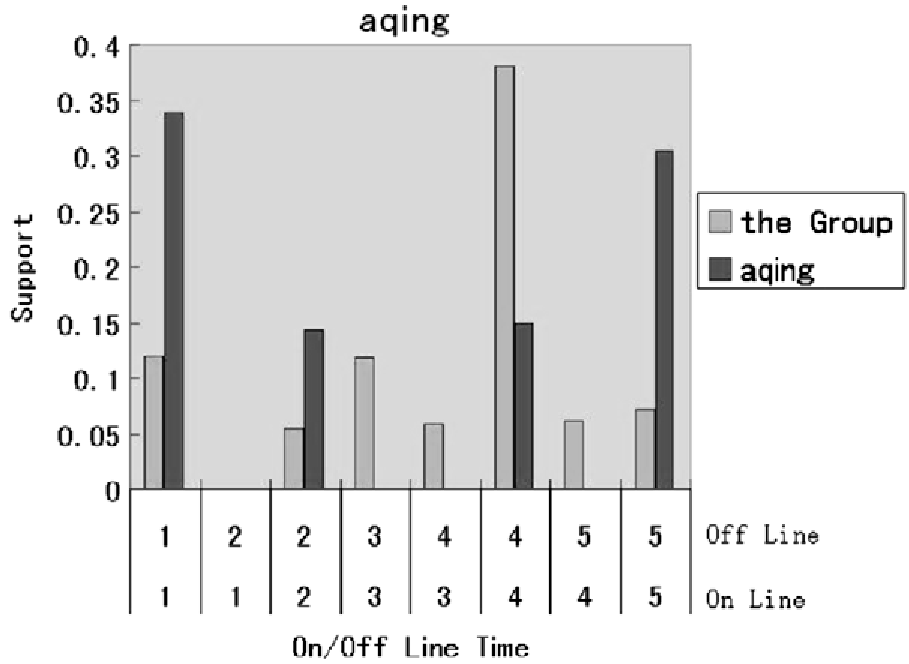
- The "Student" Pattern: High similarity with the group average, peaking during "Night" and "Afternoon" periods.
- The "Expat" Pattern: Users (likely in the US) whose peak activity occurs during China's "Noon" or "Wee hours," reflecting time-zone offsets.
Sentiment Performance
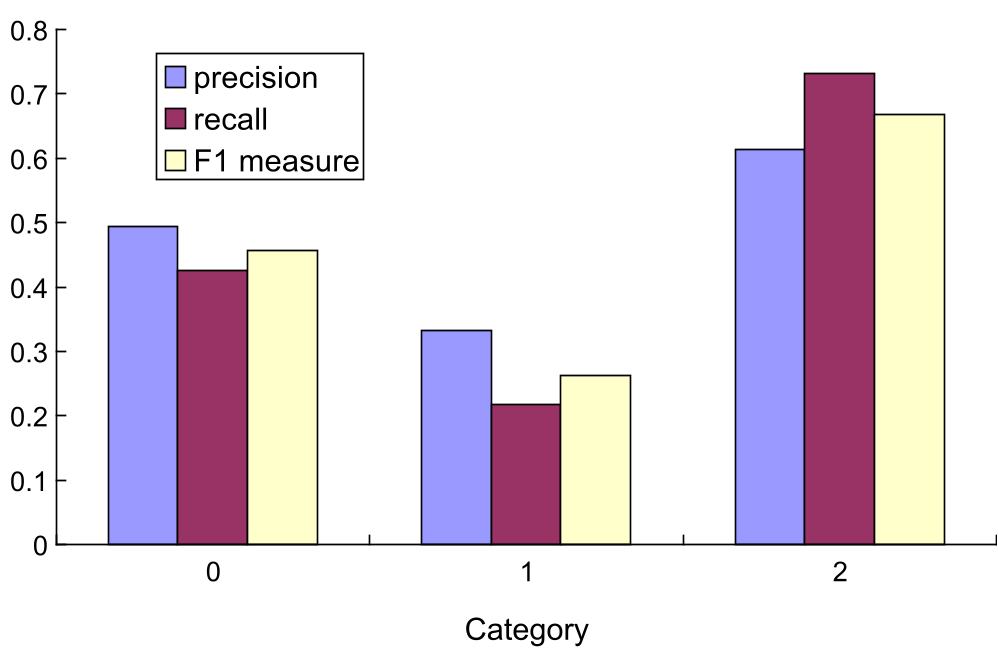
Tested on over 6,000 posts from newsmth.net, the ARC-BC algorithm proved robust. While the Recall for "Oppose" was lower (due to a polite culture where users express disagreement less frequently), the Precision for "Support" and "Neutral" remained high.
Critical Analysis & Conclusion
Takeaway
The paper proves that data mining isn't just about the algorithm; it's about data representation. By mapping time to human activities and keeping the "expressive noise" in text, the authors turned messy forum logs into actionable social insights.
Limitations
The primary limitation identified was the lack of a standardized BBS dataset. The ground truth was labeled by the authors rather than linguistic experts, which likely dampened the F1-scores compared to standard benchmarks like 20newsgroup.
Future Outlook
This work lays the groundwork for Online User Colony Recognition—clustering users not just by what they say, but when and how they say it. In today's context, these techniques are the direct ancestors of modern bot detection and digital forensics.