
Decoding the Silver Generation: Data-Driven User Modeling for Personalized Elderly Care
An Approach of User Modeling for Assisting Provided Service to Older Adults
This paper proposes a data-driven user modeling framework to provide personalized assistive services for older adults in Japan's super-aged society. Using questionnaire-based data mining with EM clustering and classification algorithms, the study identifies distinct lifestyle patterns to tailor robotic and digital healthcare interventions.
TL;DR
With Japan entering a "super-aged" society phase, this study introduces a robust framework for modeling the lifestyles of older adults using data mining. By analyzing daily "life rhythms" through EM clustering and classification, the researchers have created a way for assistive robots and systems to understand who their users are—whether they are busy homemakers or socially active retirees—allowing for services that assist without intruding.
Context: Beyond Generic Assistance
The global population aged 60+ is projected to hit 2.1 billion by 2050. In Japan, where the aging rate exceeds 28%, the shortage of labor in healthcare is no longer a future threat—it is a current reality. However, the problem isn't just a lack of robots; it's that current robots are often "blind" to the user's personality and schedule. To provide truly effective service, a system must first build a User Model.
Problem & Motivation: The "One-Size-Fits-All" Trap
Most health-tracking apps (like those on iPhones or Apple Watches) focus on physical metrics—steps, heart rate, and movement. While useful, they lack the contextual intelligence to know why someone is moving. A 70-year-old worker has vastly different needs than a 70-year-old retiree living with grandchildren. The authors argue that by mining "Life Rhythm" data (what people do between 5 AM and 11 PM), they can find "hidden knowledge" that makes technology a seamless part of life rather than a disturbance.
Methodology: Clustering Life Rhythms
The core of the research lies in transitioning from raw questionnaire data to actionable user clusters.
1. Data Collection
The team collected data from 592 participants (aged 60+) covering 71 items, including background (income, marriage, job) and daily activities (cleaning, exercise, watching news) across six distinct time blocks.
2. The EM Clustering Approach
Using the Expectation-Maximization (EM) algorithm, the researchers segmented the population based on two dimensions:
- Active Time: Focused on total duration spent on housework vs. entertainment.
- Time Assignment: Focused on when specific activities happen (the timetable).
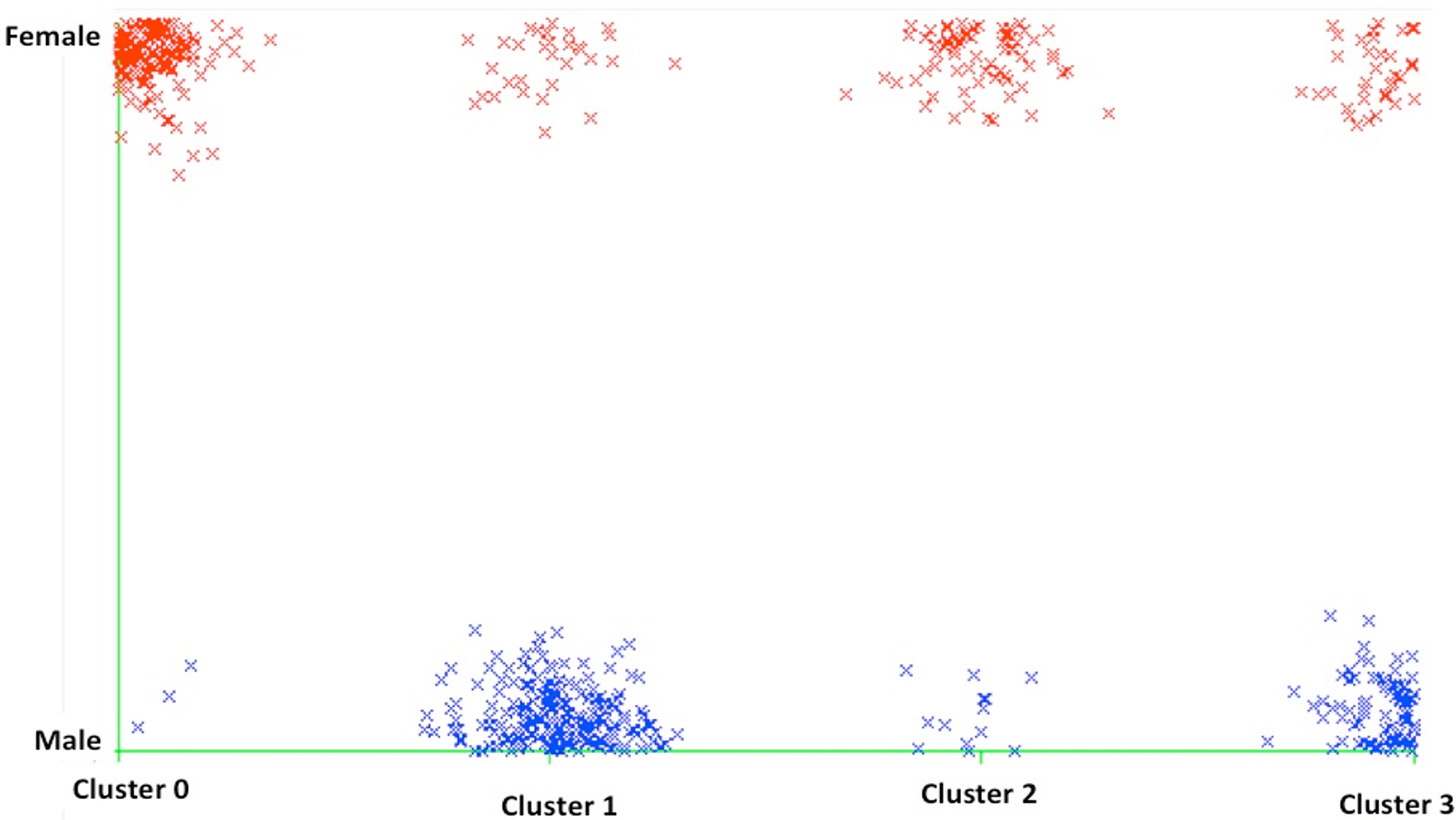 Fig 1: Clustering results based on the proportion of time spent on different activities.
3. Discriminative Modeling
Once the clusters were defined, the authors tested which machine learning model could best "sort" a new user into the correct group. They compared:
- Bayes Network Learning (K2 Algorithm): Achieved 97.97% accuracy using 4 parent nodes.
- Simple Logistic Regression: Achieved 100% accuracy on the training set, proving highly effective for nominal variables.
Results & Experimental Insights
The study revealed fascinating archetypes within the elderly population:
- The Busy Homemaker (Cluster 0): Spends 52% of the day on housework, wakes up early, and watches news at night.
- The Wealthy Retiree (Cluster 2): Spends 59% of the day on entertainment and personal interests, mostly male.
- The Senior Worker (Cluster 3): Spends 40% of the day working, with a very simple lifestyle rhythm.
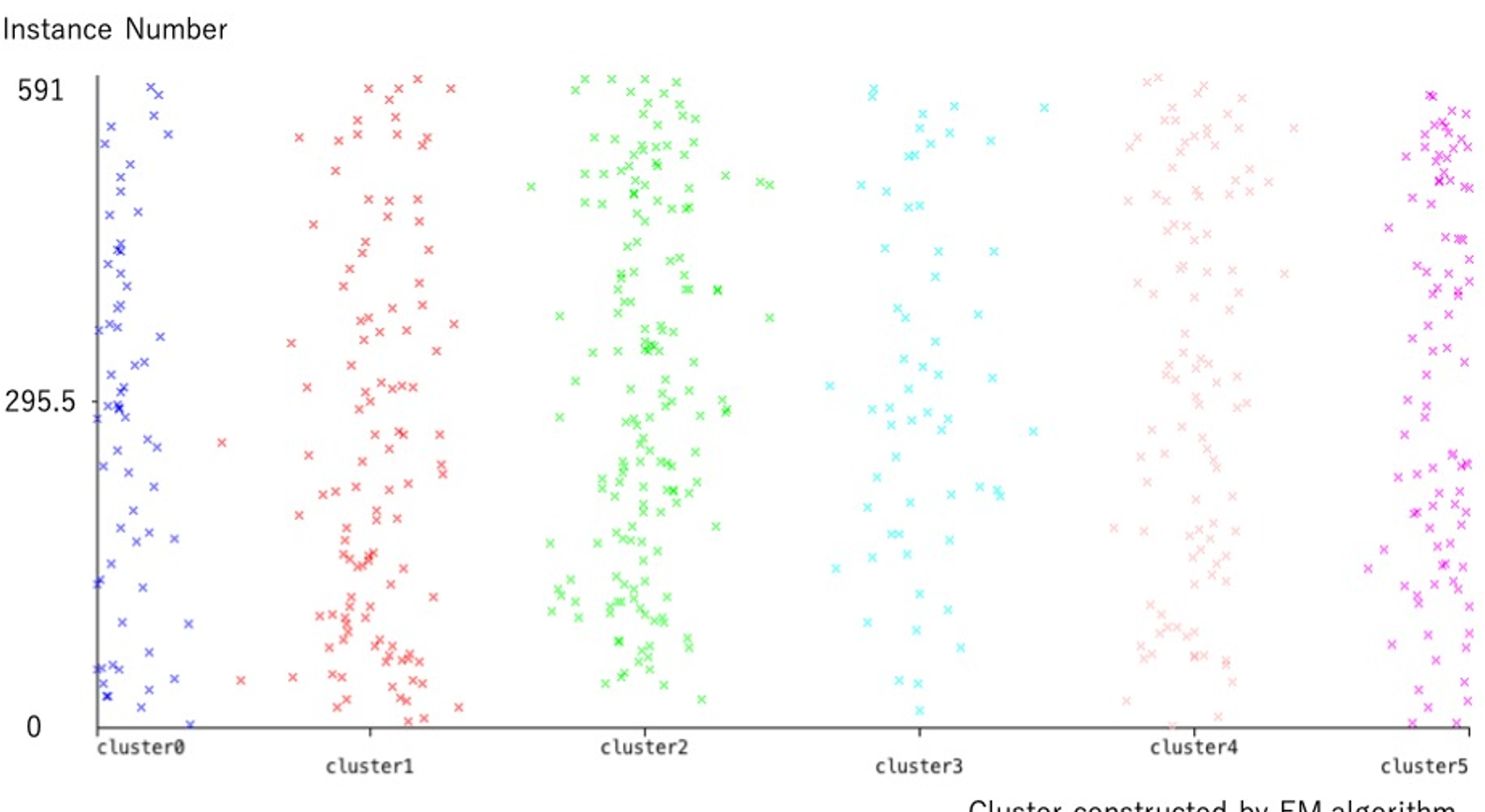 Fig 2: Visualization of the 6-cluster model based on time-of-day assignments.
The researchers found that family structure is a massive driver of routine. For example, elderly individuals living with children (as seen in the Housewives of Cluster 3 vs Cluster 6) had significantly more "various" daytime activities, likely due to the multi-generational household demands.
Critical Analysis & Future Outlook
Takeaway
This research proves that "Life Rhythm" is a viable proxy for user needs. Instead of asking a user "What do you want?", a system can infer needs (e.g., suggesting specific exercises or social events) based on which cluster the user falls into.
Limitations
- Subjectivity: The data relies on self-reported questionnaires, which can be prone to recall bias.
- Career Prediction: While the classification accuracy was high, the career prediction accuracy (identifying what they used to do for a living based only on their current rhythm) was 68%, suggesting that retirement significantly blurs former professional identities.
Future Work
The authors aim to integrate 3D accelerator sensors to automate data collection, removing the need for questionnaires and moving toward real-time, "invisible" user modeling. This is a critical step toward the next generation of assistive robots that can truly "understand" the rhythm of the Japanese home.