
Beyond the Glass Case: Modeling User Experience for Digital Art Museums
User Modeling on Social Media for Art Museums and Galleries
This paper investigates the factors influencing user engagement with museum-specific Facebook applications using the Technology Acceptance Model (TAM). By analyzing 222 visitors of the Southeast Asian Ceramics Museum, the study identifies "Perceived Usefulness" as the primary driver for expanding digital museum experiences across six dimensions, including learning and sociability.
TL;DR
Museums are no longer just physical rooms; they are digital ecosystems. This research leverages the Technology Acceptance Model (TAM) to prove that for museum Facebook applications, the "Usefulness" of content—such as expert-curated virtual galleries—is the decisive factor in expanding visitor experiences. In short: if the content is rich enough, users will overcome technical hurdles to engage with it.
The Evolution of the Visitor Context
In the digital age, a museum visit is defined by more than just walking through a hall. As cited in the study, the Falk and Dierking framework suggests that experiences are born at the intersection of Personal, Social, and Physical contexts. The challenge for modern galleries like the Southeast Asian Ceramics Museum is how to replicate this multi-dimensional experience through the lens of social media.
The researchers identified that while websites provide general info, they often fail to provide the "Interactive Social Context" necessary for a lasting impression.
Methodology: The TAM Framework for Art
The authors focused on two core pillars of User Modeling:
- Perceived Usefulness (PU): Does this app actually make me smarter about ceramics?
- Perceived Ease of Use (PEOU): Can I navigate the virtual gallery without a manual?
To test this, they built a bespoke Facebook application featuring a virtual souvenir shop and an interactive gallery where objects can be viewed from six different angles (top, bottom, and four sides).
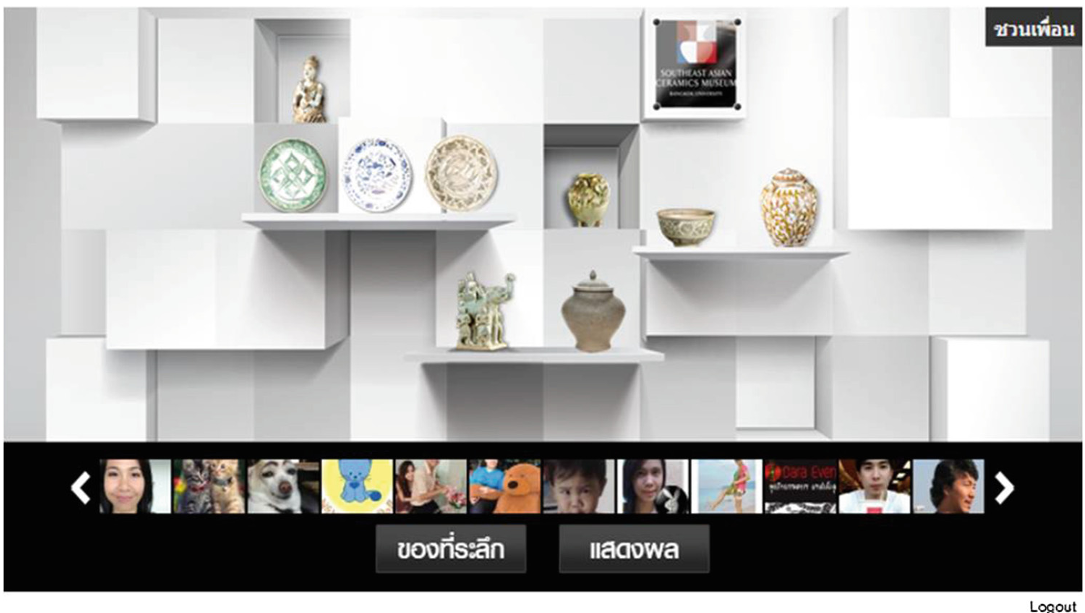 Fig 1: The Facebook application of Southeast Asian Ceramics Museum, providing a digital social space for artifacts.
Decoding the Results: Utility is King
The study surveyed 222 respondents, many of whom were professionals in the arts and culture sector. The statistical analysis yielded a striking conclusion: The degree to which users found the information useful was the primary predictor of their behavioral intention.
Interestingly, the regression model showed that for "Learning Experience" and "Celebrative Experience," Perceived Ease of Use had almost zero impact compared to Perceived Usefulness. This implies that for highly motivated learners and art enthusiasts, the "Value of Knowledge" far outweighs the "Convenience of the App."
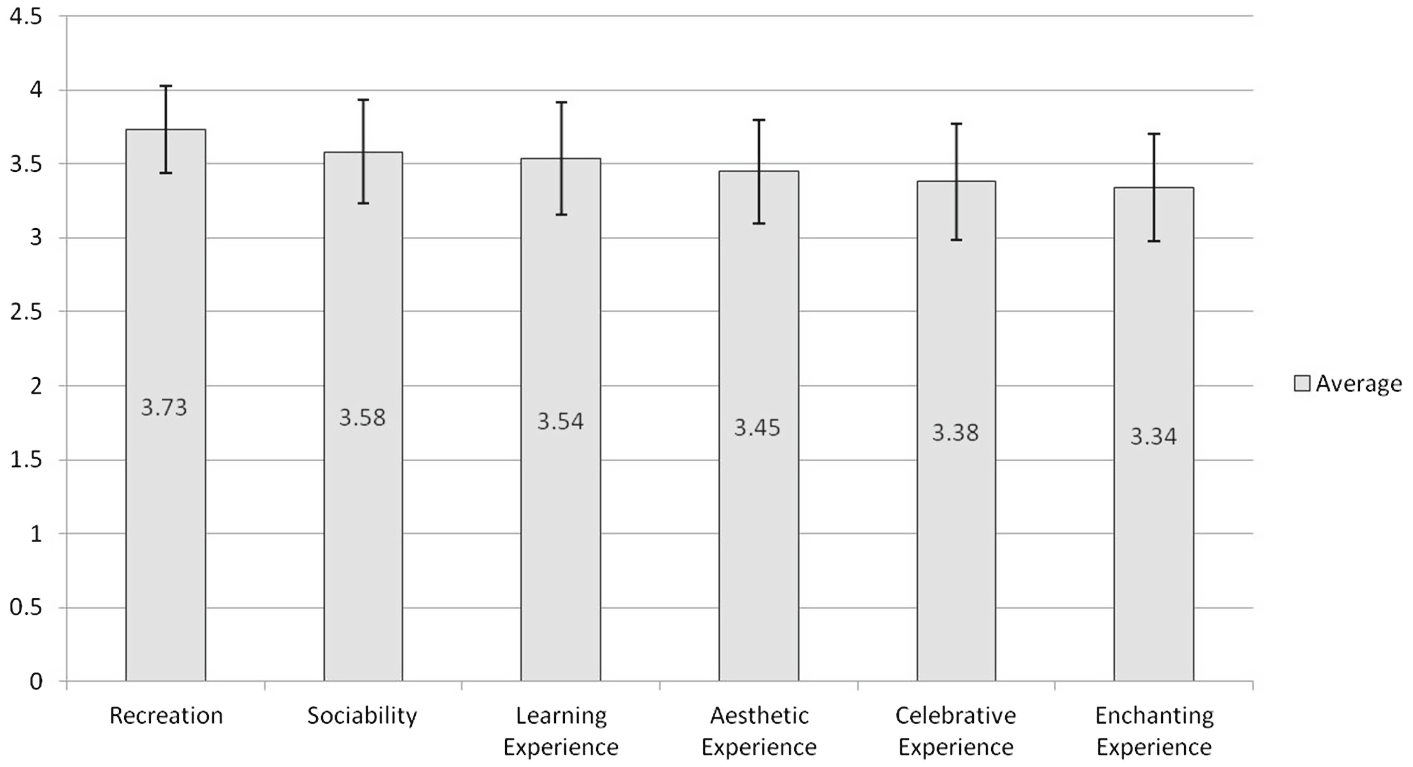 Fig 2: Visitor expectations across six experience types. Aesthetics and Learning clearly dominate user priorities.
The User Model Equation:
Critical Insights & Takeaways
- Content vs. Interface: While a smooth UI is important, this research highlights that for "Special Interest Groups," the depth of descriptions and the quality of visualizations (like the 6-view zoomable images) are the real "hooks."
- Social Context: By using Facebook, the museum successfully mapped the "Sociability" aspect of physical visits onto a digital plane, allowing for links between objects and visitor comments.
- Limitations: The study focuses heavily on Facebook. In 2026, the landscape of social media has shifted towards short-form video and immersive AR. Future research should look at how these TAM factors apply to more immersive, sensory-heavy platforms like VisionOS or TikTok-based education.
Conclusion
This paper serves as a roadmap for cultural institutions. To expand the "Visitor Experience," museums should not just build an app for the sake of technology; they must ensure the app translates the curative expertise of the museum into a useful, digitally accessible format that honors both the aesthetic and educational desires of their audience.