
Per-C PMA: Bridging Human Perception and Mobile Power Efficiency Through Fuzzy Logic
User-Satisfaction-Aware Power Management in Mobile Devices Based on Perceptual Computing
This paper introduces Per-C PMA, a novel user-satisfaction-aware power management approach for mobile devices based on Perceptual Computing. By processing linguistic feedback via Computing With Words (CWW) and Interval Type-2 Fuzzy Sets (IT2 FSs), the system optimizes processor frequency to achieve significant energy savings while maintaining high user satisfaction.
TL;DR
Researchers have developed Per-C PMA, the first hardware implementation of Perceptual Computing for mobile energy management. By letting users describe their experience in words (e.g., "Medium Battery Life," "Fairly Interesting Application"), the system uses Interval Type-2 Fuzzy Sets to find the "sweet spot" of processor frequency. The result? A 42% reduction in power compared to standard Linux governors with a significant boost in user happiness.
Problem & Motivation: The Subjective Battery Paradox
Battery life is inherently subjective. A gamer might find a 4000mAh battery "disappointing," while a light office user finds it "excellent." Traditional power management schemes like ON-DEMAND are "blind"—they scale processor frequency based purely on CPU load percentages. This leads to energy waste or performance lag because the system doesn't know if the user is actually satisfied.
Later attempts like HAPPE introduced human feedback, but they forced users to manually adjust frequencies using keys, which is non-intuitive. Furthermore, HAPPE failed to account for the fact that "words mean different things to different people."
Methodology: Computing With Words (CWW)
The core innovation is the Perceptual Computer (Per-C), which translates human "vagueness" into precise mathematical control.
1. The Perceptual Pipeline
The system follows a three-stage process:
- Encoder: Converts 20 linguistic terms into Footprints of Uncertainty (FOU) using Interval Type-2 Fuzzy Sets (IT2 FSs). This captures the range of meaning for words like "Very Fast" across different users.
- CWW Engine: Aggregates feedback from four criteria (Battery, Interest, Time, Performance) using a Linguistic Weighted Average (LWA).
- Decoder: Ranks the available processor frequencies (e.g., 1.2GHz to 2.53GHz) based on the "Centroid" of the fuzzy sets, selecting the one that maximizes satisfaction while minimizing power.
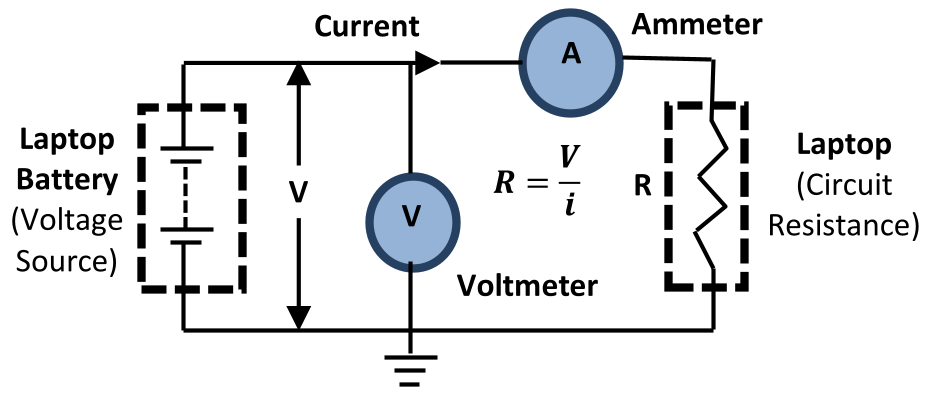 Fig 1: The Perceptual Computer (Per-C) components: Encoder, CWW Engine, and Decoder.
2. Capturing Uncertainty
Unlike traditional "crisp" logic, IT2 FSs allow the system to model the overlap in human perception. If a user says performance is "Moderate," the system understands the underlying uncertainty interval.
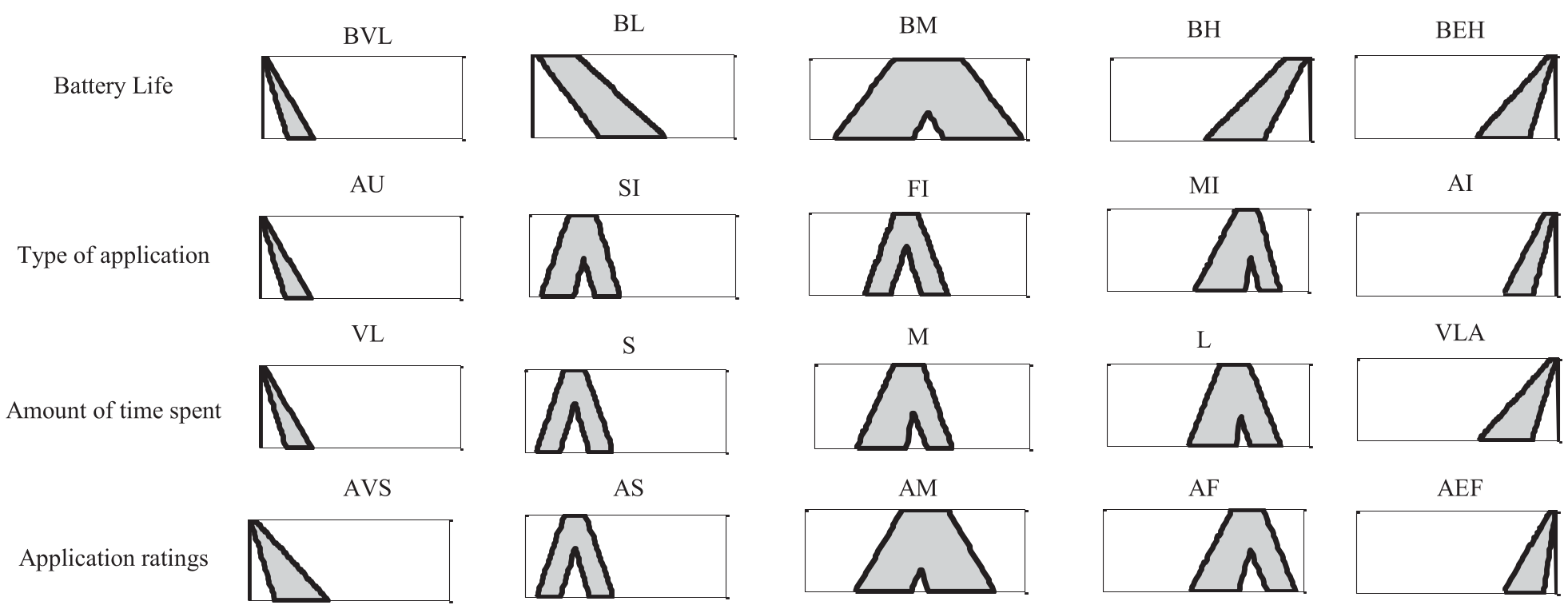 Fig 2: The Footprint of Uncertainty (FOU) for various linguistic terms, capturing the diversity in user perception.
Experiments & Results: Gaming Under Control
The authors tested Per-C PMA on an Ubuntu-based laptop using high-intensity 3D games (Left 4 Dead and Amnesia). They measured actual physical power drain using an INA 169 sensor.
Key Findings:
- Power Efficiency: Per-C PMA saved 42.26% power compared to the default ON-DEMAND governor. It also outperformed the previous human-driven HAPPE by 10.84%.
- User Satisfaction: Satisfaction ratings were roughly 10-16% higher than competing methods.
- Consistency: Statistical analysis showed that Per-C PMA had a much lower standard deviation in satisfaction, meaning it consistently "got it right" for almost all users.
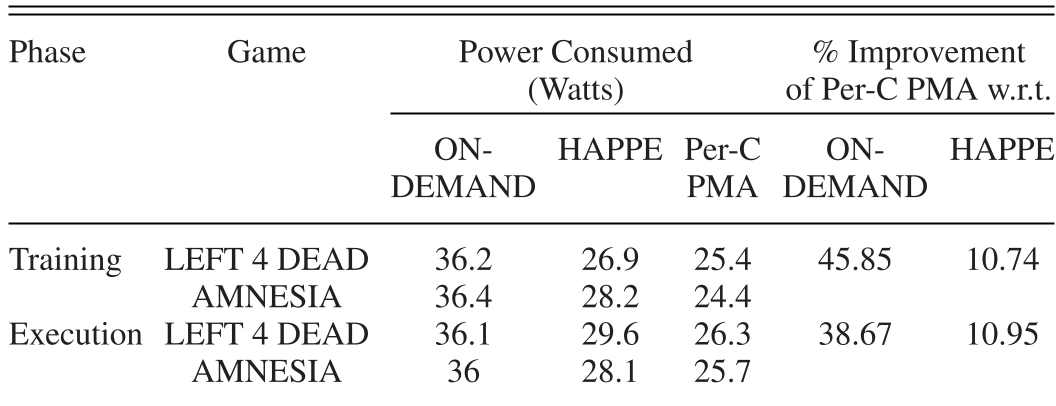 Table 1: Power consumption and improvement statistics highlighting Per-C PMA's lead.
Critical Analysis & Conclusion
Per-C PMA proves that Computing With Words is not just a theoretical framework but a viable tool for hardware optimization. By treating the user as a sophisticated sensor, the system skips the "guesswork" of load-based algorithms.
Takeaway: The future of mobile UI isn't just better graphics, but "satisfaction-aware" backends that listen to user preferences to stretch battery life.
Limitations: The current training phase requires users to play at multiple fixed frequencies, which might be tedious for a casual consumer. Future work should focus on online learning where the system learns the user's "fuzzy vocabulary" silently during normal use.
The implementation is available as open-source scripts for Ubuntu, allowing researchers to explore the intersection of Human-Computer Interaction and Low-Power Design.