
Bridging the Spiritual Distance: Tech-Interventions for the Fragmented Chinese Family
User study on family communication in China
This paper presents an ethnographic study of family communication in mainland China, examining 27 rural and urban families to identify cultural and structural shifts. It proposes two novel service concepts—the "Emotional Poster" and "Clan-based Learning Community"—to bridge the communication gap caused by massive rural-to-urban migration.
TL;DR
As China underwent a seismic economic shift, the traditional family unit fractured. This paper investigates the communication barriers between rural "left-behind" families and urban "4-2-1" structures. By moving beyond simple messaging, the authors propose ambient, community-based technologies—like the Emotional Poster—to restore the emotional intimacy lost to geographic distance.
Problem & Motivation: The "38-61-99" Phenomenon
In modern China, the family structure is defined by numbers. In rural areas, it is "38-61-99": the women (March 8th), the children (June 1st), and the elderly (September 9th). These are the populations left behind as the male labor force migrates to cities.
The authors identified a critical "Insight": Geographic distance is enlarging spiritual distance. While mobile phones exist, they are used for functional coordination (e.g., "Did you send the money?") rather than emotional support. In urban areas, the "4-2-1" inverted pyramid creates a different pressure—over-reliance on children and a "generation gap" fueled by Western culture and Internet access.
Methodology: Understanding the "Acquaintance Society"
To capture these nuances, the researchers spent time in 27 households across Beijing, Guangzhou, and rural provinces. They used Grounded Theory to ensure their designs were rooted in actual social interactions rather than hypothetical needs. They contrasted two distinct environments:
- The Village (Acquaintance Society): Where reputation and "face" are paramount.
- The City (Stranger Society): Where privacy and professional "busy-ness" create barriers to intimacy.
The Core Concept: Designing for Collective Emotion
The paper moves beyond the "one-to-one" chat model. Instead, it proposes interventions that leverage the community:
1. The Emotional Poster (EP)
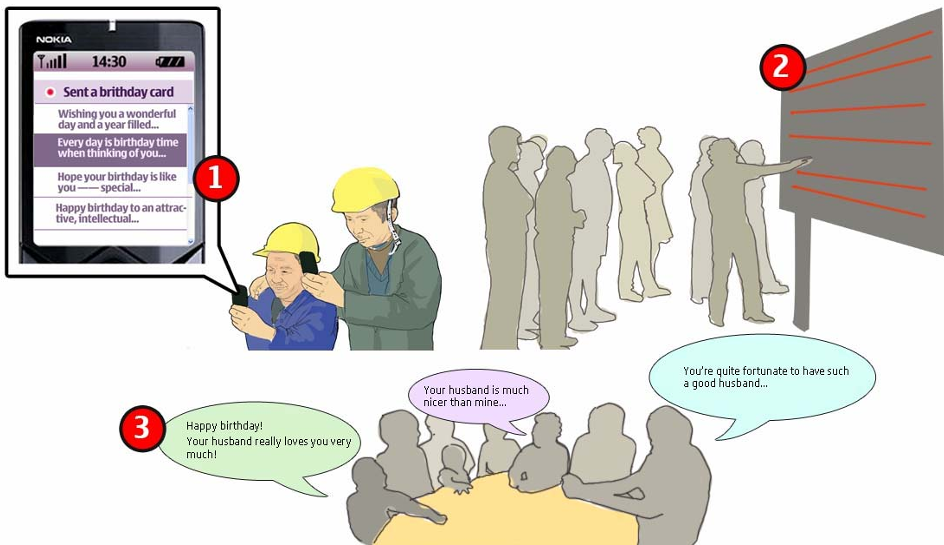
Designed for rural villages, this acts as a multimedia bridge. A migrant worker can send a blessing or a photo to a physical/digital "poster" in the village square.
- Why it works: It turns a private emotional act into a social one. When the village talks about a husband’s message to his wife, the "social interaction" reinforces the marital bond and provides the wife with "face" and local support.
2. Clan-based Learning Community
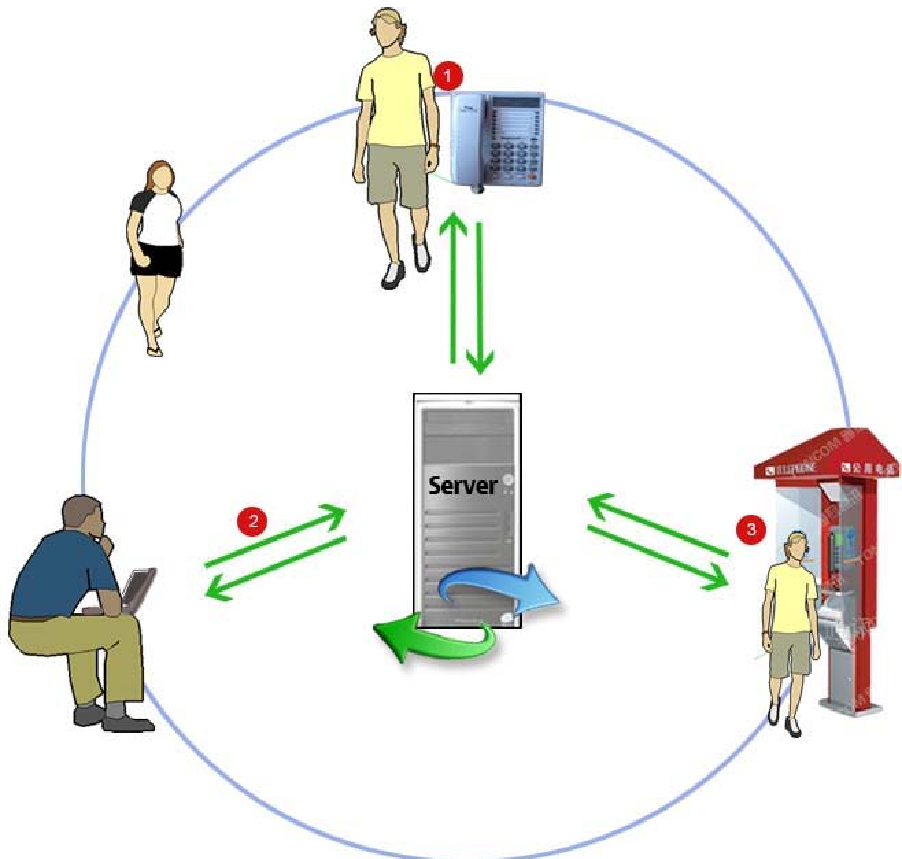
Addressing the rural education crisis, this system connects parents, distant relatives, and urban volunteers.
- The Intuition: Rural parents often feel unqualified to help with homework. By creating a system where questions asked via a simple landline can be answered via PC by a distant uncle or a volunteer, the system rebuilds the "Village Clan" as a pedagogical unit.
Experiments & Results: The "Convenience" Paradox
A fascinating finding from the interviews was that more technology does not equal more happiness.
- Urban Friction: Many couples reported that whereas they once cherished long letters, they now find SMS cold and ephemeral. The "immediate expectation" of mobile phones actually leads to more quarrels (e.g., "Why didn't you answer my call?").
- Rural Isolation: For the elderly, the breakdown of Filial Piety is a psychological trauma. Technology is currently failing to replace the physical presence of children, leading to "spiritual loneliness."
Critical Analysis & Conclusion
Takeaway
The paper successfully argues that family communication is not a subset of social communication. It requires a delicate balance between total transparency and individual privacy.
Limitations
The proposed solutions (like the Emotional Poster) rely heavily on "Village Representatives" or literacy levels that may still be barriers. Additionally, the study was conducted in a specific era of China's transformation; today’s ubiquitous use of WeChat might change the implementation, though the underlying emotional hunger likely remains.
Future Outlook
This work paves the way for Ambient Intelligence in the home—devices that don't require active "texting" but provide a passive sense of the other person's wellbeing, potentially solving the problem of "not knowing what to say" on a long-distance call.