
Beyond the Login: Why Light Facebook Use Might Be Worse Than None at All
Users and Nonusers: Interactions between Levels of Facebook Adoption and Social Capital
This study investigates the demographic and cognitive factors influencing Facebook adoption and the resulting social capital outcomes using a survey of university staff (N=614). It categorizes participants into non-users, light users, and heavy users, revealing that adoption is not a binary guarantee of social benefits.
TL;DR
In the mid-2010s, the academic consensus often leaned toward "more connection equals more social capital." This seminal paper by Lampe, Vitak, and Ellison challenges that notion. By comparing non-users, light users, and power users, the authors find that non-users often fare better socially than light users, and that concerns like privacy and "context collapse" are legitimate barriers that traditional adoption models (like TAM) often overlook.
Background: The Non-User Paradox
By 2011, while 65% of American adults were on SNSs, a significant 35% remained "unplugged." Traditionally, this was attributed to a lack of access or skills. However, this study targets a population with full internet access—university staff—to ask: When access isn't the problem, why do people still say no?
The "Why" of Non-Adoption: Motivation and Risk
Through qualitative analysis of open-ended survey responses, the researchers identified five primary inhibitors:
- Time Constraints: The "time-suck" factor.
- Channel Effects: A preference for high-fidelity, face-to-face (FtF) interactions.
- Privacy: Fears of being "sold" as a product.
- Context Collapse: The difficulty of managing professional and personal personas in one feed.
- Lack of Interest: A fundamental failure to see value in "sharing minutiae."
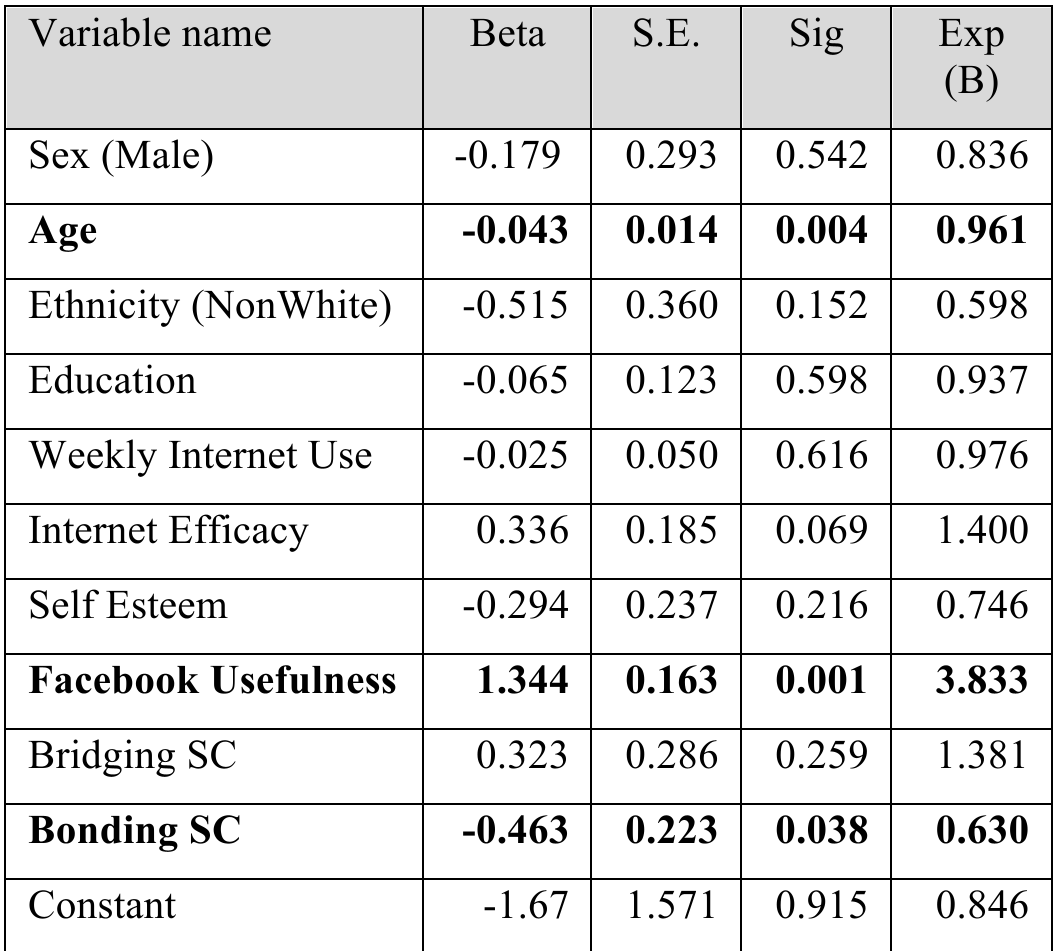
Notably, the study found that Bonding Social Capital (close-knit support) was a negative predictor of membership. People who already felt socially secure in their offline circles felt less "need" to join Facebook.
Methodology: High-Intensity vs. Low-Intensity Use
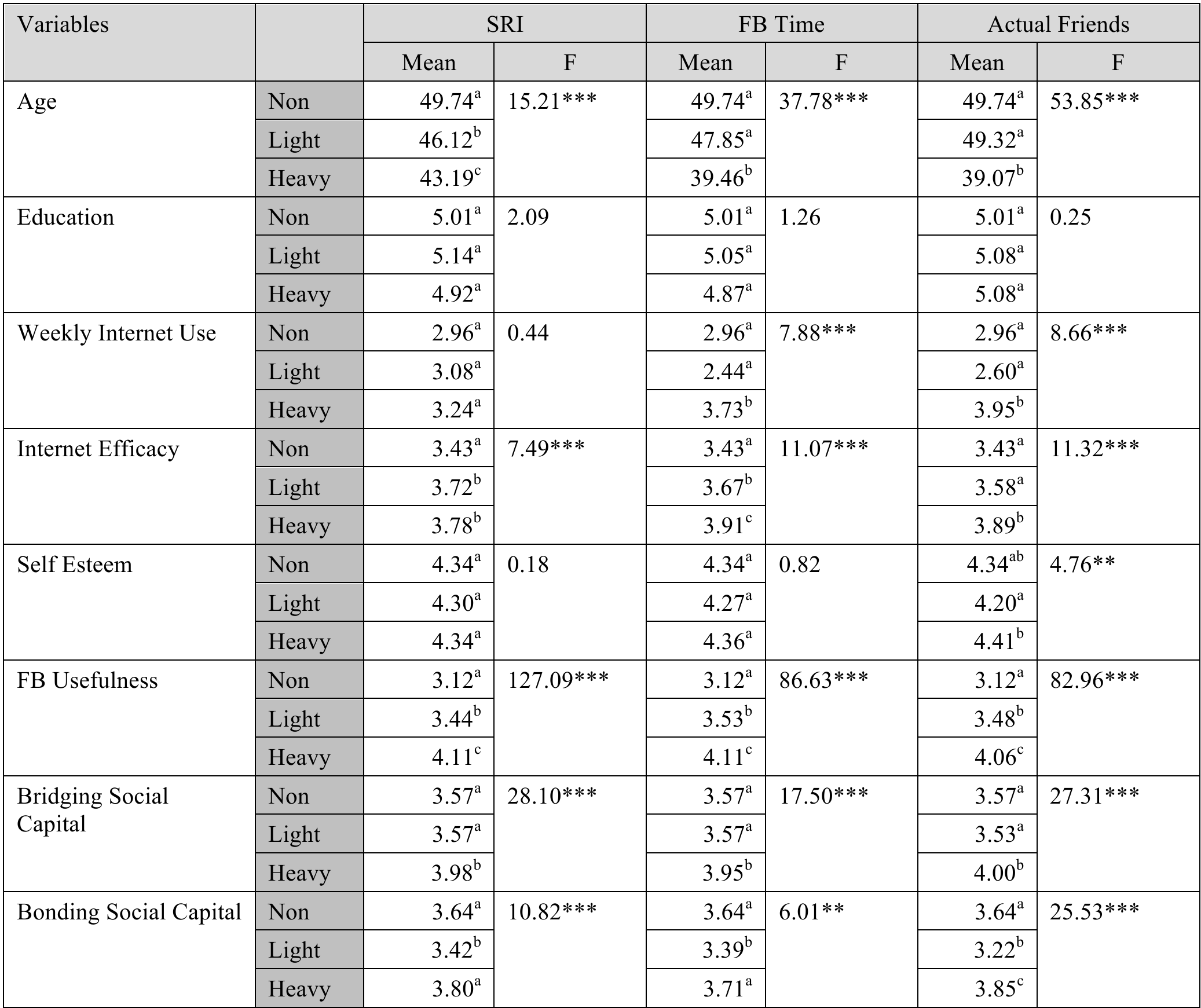
The researchers didn't just look at "Users vs. Non-Users." They broke users down by:
- SRI (Signals of Relational Investment): Liking, commenting, and "social grooming."
- Time Spent: Minutes per day.
- Actual Friends: The subset of their network they actually know.
Critical Insight: The "Light User" Trap
The most striking finding of the paper is the Bonding Social Capital gap.
- Heavy Users (the power users) reported the highest bonding social capital.
- Non-Users followed in second place.
- Light Users (those in the lowest quartile of activity) actually reported the lowest bonding social capital.
Why does this happen?
The authors suggest a "Threshold Effect." Social capital isn't a passive byproduct of membership; it requires "social grooming"—the active work of liking, commenting, and responding. Light users may experience the "costs" of social media (noticing others' events, FOMO, privacy risks) without reaching the level of activity required to reap the "benefits" (supportive feedback, mobilization).
Deep Insight & Conclusion: The Strategic Non-User
The study reframes non-adoption not as a "failure to adapt," but often as a strategic choice. Non-users often maintain high-quality social bonds through alternative channels (FtF or phone) that offer better privacy and less "noise."
Takeaways for Modern Research:
- Quality over Quantity: As platforms evolve, the "number of friends" becomes a vanity metric; the "Relational Investment" (SRI) is the true driver of social value.
- The Channel Replacement Effect: Heavy users may successfully replace traditional communication with digital ones, but light users fall into an "in-between" zone where they are neither fully digitally integrated nor perhaps as focused on traditional grooming as non-users.
- Future Outlook: In an era of "TikTok-ification" where feeds are algorithmic rather than social, does the concept of "Actual Friends" still determine social capital? This work provides the foundation for questioning the diminishing returns of passive scrolling.