
Beyond the "Like": Unmasking the Psychology of Facebook Photo Sharing
Uses and Gratifications of Digital Photo Sharing on Facebook
This study applies the Uses and Gratifications (U&G) theory to analyze why users share digital photos on Facebook. Through an online survey of 368 respondents, it identifies six primary gratifications: affection, attention seeking, disclosure, habit, information sharing, and social influence, while examining how these relate to age, gender, and sharing frequency.
TL;DR
Why do we post photos? Is it just a habit, or are we seeking something deeper? This study explores the Uses and Gratifications (U&G) of photo sharing on Facebook, identifying six psychological drivers: Affection, Attention Seeking, Disclosure, Habit, Information Sharing, and Social Influence. In a surprising twist, the research reveals that older users are more driven by "being cool" (social influence) than youth, and men are more likely to use photo sharing for personal disclosure than women.
The "Why" Behind the Upload
In an era where billions of photos are uploaded daily, we often take the act for granted. However, for digital sociologists, every upload is a calculated move to satisfy a psychological need. Most prior research focused on how to build better photo apps; this study pivots to ask why we use them. The researchers argue that Facebook isn't just one "thing"—it’s a toolkit where different features (status vs. photos vs. groups) serve totally different masters.
Methodology: Mapping the User's Mind
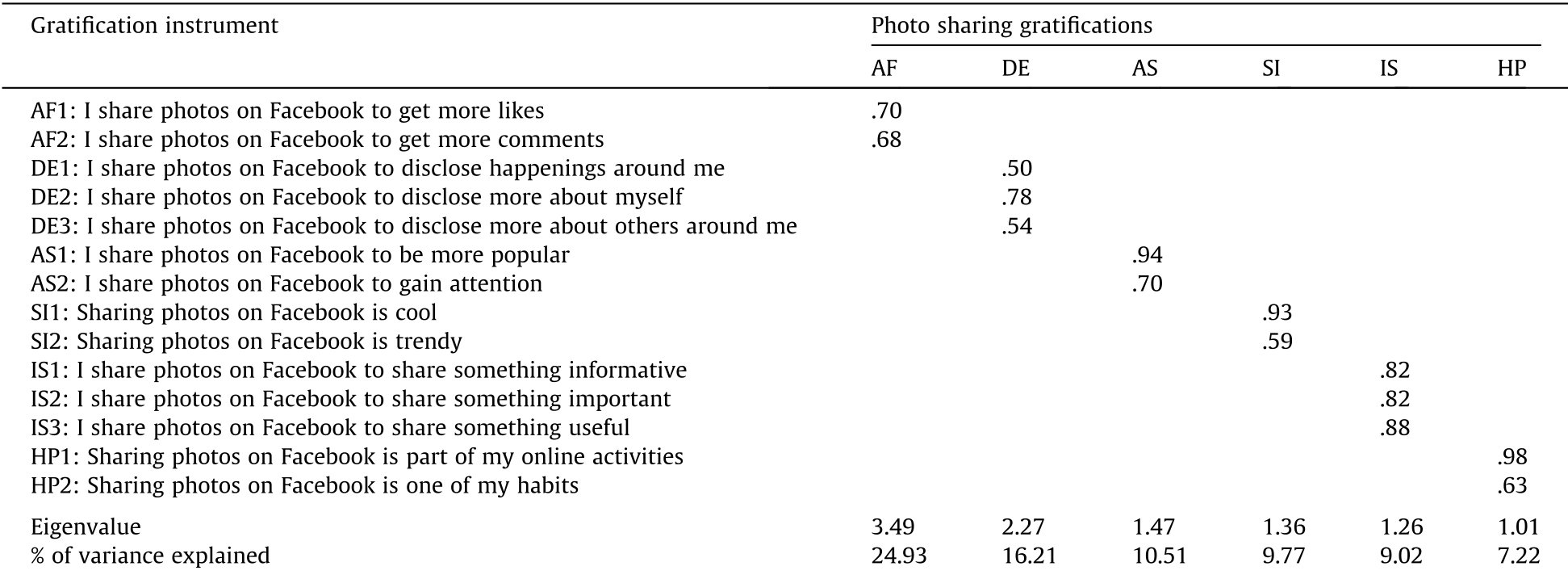
To decode these motivations, the authors surveyed 368 Facebook users and applied Exploratory Factor Analysis (EFA). They didn't just look at broad categories; they refined 26 distinct statements into a stable framework of six core gratifications.
The Six Pillars of Photo Sharing
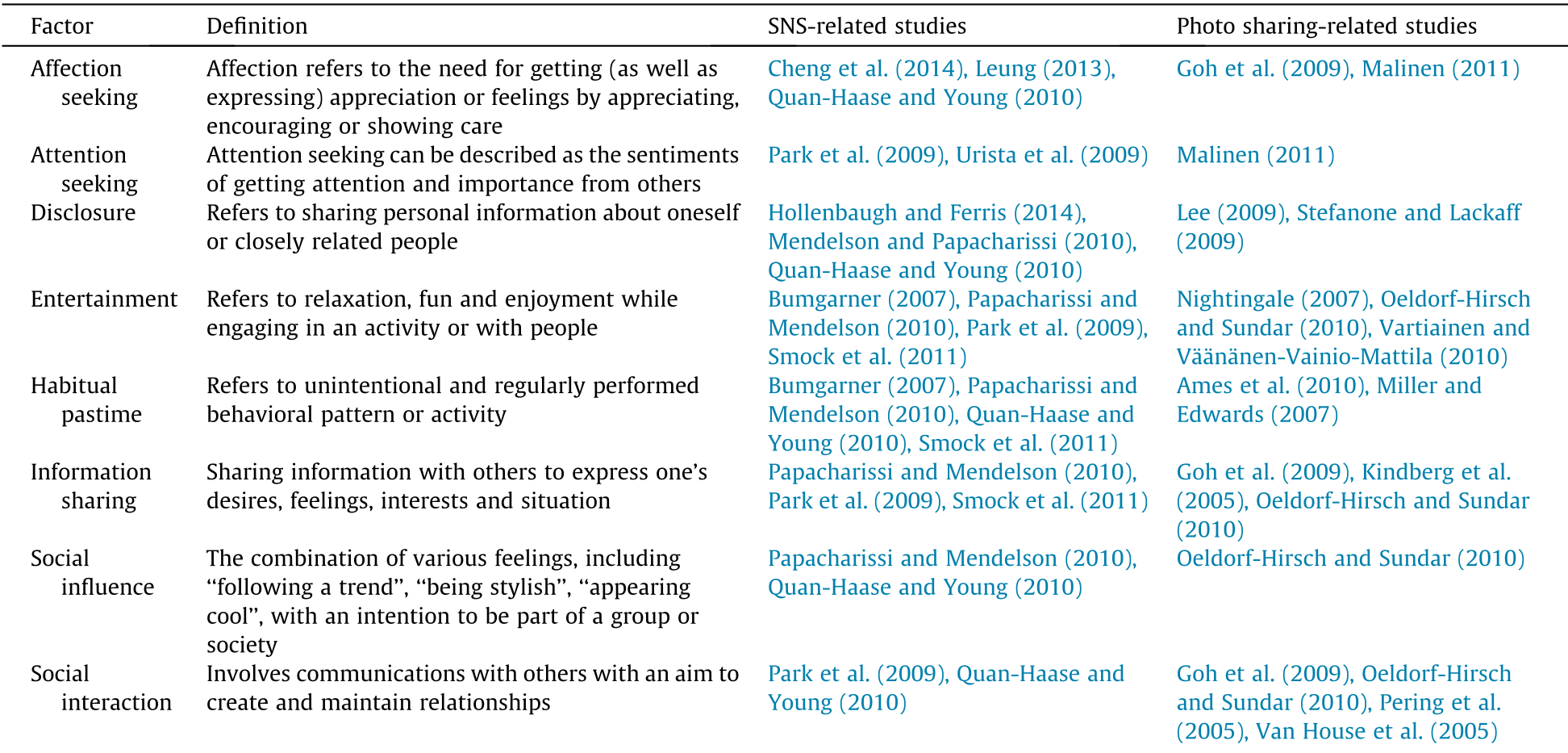
The EFA results provided a clear taxonomy of why we hit that "Post" button:
- Affection Seeking: The hunger for "Likes" and comments as a proxy for social care.
- Attention Seeking: The drive to become popular or gain a sense of importance.
- Disclosure: Using photos to reveal "the real me" and what's happening in one's life.
- Habitual Pastime: The unintentional, routine-based behavior of content generation.
- Information Sharing: Providing useful, visual data to one's network.
- Social Influence: The desire to appear "cool," "trendy," and stay relevant within a peer group.
Counter-Intuitive Insights
The study's most fascinating findings come from the demographic correlations, some of which defy common stereotypes:
- The Age Paradox: We often think of "Social Influence" (staying trendy) as a youth-driven motive. However, this study found that older users had a higher correlation with social influence and disclosure. For them, Facebook is a "cool" new tool for staying connected to grandchildren, whereas, for the youth, it has become a mundane utility.
- The Gender Gap: While women are often characterized as the "social" users of Facebook, men showed significantly higher gratifications for habit and disclosure. The authors suggest men may be less concerned with the "Privacy Paradox," weighing the social benefits of disclosure more heavily than the risks.
- Quantity vs. Quality: Interestingly, users driven by habit and information sharing actually shared fewer photos. This suggests that info-sharers are highly selective, choosing only "useful" photos to maintain their reputation.
Deep Insight: The Privacy Paradox
One of the study's most critical takeaways is the persistence of disclosure despite growing privacy concerns. This reinforces the Privacy Calculus Theory: users are rational actors who will sacrifice their privacy if the perceived "social currency" (affection, attention) is high enough. Photo sharing, being a high-bandwidth visual medium, offers a higher "ROI" for social capital than text alone.
Conclusion & Future Outlook
This research moves the conversation from the affordances of technology to the intentions of the user. For product developers, the message is clear: to keep users engaged, platforms must provide features that amplify affection and social influence—such as virtual rewards or more intuitive ways to share "useful" information.
Limitations: The study is cross-sectional (a "snapshot" in time) and focused only on Facebook. As users migrate to more ephemeral (Snapchat) or curated (Instagram) platforms, how do these six gratifications evolve? That remains the next frontier for social media researchers.