
Object-Centered Sociality: The Secret Sauce of Media Sharing Groups
Uses & gratifications of a facebook media sharing group
This paper investigates the "Uses and Gratifications" (U&G) of a specialized content community within Facebook—a music video sharing group called "Saturday Morning Classics" (SMC). Utilizing factor analysis, the study identifies four primary motivations for participation: Contribution, Discovery, Social Interaction, and Entertainment, establishing that niche groups within social networks function differently than the platforms as a whole.
TL;DR
This study dissects the "why" behind niche Facebook groups dedicated to media sharing. Moving beyond general social networking, the researchers found that users are driven by the joy of Contribution and the thrill of Discovery. By "unbundling" Facebook's features, the paper argues that the specific objects we share—like music videos—become the anchors for deeper, more meaningful social connections than simple status updates.
Background: Beyond the Monolith
In the early 2010s, Facebook was often studied as a single experience. However, this paper adopts the perspective that SNS are "toolkits" of distinct features. The authors argue that a group dedicated to "Saturday Morning Classics" (SMC) isn't just a part of Facebook—it is an object-centered community where the media itself (the music video) dictates the social behavior.
The Problem: Why Do We Actually Participate?
Prior research identified general gratifications like "social investigation" or "status updating." But these don't explain why someone would spend hours hunting for a rare 80s music video to share with a specific group. The researchers suspected that when a group has a specific focus, the motivations change. They aimed to move from "What is Facebook for?" to "What is this specific community for?"
Methodology: The Two-Stage Approach
The team created the SMC group and studied it using a classic U&G (Uses and Gratifications) framework:
- Qualitative Seed: Users provided words describing their enjoyment (e.g., "nostalgia," "finding rare songs").
- Quantitative Rigor: A factor analysis of 34 items was conducted to see how these motivations clustered together.
The Core Discovery: Four Pillars of Participation
The study identified four distinct factors. While "Social Interaction" and "Entertainment" were expected, the other two provide the real insight:
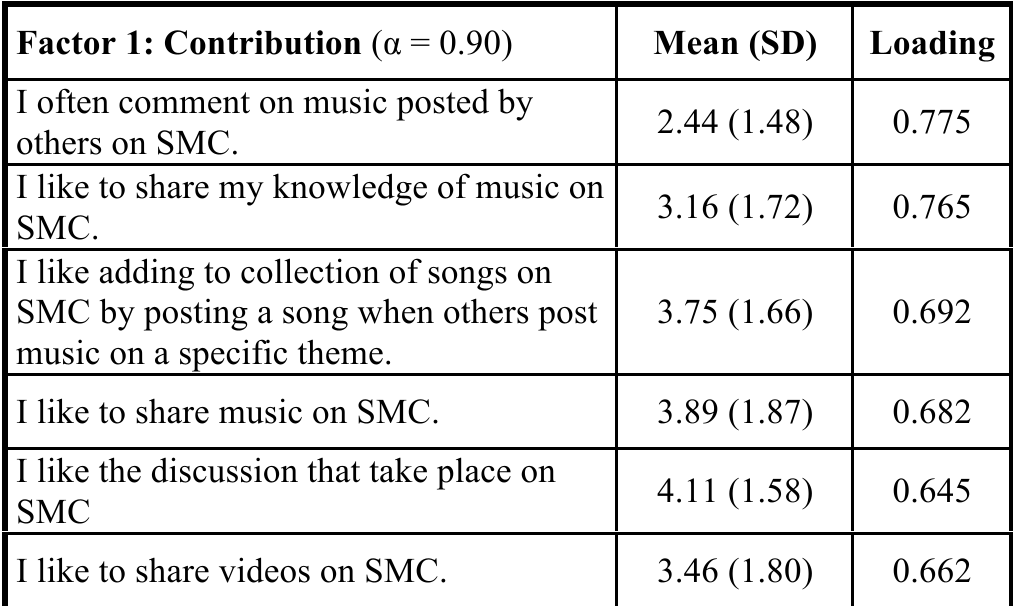
1. Contribution (The Curator's High)
Users aren't just consumers; they are archivists. This factor (Factor 1) showed that members valued sharing their knowledge and responding to others through "response chains"—where one video triggers a flurry of related content.
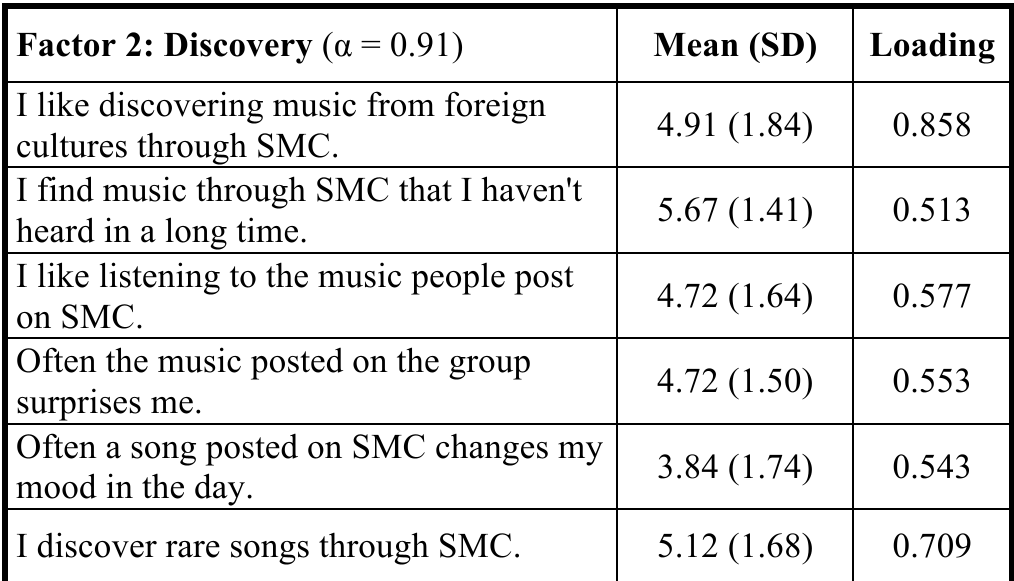
2. Discovery (Social Filtering vs. Algorithms)
In a world of "You might also like" algorithms, this group offered Social Discovery. Seeing what a human peer (especially from a different culture) personally recommends proved significantly more gratifying than an automated list.
3. Social Interaction & 4. Entertainment
These encompassed the joy of the content itself and the "ego-boost" of receiving 'likes' on a shared item—validating the user's taste and expertise.
Deep Insight: Design for the Object
The researchers conclude with a powerful message for software architects: Identity + Content = Engagement.
- Curation as Conversation: Design systems that allow users to "reply" with media, creating meaningful chains of content.
- Identity Matters: Anonymous sharing is less effective. Users want their contributions attributed to their social identity to build "bridge social capital."
Critical Analysis & Conclusion
While the sample size (57 for the main survey) is modest, the paper successfully demonstrates that context is king. A Facebook group is not just a forum; it’s a dynamic space where objects (music) facilitate social ties that might not otherwise exist.
Takeaway: If you are building a social product today, don't just build a "community." Give your users a "thing" (an object) to gather around. Whether it's code, music, or art, the object is the catalyst that transforms passive users into active contributors.