
Beyond Usage: Decoding the Pervasive Adoption of Social Networks Among Students
Applying uses and gratifications theory and social influence processes to understand students' pervasive adoption of social networking sites: Perspectives from the Americas
This study investigates the drivers of pervasive adoption of Social Networking Sites (SNSs) among university students in the Americas. It integrates Uses and Gratifications Theory (UGT) and Social Influence (SI) processes into a unified research model. Using Partial Least Squares (PLS) analysis on data from four countries, the study identifies key psychological and social determinants of deep technology embedment.
Executive Summary
In an era where university students spend up to six hours a day on social platforms, the academic community has shifted its focus from if they use these tools to how deeply these tools are woven into their lives. This paper, titled "Applying uses and gratifications theory and social influence processes to understand students’ pervasive adoption of social networking sites," moves beyond simple usage metrics. By synthesizing Uses and Gratifications Theory (UGT) and Social Influence (SI) processes, the research uncovers the psychological and cultural engines driving the total "embedment" of platforms like Facebook into student life across the Americas.
The Motivation: Moving from "What" to "Why"
Most prior work relies on TAM (Technology Acceptance Model), focusing on perceived usefulness and ease of use. However, the author argues that SNSs are inherently social ecosystems, making individualistic models insufficient. The core insight is the concept of Pervasive Adoption, defined by two pillars:
- Embracement: The willing and positive acceptance of the technology.
- Embedment: The technology becoming an integral, inseparable part of the user's social existence.
The study aims to solve a critical gap: Why do some users merely use a site, while others make it the "cockpit" of their social identity?
Methodology: A Dual-Engine Framework
The researcher constructed a model where five categories of UGT and three modes of Social Influence act as antecedents to Behavioral Intention, which in turn dictates the depth of Pervasive Adoption.
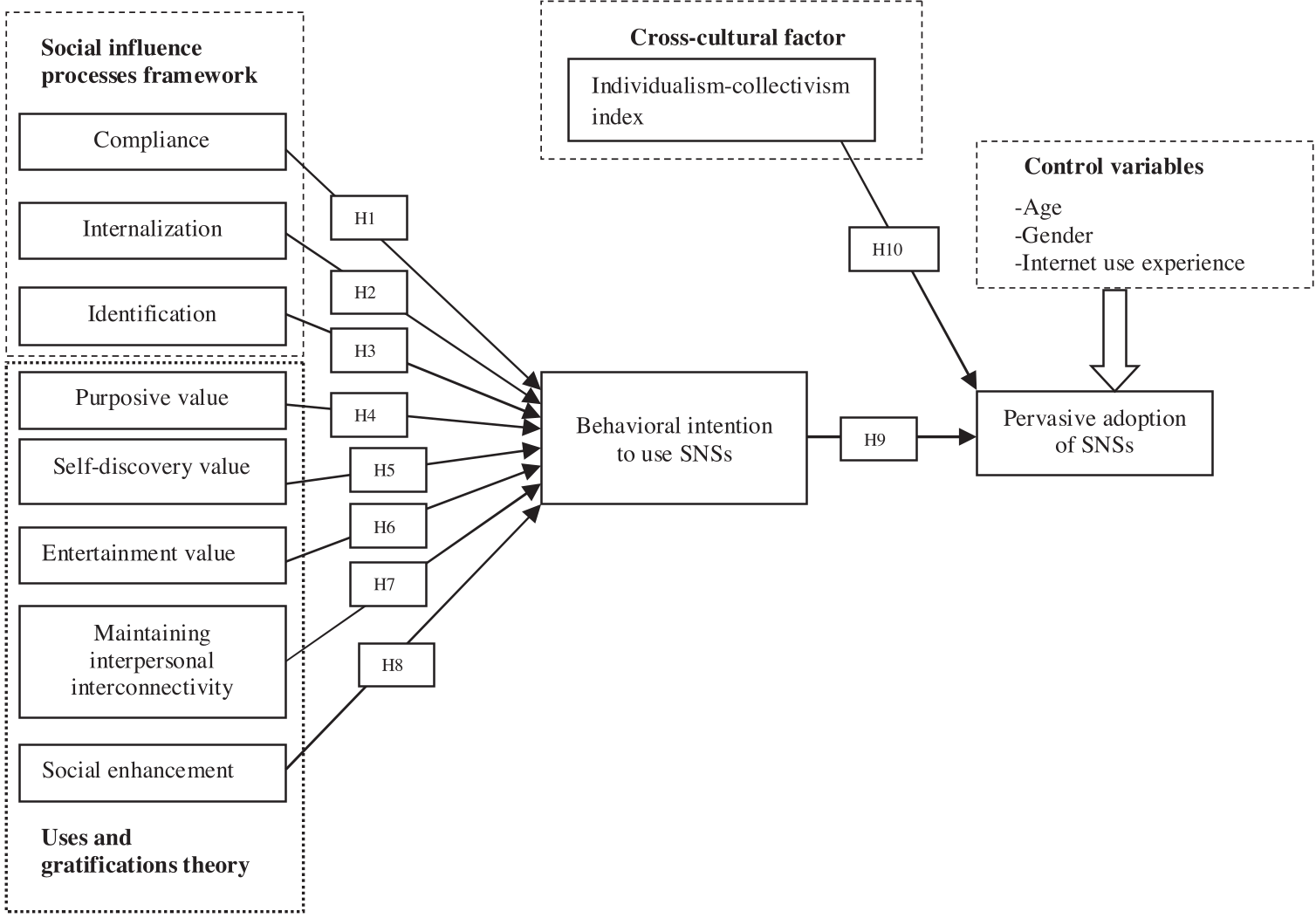
The UGT Engine
- Entertainment Value: The hedonic pleasure derived from the platform.
- Interpersonal Connectivity: The social benefit of maintaining contacts.
- Self-Discovery: Learning more about oneself through social mirrors.
- Social Enhancement: Gaining status and approval.
The Social Influence Engine
- Internalization: Adopting technology because it matches one's core values.
- Identification: Adopting it to maintain a self-defining relationship with a group.
- Compliance: Adopting to gain rewards or avoid social punishment (found to be less relevant here).
Findings: Culture and Connection
The study utilized data from four countries: Canada, the USA, Mexico, and Argentina. The results are telling:
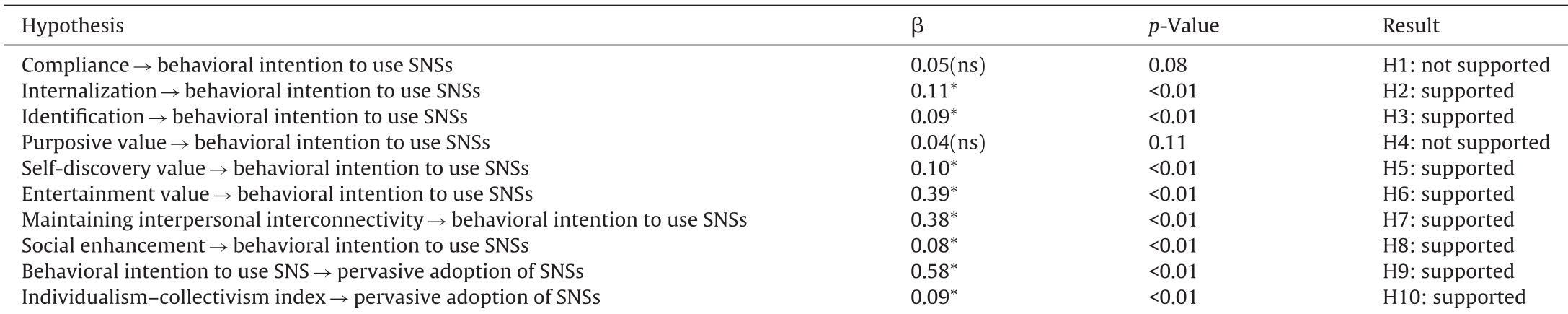
- Hedonism Trumps Utility: Entertainment and social connectivity were the "heavy lifters" of the model. Surprisingly, Purposive Value (using the site to solve specific problems) was not a significant driver of deep adoption.
- The "Peer Approval" Fallacy: The SI process of Compliance failed the hypothesis test. This suggests that modern students don't use Facebook just because they "have" to for peer acceptance; they do it because they've internalized its value.
- The Individualism Paradox: Counter-intuitively, students from more individualistic cultures (USA/Canada) showed higher pervasive adoption scores than those from collectivist cultures. The author suggests this is due to a higher level of personal motivation and self-awareness in these cultures to use social media for self-expression.
Deep Insight: Is It Addiction or Integration?
One of the most valuable aspects of this paper is its distinction between Pathological Addiction and Pervasive Adoption. While addiction is antisocial and medical, pervasive adoption is seen here as a controlled, beneficial state where the user extracts social capital and life satisfaction from their digital "embedment."
Conclusion and Future Outlook
This research provides a roadmap for both educators and developers:
- For Developers: To move users from "active" to "pervasive," focus on features that enable "self-discovery" and "social enhancement" rather than just utility.
- For Educators: SNS platforms can be powerful e-learning environments if they tap into the "internalization" process—making the learning tool feel congruent with the student's social identity.
Limitations: As an exploratory study, it relies on cross-sectional survey data. Future work must investigate the longitudinal stability of these social influences as platforms evolve.