
iRACE: Revolutionizing Parkinson’s Gait Therapy with Smartphone-Based Clinical Evaluation
Validating an iOS-based Rhythmic Auditory Cueing Evaluation (iRACE) for Parkinson's Disease
This paper introduces iRACE (iOS-based Rhythmic Auditory Cueing Evaluation), a mobile system designed to assess and deliver Rhythmic Auditory Cueing (RAC) for Parkinson’s Disease (PD) patients. Using on-board sensors for gait and finger-tapping analysis, it achieves clinical-grade accuracy, demonstrating less than ±1.0% error in key motor outcome measures.
TL;DR
Parkinson’s Disease (PD) patients frequently suffer from gait impairments and high fall risks. While Rhythmic Auditory Cueing (RAC)—walking to a steady beat—is an evidence-based fix, it lacks scalable tools for home use. Enter iRACE, an iOS-based system that uses machine learning and on-board sensors to provide clinical-grade gait and tapping analysis with <1% error, turning a standard iPhone into a powerful medical diagnostic and therapeutic tool.
Background & Motivation
Motor impairments in PD, such as bradykinesia and "freezing of gait," often persist even with gold-standard medication. RAC has been shown to reduce Motor Timing Variability (MTV), a key predictor of falls. However, clinicians face a bottleneck: they cannot easily monitor how a patient responds to RAC without expensive equipment like the GAITRite mat.
The authors observed that while smartphones contain powerful Inertial Measurement Units (IMUs), previous research focused on healthy subjects and lacked "gold-standard" validation. To bridge this gap, they developed iRACE to quantify gait dynamics directly on-device and via a cloud-based dashboard.
Methodology: The Core Engine
The technical brilliance of iRACE lies in its ability to extract "clean" clinical data from "noisy" consumer sensors.
1. Robust Heel Strike Detection
Instead of relying on simple "zero-crossing" rules (which fail in irregular PD gait), iRACE uses a two-layer neural network. It treats heel strike (HS) detection as a binary classification problem, analyzing anterior-posterior (A-P) troughs and feature vectors to distinguish true steps from noise.
2. Overcoming Integration Drift
Calculating step length from a trunk-mounted sensor is notoriously difficult due to integration drift. iRACE utilizes a hybrid machine learning algorithm that combines double integration of acceleration with neural network regression. This compensates for the non-zero initial velocity typical of PD gait cycles.
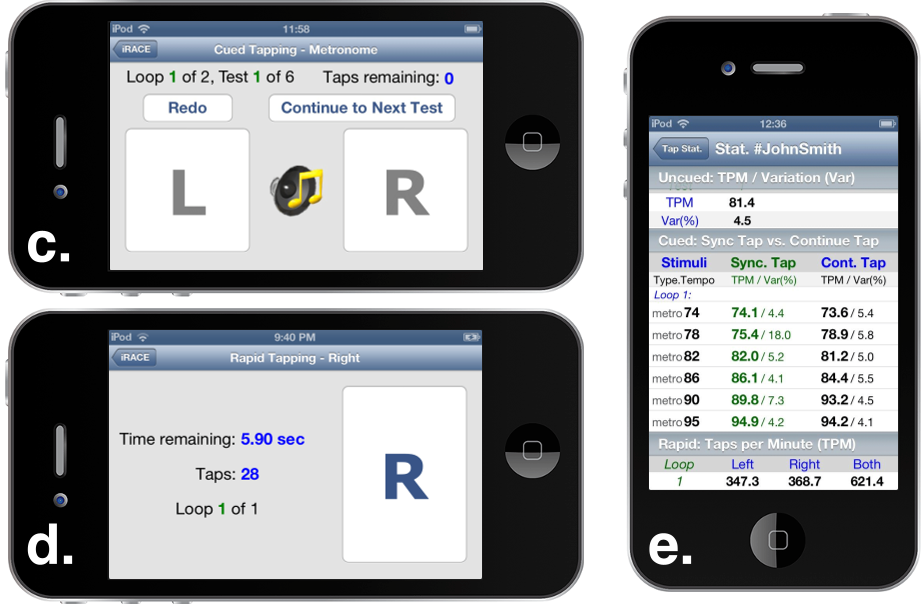 Figure 1: iRACE app interface showing the evaluation parameters and bimanual tapping assessments.
3. Precision Synchronization
To validate the app, the team developed a novel acoustic synchronization method. By toggling audio volume every 30ms and recording it on a reference telemetry unit, they synchronized the iPhone clock with medical-grade sensors at sub-millisecond accuracy.
Experiments and Results
The study involved 10 PD patients performing self-paced and RAC-facilitated walking trials.
- Detection Accuracy: The HS detection and foot identification reached 100% precision and recall in the validated dataset.
- Spatial Precision: Step length RMSE was just 3.22 cm, competitive with professional systems.
- Clinical Efficacy: iRACE accurately captured the "RAC effect"—showing significant improvements in cadence and step length stability as the beat tempo increased.
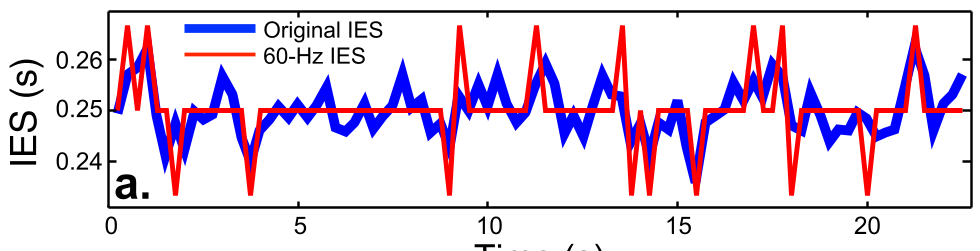 Figure 2: Bland-Altman analysis showing high agreement between iRACE and ground truth for Step Time.
Critical Analysis & Conclusion
Takeaway
The primary contribution of this work is the validation of consumer hardware for clinical gait analysis. By achieving error rates below 1%, iRACE proves that we can move sophisticated neuro-rehabilitation from the lab to the living room.
Limitations & Future Work
While the results are stellar, the sample size (N=10) is a pilot scale. The "navel-mounted" requirement, while better than back-mounting for user interaction, still requires a belt. Future iterations might leverage smartwatch data (wrist-based) to further lower the barrier to entry, though this drastically increases the complexity of gait extraction algorithms.
In conclusion, iRACE provides a blueprint for "scaling up" physical therapy, offering a low-cost, accurate, and highly scalable solution for the global PD population.