
Tug of War: A Fast and Robust Approach to Digging Up Trust in Signed Social Networks
A very fast and robust trust inference algorithm in weighted signed social networks using controversy, eclecticism, and reciprocity
The paper introduces a novel trust inference algorithm for Weighted Signed Social Networks (WSNs) that predicts both trust and distrust. By leveraging three localized social traits—controversy, eclecticism, and reciprocity—the method models trust evaluation as a "tug of war" game, achieving state-of-the-art speed and robustness in sparse networks.
TL;DR
Trust is complex, and distrust is even harder to predict. Most algorithms try to "propagate" trust like electricity through a wire, but this fails when connections are negative or missing. This paper proposes a localized "Tug of War" (ToW) algorithm that predicts trust and distrust using only the immediate neighbors of the users involved. It is exponentially faster than traditional methods and remains accurate even in "ghost town" networks where 90% of data is hidden.
The Problem with "Follow the Leader"
In digital sociology, researchers often assume trust is transitive: if Alice trusts Bob, and Bob trusts Charlie, Alice should trust Charlie. However, this logic collapses when distrust enters the equation. If Alice distrusts Bob, and Bob distrusts Charlie, does Alice trust Charlie? Not necessarily.
Existing methods (like PageRank variants or propagative models) face three walls:
- The Transitivity Trap: Distrust doesn't flow predictably.
- Computation Heavy: Calculating global scores whenever a single link changes is a nightmare for real-time systems.
- Sparsity Sensitivity: When data is missing, "paths" of trust break, leaving the algorithm blind.
The Insight: Trust as a Tug of War
Instead of seeing trust as something that flows from A to B, the authors view it as a joint result of social "forces" exerted by both the trustor and the trustee. They identify three pivotal social traits:
- Controversy (): Does everyone agree about this person? If opinions vary wildly, the person is controversial.
- Eclecticism (): Does this trustor give the same rating to everyone, or are they highly selective?
- Reciprocity (): Does this user tend to give back exactly what they receive?
By quantifying these, the trust prediction becomes a weighted average where these traits "pull" the prediction toward different anchors ().
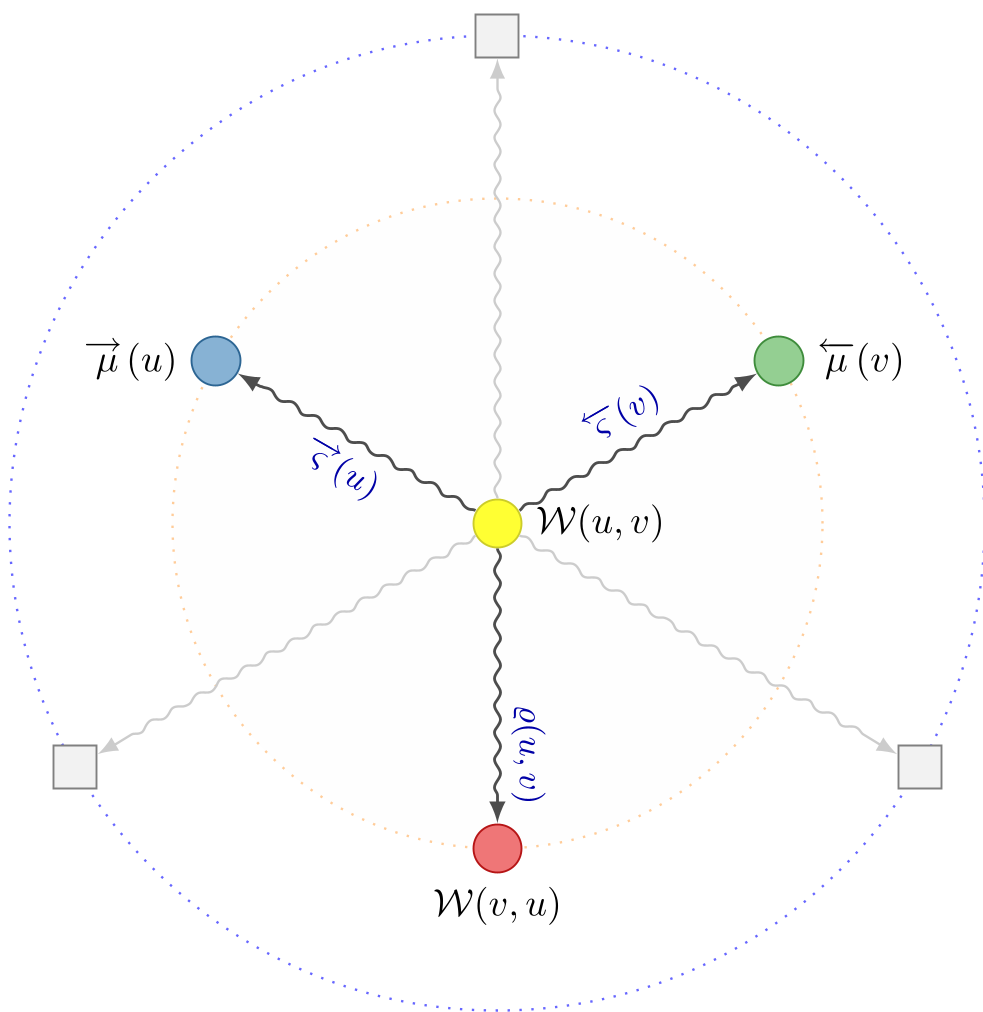 Figure 1: The Tug of War analogy—Controversy, Eclecticism, and Reciprocity acting as forces to determine the weight of a trust arc.
Methodology: The Local Advantage
The core formula (Eq. 5) weights the mean trust received by the trustee, the mean trust given by the trustor, and any existing reciprocal link. If a trustee is not controversial, their "received mean" carries more weight. If a trustor is not eclectic, their "given mean" is more reliable.
Mathematical efficiency is the killer feature here. The complexity is . It only cares about the direct neighbors.
Performance: Speed Meets Accuracy
The authors tested ToW against heavyweights like STAR (Semiring Trust Inference) and FxG (Fairness-Goodness).
1. Accuracy & Sparsity
Even when the authors randomly deleted 90% of the network's edges, the ToW algorithm's error rate (MAE) remained remarkably flat, while others spiked.
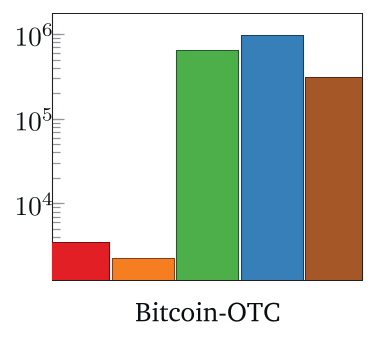 Figure 2: Performance under extreme sparsity—ToW (bottom line) maintains the lowest error even as arcs are removed.
2. The Speed Benchmark
In terms of execution time, ToW is essentially the same speed as a simple reciprocal lookup (the fastest possible operation), making it approximately 100x faster than BaD or FxG.
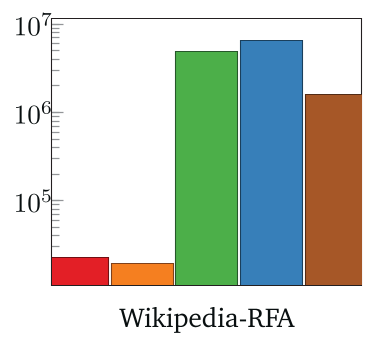 Figure 3: Time taken for inference across various datasets (Log Scale).
Critical Insight & Conclusion
The brilliance of this work lies in its Inductive Bias. Most researchers assume more global data equals better predictions. This paper proves the opposite: for trust, the "truth" is local. By focusing on how controversial or eclectic we are as individuals, we can predict relationships better than if we mapped the entire global web.
Limitations: The model assumes all three traits are equally important across all networks. In reality, a Bitcoin network (financial) might value reciprocity more than a Wikipedia network (authority). Future iterations could benefit from "learned weights" for these social ropes based on the network's specific DNA.
Final Takeaway: If you are building a recommendation or rating system, don't just look for paths; look for the "social signature" of your users.