
Virtual Caucasus: Decoding Ethnic Dynamics and Pan-Ethnic Bridges on VK
Virtual caucasus on VK social networking site
2016-05-18
Summary
Problem
Method
Results
Takeaways
Abstract
The paper maps the ethnic and supra-ethnic virtual landscapes of the Caucasus on the VK social network. Using a combination of Social Network Analysis (SNA) and Latent Dirichlet Allocation (LDA) topic modeling, the authors identify how Armenian, Azerbaijani, Georgian, and "Pan-Caucasian" groups interact or isolate based on shared cultural and political themes.
## Executive Summary
**TL;DR**: This study explores how the complex ethnic landscape of the Caucasus is reconstructed on Eurasia's largest social network, VKontakte (VK). By analyzing the membership overlaps and content of 287 virtual communities, the authors reveal a digital ecosystem where geopolitical wars create absolute voids between certain ethnic clusters, while "Pan-Caucasian" groups act as vital bridges.
**Academic Context**: This work sits at the intersection of Digital Sociology and Computational Social Science. It contributes to the "e-nations" theory by demonstrating that virtual spaces don't just mirror real-world conflicts—they also provide a "cyberspatial commons" for identities that lack institutional space in the physical world.
## The Digital Schism: Problem and Motivation
The Caucasus is famously a "cauldron of ethnicities," but how does this translate to the digital realm? The authors sought to understand if the Internet merely exports real-world animosities or if it fosters a new, unified "Virtual Caucasian" identity. The primary challenge was deciphering the hidden structures within over 1.3 million unique users to see whether digital interaction could bridge gaps that physical diplomacy cannot.
## Methodology: The Fusion of SNA and NLP
The researchers utilized a two-pronged approach to dissect the "Virtual Caucasus":
1. **Social Network Analysis (SNA)**: They constructed a weighted network where nodes represent groups and edges represent membership similarity (calculated via the **Jaccard Index**). This allowed them to measure **Betweenness Centrality**—identifying which groups act as "gatekeepers" or "bridges" between isolated clusters.
2. **Topic Modeling (LDA)**: To understand *what* these groups were actually discussing, they applied Latent Dirichlet Allocation to thousands of posts. This categorized the groups into themes like religion, politics, cuisine, and national history.
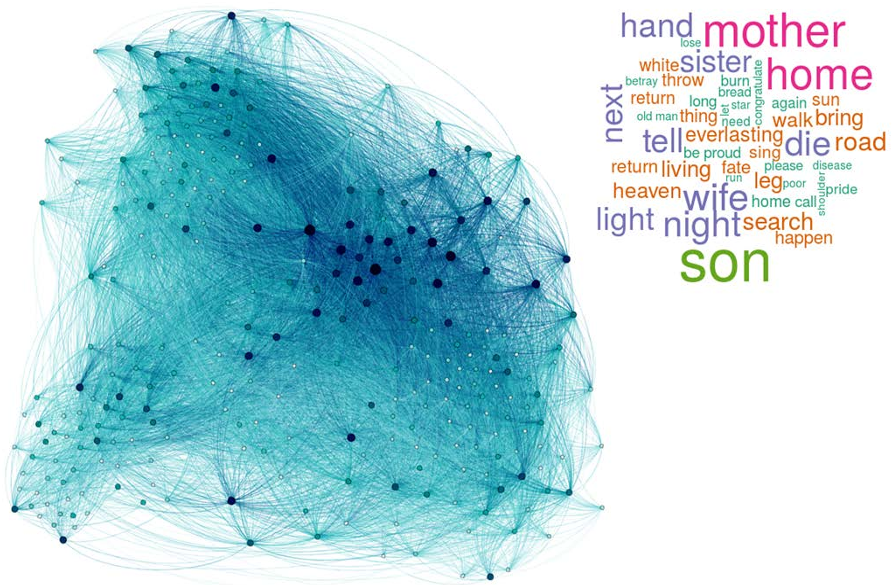
*Figure 1: The network of South Caucasian groups. Note the clear physical separation between Armenian and Azerbaijani clusters and the bridging role of Pan-Caucasian nodes.*
## Core Insights: Bridges and Voids
The findings provide a striking visualization of regional geopolitics:
* **The Contentious Gap**: There is a complete lack of shared membership between Armenian and Azerbaijani groups, directly reflecting the Nagorno-Karabakh conflict.
* **The Structural Mediators**: Georgian and Pan-Caucasian groups show the highest centralities. Specifically, Georgian clusters often contain multi-ethnic labels (e.g., "Georgians and Armenians"), acting as a buffer.
* **The Ideology Paradox**: Contrary to media portrayals of the Caucasus as a hotbed for radicalism, the LDA analysis revealed that most groups are *not* ideological. Instead, they focus on "symbolic allegiance"—maintaining cultural ties through food, history, and language, especially for those in the diaspora.
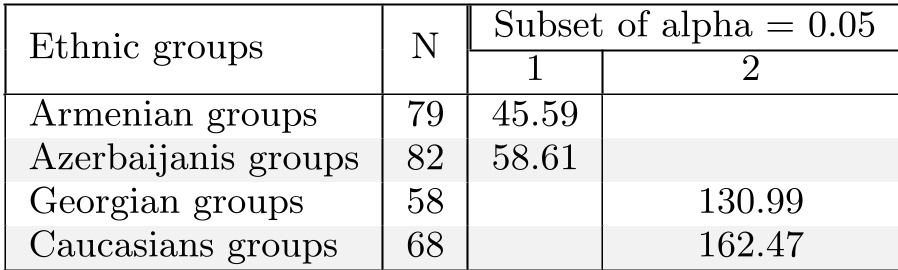
*Table 1: Statistical analysis showing that Georgian and Caucasian clusters possess significantly higher bridging power than Armenian or Azerbaijani clusters.*
## Critical Analysis & Conclusion
**Takeaway**: The "Virtual Caucasus" acts as a pressure relief valve. While the digital world cannot erase ethnic conflict, it creates a "Pan-ethnic" layer where shared regional identity is celebrated through non-political means.
**Limitations**: The study is confined to VK, which is primarily used by Russian-speaking populations. This may introduce a "diaspora bias," where migrants in Russia are more likely to seek Pan-Caucasian unity than those living within the conflict zones of the South Caucasus.
**Perspective**: As we move further into the era of algorithmic echo chambers, this research highlights the importance of "bridge nodes." Understanding how to cultivate these non-ideological virtual spaces could be key to mitigating real-world ethnic polarization.