
Specialized VLE: Bridging the Accessibility Gap with OTT and Data Mining
Virtual learning environment for children with disabilities: A proposal based on MOODLE and content management with Over The Top (OTT) technology
This paper proposes a Virtual Learning Environment (VLE) based on MOODLE and Over The Top (OTT) technology specifically designed for children with disabilities in developing countries. The system integrates automated video/image optimization and data mining modules (HAC and PCA) to analyze user perceptions and provide instructional decision support.
TL;DR
Special education in developing countries is often hindered by poor infrastructure and unoptimized content. This paper introduces a specialized MOODLE-based platform that uses Over The Top (OTT) technology to ensure smooth multimedia delivery over weak connections and employs Machine Learning (HAC & PCA) to help teachers understand how children with diverse disabilities perceive and interact with digital learning materials.
Problem & Motivation: The Digital Divide in Special Education
While Learning Management Systems (LMS) like MOODLE are ubiquitous, they are rarely "out-of-the-box" ready for the 5.1% of children globally living with disabilities—especially those in connectivity-starved regions.
The authors identify three critical pain points:
- The Connectivity Bottleneck: High-quality educational videos often fail to load in rural special education centers.
- Content Mismatch: Standard digital assets aren't tailored for cognitive or motor impairments.
- The Feedback Vacuum: Teachers lack quantitative tools to measure whether a digital resource is actually "pleasant" or "useful" for a child with specific needs.
Methodology: Adaptive Delivery and Intelligent Analysis
The proposed architecture is divided into layers that move beyond a simple website into a data-driven ecosystem.
1. The OTT-Education Layer
To solve the connectivity issue, the authors implemented OTT technology. This acts as an automated "buffer and adaptor" that performs video transcoding and image compression on the fly. This ensures that a child in a low-bandwidth area still receives a fluid experience, which is crucial for maintaining the attention of students with neurodivergent profiles.
2. The Data Analysis Layer (Decision Support)
This is the "brain" of the proposal. The authors don't just collect survey data; they process it using a mathematical descriptor for each child ():
- Attributes: Age, Gender, Disability Type, Perceptions of Sound/Images, Concentration, and Retention levels.
- Clustering: Using Hierarchical Agglomerative Clustering (HAC), the system groups students with similar needs or perceptions. This allows a teacher to see, for instance, that all children with physical disabilities in a specific age bracket are struggling with video loading speeds or find certain colors "unpleasant."
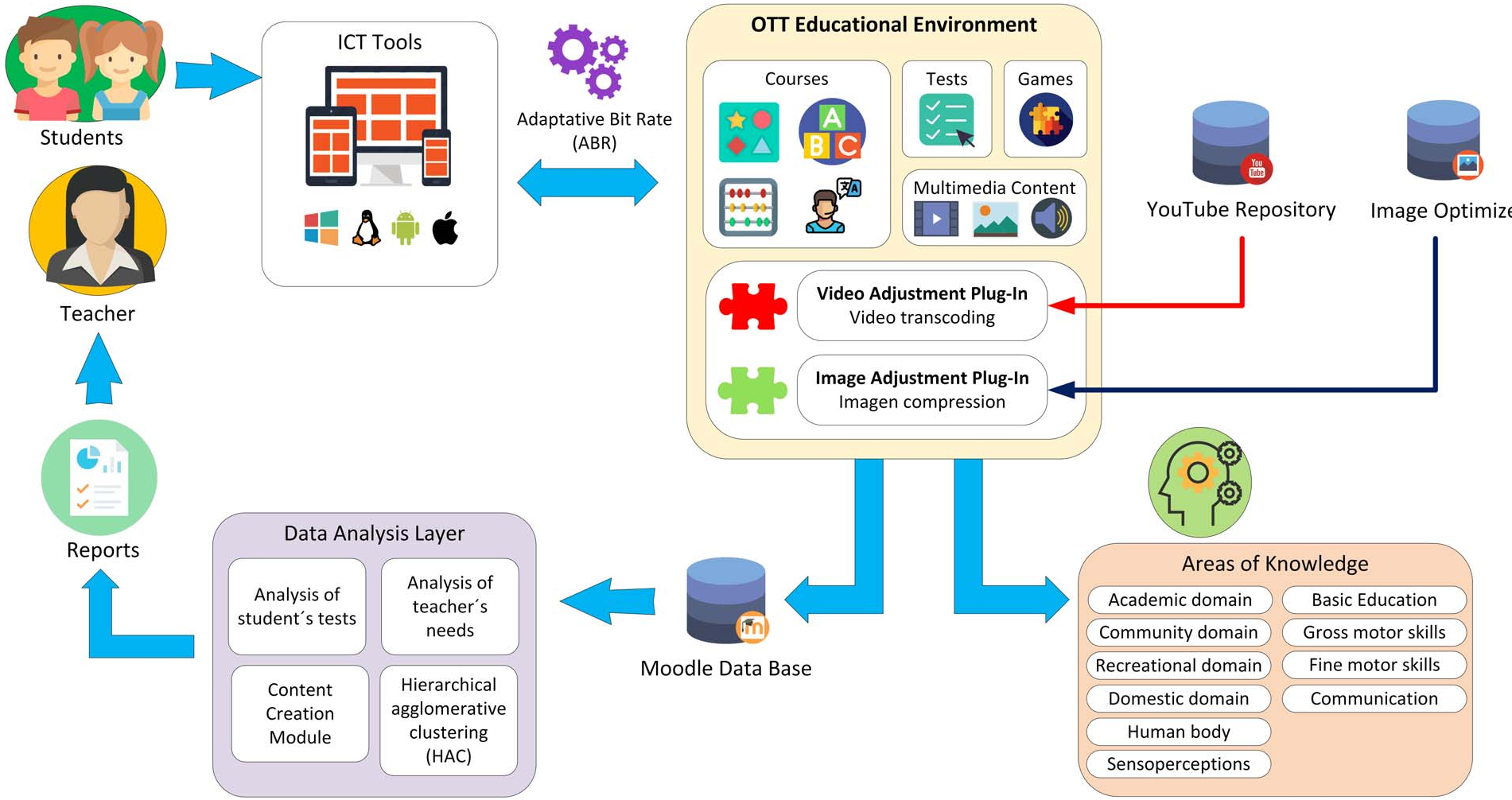 Figure 1: The multilayered system architecture integrating MOODLE with OTT and Data Mining modules.
Experimental Results: Quantitative Validation
The system was tested at the Instituto de Parálisis Cerebral del Azuay (IPCA) with 26 participants. The study focused on Quality of Experience (QoE).
- Performance: Even in constrained environments, the combination of OTT plugins led users to rate loading speeds as "fast" (reaching 4 or 5 on the Likert scale).
- Emotional Impact: The "sensation of use" was overwhelmingly positive. Most children found the platform "pleasant" or "very nice," which is a critical metric for long-term educational engagement in special needs contexts.
- Clustering Accuracy: As seen in the dendrograms, the HAC algorithm successfully grouped children by disability and perception profiles, providing a visual roadmap for teachers to customize their materials.
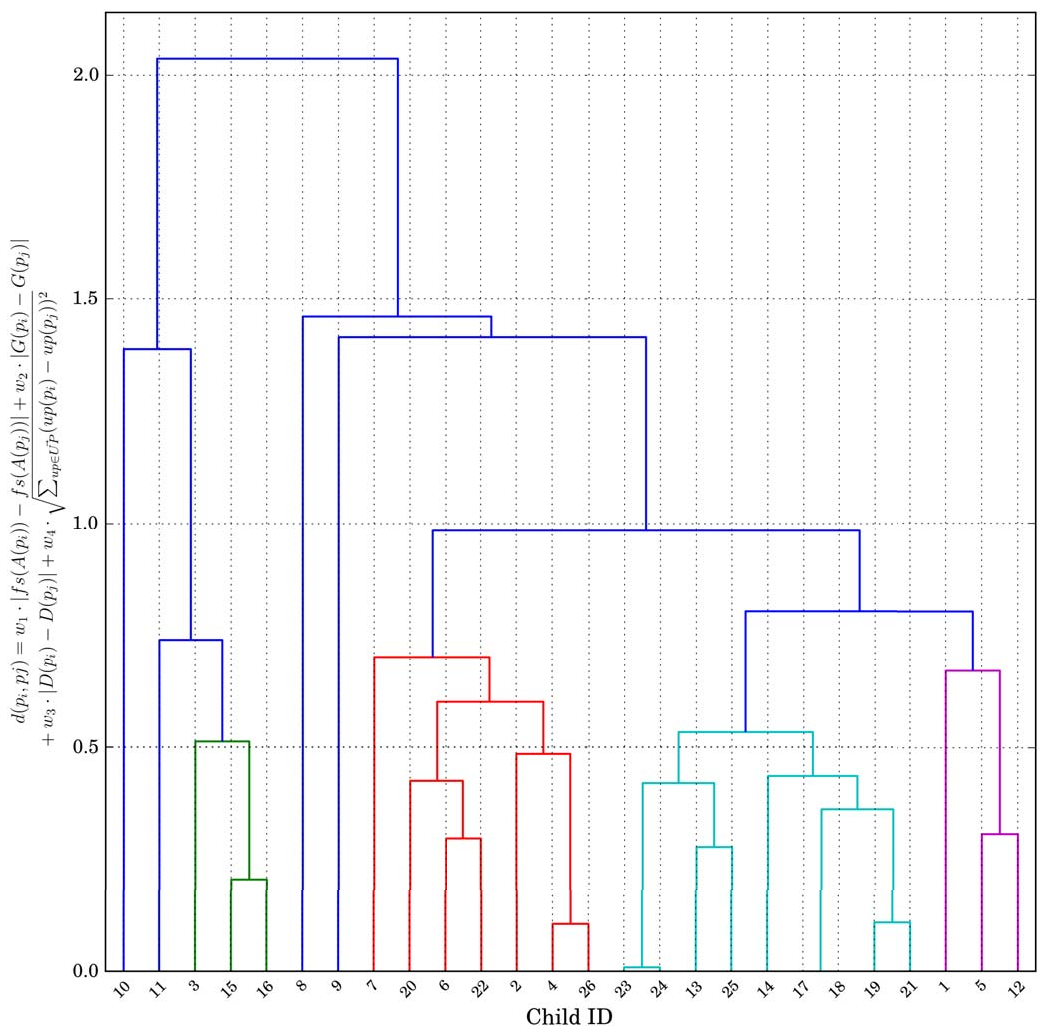 Figure 2: Dendrogram showing how children are grouped based on profile similarity—a vital tool for personalized education.
Critical Insight & Future Outlook
The brilliance of this work lies in its holistic approach. It doesn't just build a "dark mode" or a "text-to-speech" feature; it addresses the underlying infrastructure (OTT) and the psychological feedback loop (Data Mining).
Future Directions: The authors aim to move from "analysis" to "action" by developing a Recommender Module. Imagine a system that sees a child's concentration is low for video content and automatically suggests "Serious Games" (like word searches or puzzles) from the platform's library to stimulate engagement.
In conclusion, this research marks a significant step toward Educational Inclusion, proving that technical constraints in developing nations can be overcome through intelligent system design and user-centric data analysis.