
Vision and Voice in eConsent: Transforming Privacy Policies into Persuasive Multimedia
Vision and Voice in eConsent: Future Trends for Health Social Networks.
This paper introduces an animated eConsent prototype designed to replace traditional, text-heavy Privacy Policies (PP) and Terms & Conditions (T&Cs) in Health Social Networks (HSNs). By leveraging multimedia learning principles and persuasive communication, the study demonstrates how visual and auditory narratives can significantly enhance user understanding of data sharing practices.
TL;DR
Researchers from University College Cork have developed an animated alternative to the "biggest lie on the internet"—the "I Agree" button. By turning dense, jargon-filled Privacy Policies into a 2-minute narrative animation, the study reveals that users can finally achieve "informed consent," even if that means they are now scared enough to think twice before sharing their health data.
The Problem: The Illusory Consent of the "Click-Wrap"
We’ve all done it. Faced with a 50-page document of "Terms & Conditions," we scroll to the bottom and click "Agree" without reading a single word. In the context of Health Social Networks (HSNs), this behavior is dangerous. Users share Personal Health Information (PHI)—data that could affect their insurance premiums or employment—without realizing it might be sold to third parties.
The authors argue that current eConsent designs are "misleading in their complexity" and "legally unfair." The cognitive load required to process these documents is simply too high for the average user, creating a "transparency gap" that undermines the ethical foundations of the GDPR.
Methodology: The Power of Two-Sided Messaging
To bridge this gap, the team created a 2-minute animation. The design wasn't just about "making it pretty"; it was grounded in Cognitive Load Theory.
- The Modality Effect: By using both auditory text and visual pictures, the animation pulses information through two different channels, preventing the brain from stalling on complex jargon.
- Two-Sided Persuasion: Unlike a sales pitch, the animation shares "both sides of the coin"—the pros of joining a community and the cons of data dissemination.
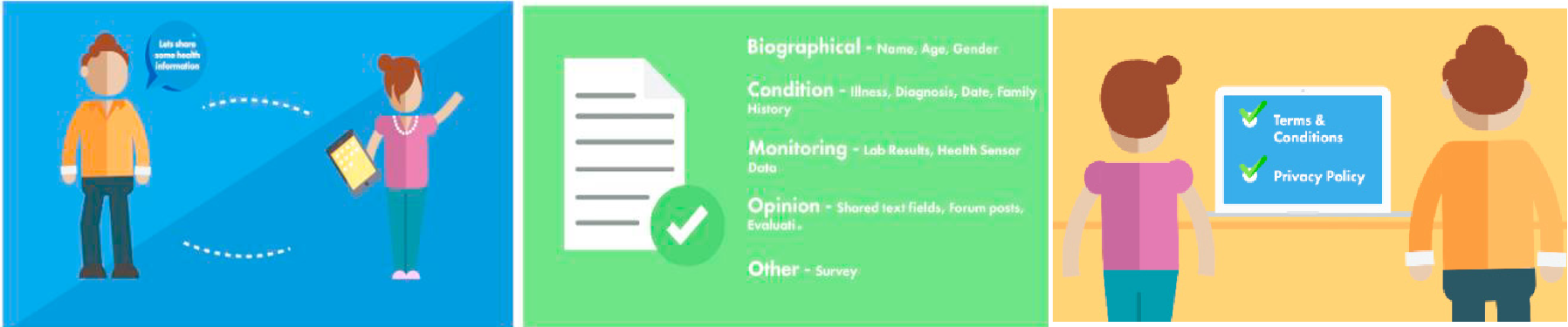
The study involved an online simulation where 25 participants navigated a mock registration, followed by intensive focus group discussions to "peel back" their emotional reactions.
Key Insights: When "Informed" Equals "Concerned"
The results from the focus groups were a wake-up call for HSN developers.
1. The "Vocal Design" Trap
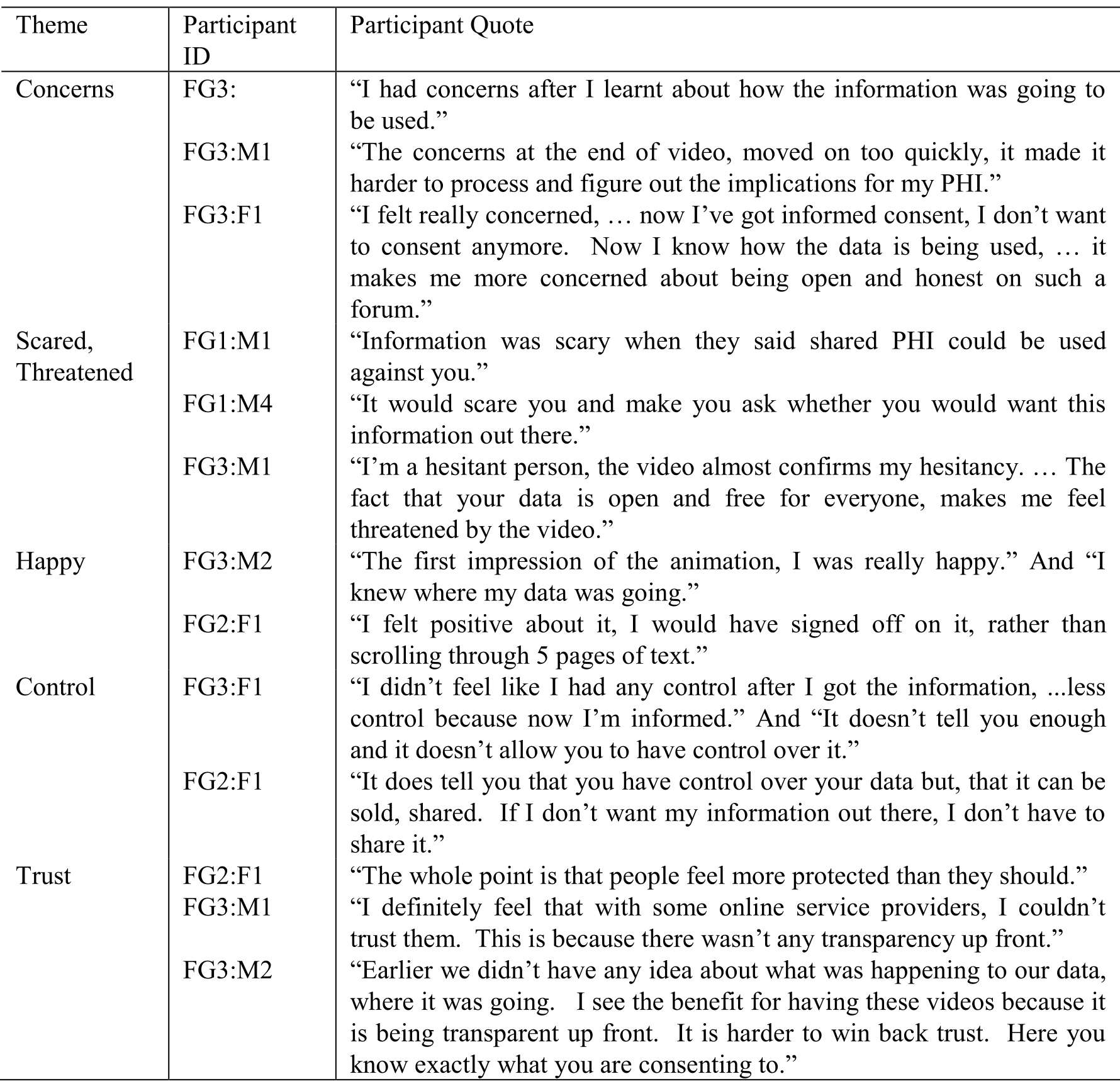
Unexpectedly, the voice of the animation was as important as the content. Participants were highly sensitive to the narrator's accent, pitch, and "up-talk" (rising inflection at the end of sentences). If the voice sounded too "excited" or "unserious," it undermined the gravity of the legal information being shared.
2. The Rise of "Informed Hesitancy"
The study proved that the animation worked—perhaps too well for the HSNs. Once users understood that their data could be used against them by employers or insurers, their emotions shifted from "happy to join" to "scared and threatened."
"Now I’ve got informed consent, I don’t want to consent anymore," noted one participant (FG3:F1).
Critical Analysis & The Future of HSNs
This work highlights a fundamental tension in digital health: Transparency vs. User Growth. If users truly understood what they were signing, many wouldn't sign.
Takeaways for the Industry:
- Supplement, Don't Just Replace: Animations should be visible on the registration page with an embedded timer to ensure engagement.
- Vocal Customization: Future eConsent tools should allow users to choose a "voice profile" (gender, accent, tone) that they find trustworthy.
- Dynamic Consent: The industry must move toward "opt-in/opt-out" preferences for different levels of data sharing, rather than a binary "take it or leave it" agreement.
Conclusion
The study concludes that as HSNs become more persuasive in their marketing, they have an ethical duty to be equally persuasive in their transparency. Animated eConsent is not just a UI upgrade; it is a necessary tool for digital citizenship in a post-GDPR world.