
Vote For Me!: Strategic Election Control via Social Influence and Ranking Dynamics
Vote For Me!: Election Control via Social Influence in Arbitrary Scoring Rule Voting Systems
The paper introduces the Linear Threshold Ranking (LTR) model to study election control via social influence in arbitrary scoring rule voting systems (e.g., Plurality, Borda count). It provides approximation algorithms to maximize or minimize a target candidate's Margin of Victory (MoV) by strategically selecting a seed set of influential voters.
TL;DR
Researchers have developed a mathematical framework called Linear Threshold Ranking (LTR) that models how social influence doesn't just nudge a voter, but can fundamentally reorder their entire preference list. By exploiting the submodular properties of this model, they've created algorithms that can optimize the "Margin of Victory" for a target candidate in virtually any standard voting system (like Borda count or Plurality) with provable performance guarantees.
Problem & Motivation: Beyond the "One-Vote" Mentality
In digital politics, influence isn't binary. It's not just about whether you vote; it's about how you rank the field. Traditional models like the Independent Cascade Model (ICM) or basic Linear Threshold Models (LTM) often treat opinions as binary (Active/Inactive) or assume that influence only moves a candidate up or down by a single slot.
The authors argue that this is unrealistic. If a voter is heavily influenced by their peers, their perception of a candidate might jump from last place to first. Furthermore, most existing research focuses on Plurality voting (whoever gets the most 1st place votes wins), ignoring the complexity of Scoring Rules where 2nd and 3rd place rankings also contribute points.
Methodology: The Linear Threshold Ranking (LTR) Model
The core innovation is the link between influence accumulation and ranking displacement.
1. The Physics of Influence
In the LTR model, each voter has a threshold . As their neighbors become "active" (recruited by a campaign), they exert influence weight . Once the sum of weights hits the threshold, the voter is influenced. However, LTR goes further: the number of positions the target candidate moves up in voter 's ranking is determined by: This means more influence equals a bigger jump in the ranking.
2. The LDR Process (The Mathematical "Secret Sauce")
To prove that a Greedy algorithm would work, the authors needed to show submodularity (a property identifying "diminishing returns"). They introduced the Live-edge Dice Roll (LDR).
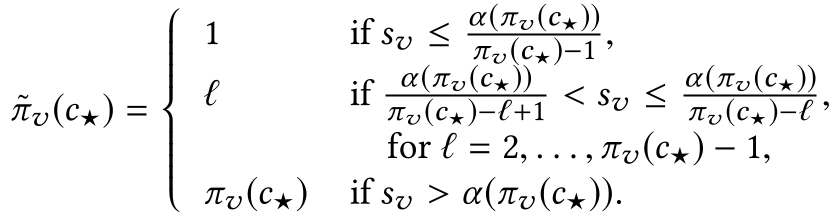 Figure: The LDR process allows the authors to treat the complex ranking shifts as a probabilistic reachability problem, making the optimization tractable.
Experiments & Results: Guaranteed Manipulation
The authors evaluate their approach on the Margin of Victory (MoV), defined as the gap between the target candidate and their strongest rival.
Key Findings:
- Constructive Control: By choosing a seed set of voters, the Greedy algorithm achieves a approximation. This is a significant result for arbitrary scoring rules.
- Destructive Control: To make a candidate lose, they cleverly reversed the rankings and scoring functions, achieving a approximation.
- Universality: Unlike previous SOTA methods tied to Plurality, this works for any non-increasing scoring function .
 The framework bridges the gap between social network topology and formal voting theory.
Critical Analysis & Conclusion
This paper is a significant "SOTA repair" and "Bridge Building" work. It repairs the overly simplistic influence models of the past and builds a bridge to the complex scoring rules used in many democratic and organizational contexts.
Takeaway
The research highlights a "vulnerability" in ranking-based voting systems: they are susceptible to targeted social influence campaigns if an adversary understands the network structure.
Limitations
- Single-Target Focus: The model currently only considers changing the position of one target candidate. In a real election, influence might shift the relative rankings of all candidates simultaneously.
- Static Graph: It assumes the social network structure is known and static, which is rarely the case in fast-moving digital political landscapes.
Future Work could involve "Multi-candidate LTR," where social influence affects the entire permutation of preferences, creating a more holistic simulation of political discourse.