
Stabilizing the Walk: Mastering Environmental Modes for Bipedal Robots
A Walking Stabilization Method Based on Environmental Modes on Each Foot for Biped Robot
This paper introduces an extended environmental-mode compliance controller for biped robots to track Zero-Moment-Point (ZMP) reference trajectories. The method utilizes "environmental modes" (heaving, rolling, pitching, twisting) derived from four-point force sensors on each sole to stabilize walking, particularly during the double-support phase.
TL;DR
Bipedal stability is not just about where you place your feet, but how you interact with the ground once you're there. This paper presents an enhanced control framework that decomposes complex ground reaction forces into four "Environmental Modes." By adding Heaving mode control to the traditional rolling and pitching adjustments, the authors achieve a significantly more stable gait, especially during the treacherous double-support phase and when encountering unexpected obstacles.
The Missing Link in ZMP Control
Most bipedal walking algorithms rely on the Zero Moment Point (ZMP). If the ZMP stays within the footprint, the robot stays upright. However, real-world walking is messy. Sensor noise, joint elasticity, and uneven ground cause ZMP errors.
While previous studies successfully used ankle torque (rolling and pitching) to fix these errors in the single-support phase, they often ignored the Heaving mode—the vertical pressure balance. Without controlling heaving, the robot cannot effectively manage the transition between legs, often leading to "impact shocks" that throw the ZMP outside the stable region.
Methodology: The Power of Modal Decomposition
The core innovation lies in treating the foot-ground interaction as a set of structured "modes." Using four uniaxial force sensors at the corners of a rectangular sole, the system uses a Hadamard Matrix to transform raw sensor data into:
- Heaving: Vertical offset/pressure.
- Rolling: Rotation in the frontal plane.
- Pitching: Rotation in the sagittal plane.
- Twisting: Asperities of the ground (uncontrollable but useful for state recognition).
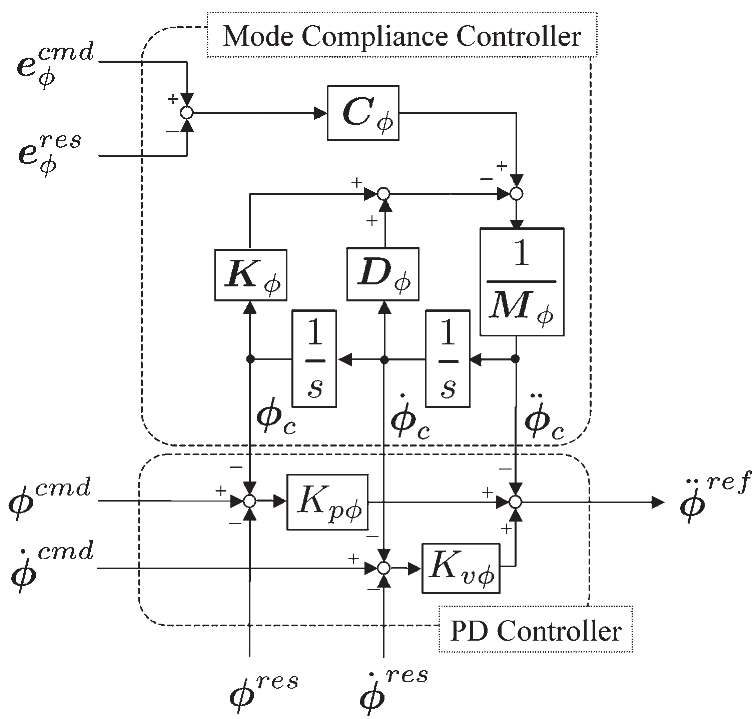 Fig 9: The compliance controller for rolling and pitching modes.
Why Heaving Matters
In the double-support phase, the robot must decide how to distribute its weight. The authors derived a mathematical relationship (Equation 15) that calculates the required heaving force for each foot based on the global ZMP reference. By implementing a Virtual Impedance Controller for the heaving mode, the robot acts like it has a tunable spring in its "waist-to-foot" vector, allowing it to absorb impacts and maintain the desired pressure distribution.
Experimental Evidence: Walking Over Obstacles
The researchers tested their theory using a physical bipedal robot in three scenarios. The most revealing results came from Case 2 (Low Heaving Gain) vs. Case 1 (Proposed Method).
- Case 2: The robot failed to track the heaving command during transitions. The resulting impact at 8.9s caused the y-component of the ZMP to spike wildly, eventually leading to a fall.
- Case 1 & 3: With the heaving controller active, the robot successfully navigated a 1.5 cm obstacle. The heaving mode successfully compensated for the "premature" contact with the obstacle, keeping the ZMP safely within the support polygon.
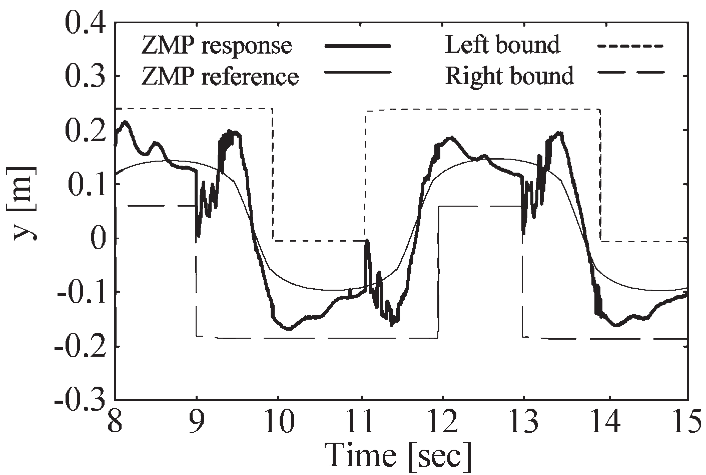 Fig 13 & 14: Comparative ZMP trajectories. Case 2 (dashed) hits the stability boundary, while the proposed method (Case 1) stays centered.
Critical Insight & Future Outlook
The beauty of this approach is its computational simplicity. Instead of complex environment mapping or expensive LiDAR, the robot uses "internal structures" (environmental modes) to feel the ground.
Takeaway: Precise control of vertical force (Heaving) is the "stabilizer" that makes rotational compliance (Rolling/Pitching) effective.
Limitations: The system relies on four-point contact (spikes). If an obstacle is larger than the spikes, the flat sole might contact the object directly, breaking the modal model. Future research might look into integrating these modes with "toe joints" or soft, deformable protective soles to handle even more complex terrains.
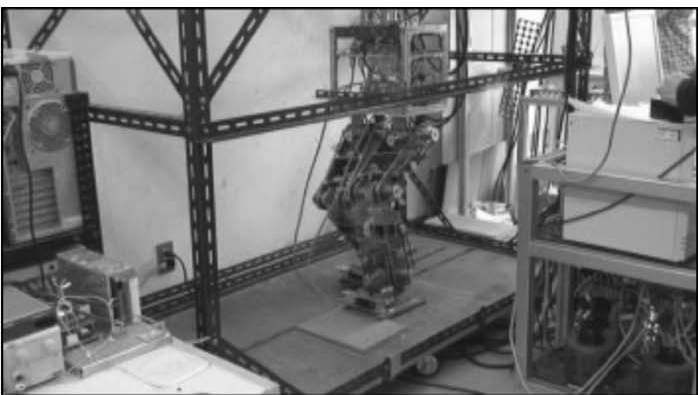 Fig 16: Sequential snapshots of the robot successfully walking over an obstacle using the proposed modal control.