
Stabilizing the Chaos: Designing Selfish Routing for Networks with Uncertain Delays
11016_Wardrop Equilibrium in Discrete-Time Selfish Routing With Time-Varying Bounded Delays.
This paper presents a distributed, discrete-time routing algorithm for multicommodity networks that converges to a Wardrop equilibrium despite the presence of heterogeneous, time-varying, and unknown but bounded delays. The authors prove convergence using LaSalle’s invariance principle for discrete-time systems and offer both measure-only and communication-enhanced variants.
TL;DR
In large-scale networks, "selfish" agents (packets or vehicles) choose paths to minimize their own travel time (latency), aiming for a Wardrop Equilibrium. However, real-world feedback delays usually turn this goal into an unstable mess. This paper introduces a discrete-time control algorithm that mathematically guarantees convergence to an approximation of this equilibrium even when delays are unknown, time-varying, and heterogeneous.
The "Stale Information" Problem
The ideal state of a network is the Wardrop Equilibrium: a condition where no user can reduce their travel time by switching paths. In modern high-speed communication (like SDN) or urban traffic, agents make decisions based on measured latency.
The catch? By the time a router or driver receives a latency measurement, it is already "stale." If everyone switches to the "fast" path based on old data, that path immediately becomes congested, leading to violent oscillations. Previous research struggled to prove stability in multicommodity scenarios (multiple origins and destinations) where flows interact in complex, non-linear ways under discrete-time sampling.
Methodology: The Framework
The authors treat the network as a dynamical system and use LaSalle’s Invariance Principle to prove stability. The core innovation lies in the definition of an -Wardrop Equilibrium:
- Tolerance (): Agents only migrate from path A to path B if the latency difference is significantly large ().
- Significance (): Paths with negligible flow (below ) are ignored to prevent tiny fluctuations from stalling the algorithm.
Architecture of the Controller
The algorithm uses a Migration Policy. Instead of a simple "better response," it uses a dampened rate proportional to the measured latencies.
 Figure 1: The feedback loop of the selfish routing mechanism where delays are explicitly considered in the state update.
To handle the unknown delays, the authors augment the system state to include a history of previous flows, ensuring the Lyapunov analysis covers the "memory" of the network.
Refinement through Communication
While the basic algorithm works based only on a commodity's own measurements, the authors propose a Communication-Enhanced Algorithm. By exchanging the "maximum observed error" between different commodities, the system can dynamically shrink the tolerance over time.
- Phase 1: High allows for aggressive, fast convergence when the network is highly imbalanced.
- Phase 2: As the system nears equilibrium, decreases, allowing for a microscopic "fine-tuning" of the flows.
Experimental Proof
The researchers tested the algorithm on a complex topology with 17 edges and two major traffic commodities.
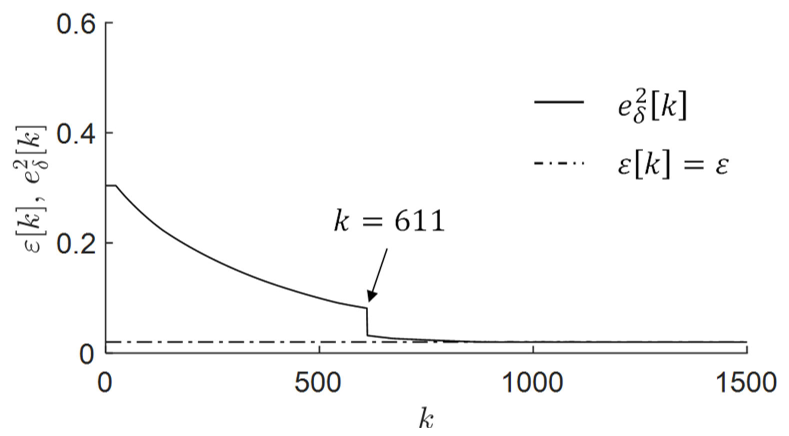 Figure 2: Trajectory of population and latency over time. Note how the "Static Tolerance" version (Fig. 2 in paper) reaches a steady state, while the "Dynamic Tolerance" version (Fig. 3 in paper) significantly reduces the remaining latency mismatch.
The results demonstrated that:
- The system is robust against time-varying delays (up to 2s in the simulation).
- Dynamic tolerance achieves a better approximation of the theoretical Wardrop Equilibrium than static approaches.
Conclusion and Insights
This paper bridges the gap between game theory and control engineering. For engineers building automated traffic management or cloud routing protocols, the takeaway is clear: Stability in delayed systems requires a dead-zone () that is proportional to the uncertainty. Without this "buffer," selfish optimization is more likely to cause congestion than solve it.
Future research looks to expand this into multirate systems, where different agents make decisions at different frequencies—a common scenario in heterogeneous IoT networks.