
Hybrid Sensing: Redefining 3D Posture Estimation for Lower Back Healthcare
Wearable Sensing System to perform Realtime 3D posture estimation for lower back healthcare
This paper introduces a novel multimodal wearable sensing system designed for real-time 3D posture estimation to aid lower back healthcare. The system integrates dual-IMU sensors (placed on the lumbar region and wrist) with a MediaPipe-based computer vision unit, achieving over 97% accuracy in standing posture recognition.
TL;DR
Low back pain (LBP) is a global health crisis, often exacerbated by improper posture during unsupervised rehabilitation. This paper presents a dual-IMU wearable system combined with computer vision (MediaPipe) to track spinal and wrist movements in real-time. By fusing sensor data with 33-keypoint skeletal tracking, the system provides a high-fidelity 3D estimation of a user's posture, achieving up to 98% accuracy in dynamic movement classification.
Problem & Motivation: The Gap in Home Rehabilitation
Physical therapy is the gold standard for LBP, but it faces a catch-22: clinical supervision is expensive and time-consuming, while home exercise often lacks the proprioceptive feedback necessary to prevent further injury.
Existing solutions typically suffer from two flaws:
- Limited Scope: Many wearables only monitor the spine, ignoring hand/arm movements that affect overall balance and spinal load.
- Lack of Context: Vision-only systems can be obscured by clothing or environment, while sensor-only systems struggle with global spatial orientation.
The authors' insight was to create a synergistic "Sensing + Vision" pipeline that offsets the drift of IMU sensors with the absolute spatial references provided by computer vision.
Methodology: The Fusion of Silicon and Pixels
The system architecture is divided into three distinct pillars:
1. Dual-IMU Hardware Layout
Unlike single-sensor setups, this system uses two nodes:
- Back Device: An Arduino Nano BLE Sense placed at the lumbar region to track spinal tilt and rotation.
- Wrist Watch: An Arduino Nano 33 IoT that tracks arm movement, which is critical for exercises like squats or bird-dog poses.
2. Computer Vision (BlazePose)
The researchers utilized Google’s MediaPipe/BlazePose framework. Unlike older YOLO models, BlazePose is optimized for human pose estimation, tracking 33 keypoints. In this study, the authors focused on the lumbar-pelvic "hinge" points (11, 12, 23, 24, 25, 26) to quantify the quality of exercises.
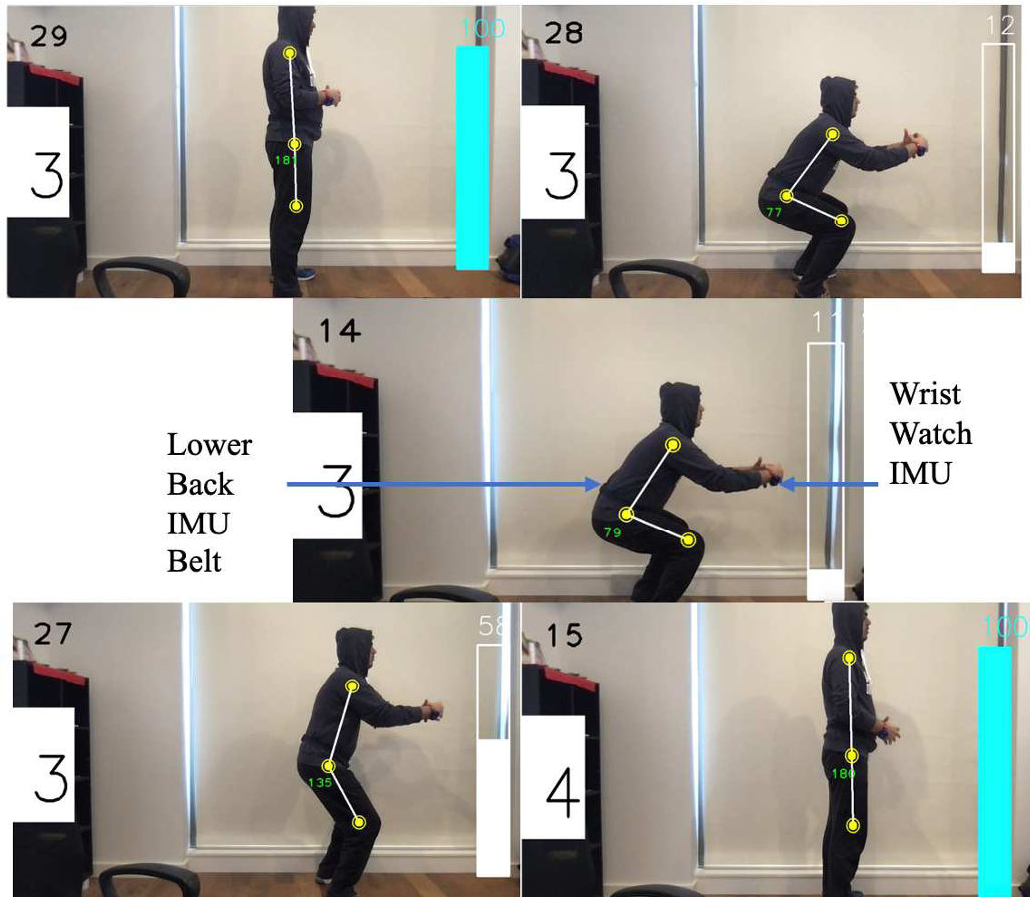 Fig 1: The information flow from dual-wearables and vision streams to the forecasting model.
3. Mathematical Alignment
To bridge the raw sensor data and 3D space, the system employs Quaternions (). This avoids "Gimbal Lock" and allows for a more stable calculation of the body’s rotation angle relative to the gravity vector.
Experimental Results: Precision in Motion
The system was tested against various rehabilitation poses, including high planks, glute bridges, and squats.
- Dynamic Accuracy: The system excels at tracking motion. Time-series forecasting (ARIMA) yielded accuracies of 96.7% to 98.7% for active lateral movements.
- Vision-Based Validation: The AI exercise tracker successfully monitored squat completion by calculating the vertex angle at the hip, identifying the transition from 180° (standing) to 77° (peak squat).
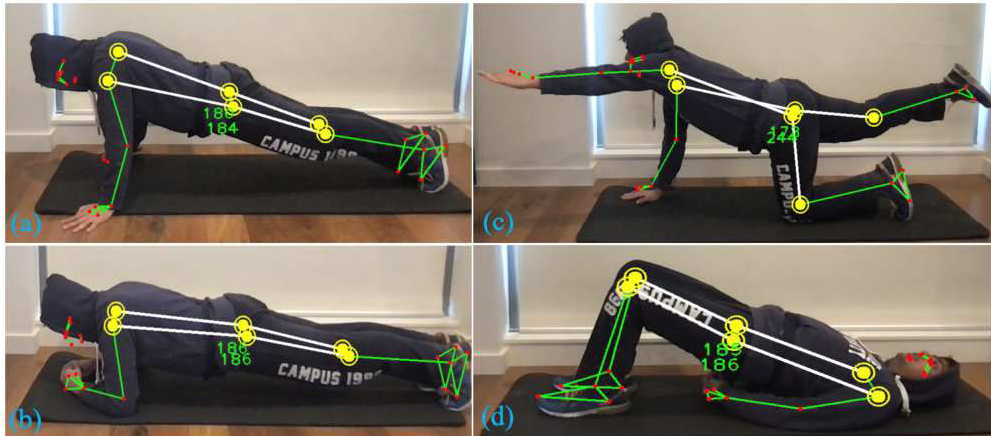 Fig 2: Real-time pose estimation using BlazePose during various therapeutic exercises.
The Standing Paradox
Interestingly, the system showed a slight drop in accuracy during static "Standing" or "Tilted" positions (~84-89%). This is a common phenomenon in IMU-based sensing where the lack of signal variance (acceleration) makes "stillness" harder to distinguish from "sensor noise."
Critical Analysis & Conclusion
Takeaway
The core value of this work is the scalability of the localized sensing. By moving beyond a single lumbar sensor and integrating cost-effective vision (even a laptop camera), the authors have created a framework that provides clinical-grade feedback at a consumer price point.
Limitations & Future Work
- Environment Sensitivity: The vision component still relies on lighting and camera placement.
- Deep Learning Integration: While ARIMA was used for preliminary forecasting, the authors suggest that a Deep Neural Network (DNN) would better handle the non-linearities of complex skeletal movements.
The future of LBP management likely lies in this "Smart-Body" approach, where our clothes and our cameras work together to keep our spines aligned.
Keywords: Posture Estimation, IMU, MediaPipe, Low Back Pain, IoT Healthcare.