
Wearing Emotions: Turning the Human Body into a Translucent Emotional Skin
Wearing Emotions: Physical Representation and Visualization of Human Emotions Using Wearable Technologies
This research introduces a framework for "Emotional Skins," utilizing wearable technologies to capture, visualize, and physically represent human emotions. Across a three-year iterative design process, the author developed prototypes like "Talkers" and "OneAvatar" that bridge the gap between internal psychological states and external social communication through real-time biofeedback and interactive visualizations.
Executive Summary
TL;DR: This paper explores the transition of technology from desktop screens to the human body, specifically focusing on "Emotional Skins." By integrating wearable sensors with cognitive modeling, the author demonstrates how internal feelings can be externalized as visual, auditory, and tactile "skins" that facilitate social communication and enhance human-computer interaction.
Background Positioning: This work sits at the intersection of Interaction Design, Affective Computing, and Ethnography. Rather than treating emotions as static data points, it treats them as a dynamic "grammar" for social life, following the lineage of Rosalind Picard’s groundbreaking work in affective technologies.
Problem & Motivation: Beyond the Cartesian Dualism
The author argues that Western intellectual tradition has long separated the body from the mind (Cartesian Dualism). In the context of technology, this has resulted in interfaces that are emotionally "blind."
Current challenges include:
- Cultural Relativity: Words for emotions don't always translate perfectly across languages or eras.
- Physiological Variance: Two people might feel the same physically but label the emotion differently, or vice-versa.
- Contextual Absence: Computers often lack the context required to interpret human emotional nuances effectively.
The motivation behind this research is to move beyond the "nature/nurture" debate and create bioculturally adaptive wearables that "tune" themselves to the specific individual's emotional configuration.
Methodology: The Sensor-Comparator-Actuator Pipeline
The research followed a three-year iterative design loop utilizing a hierarchical processing pipeline:
- Sensor Layer: Captures raw biological signals (Heart rate, GSR, movement) using Linear Systems Theory and Digital Signal Processing (DSP).
- Comparator Layer: Uses cognitive architectures like Soar, ACT-R, and JACK to perform heuristic searches and pattern recognition, mapping raw signals to emotional concepts (e.g., Plutchik’s angular distribution).
- Actuator Layer: The "Emotional Skin" itself. This stage transforms processed data into visualizations, audio tag clouds, or haptic feedback.
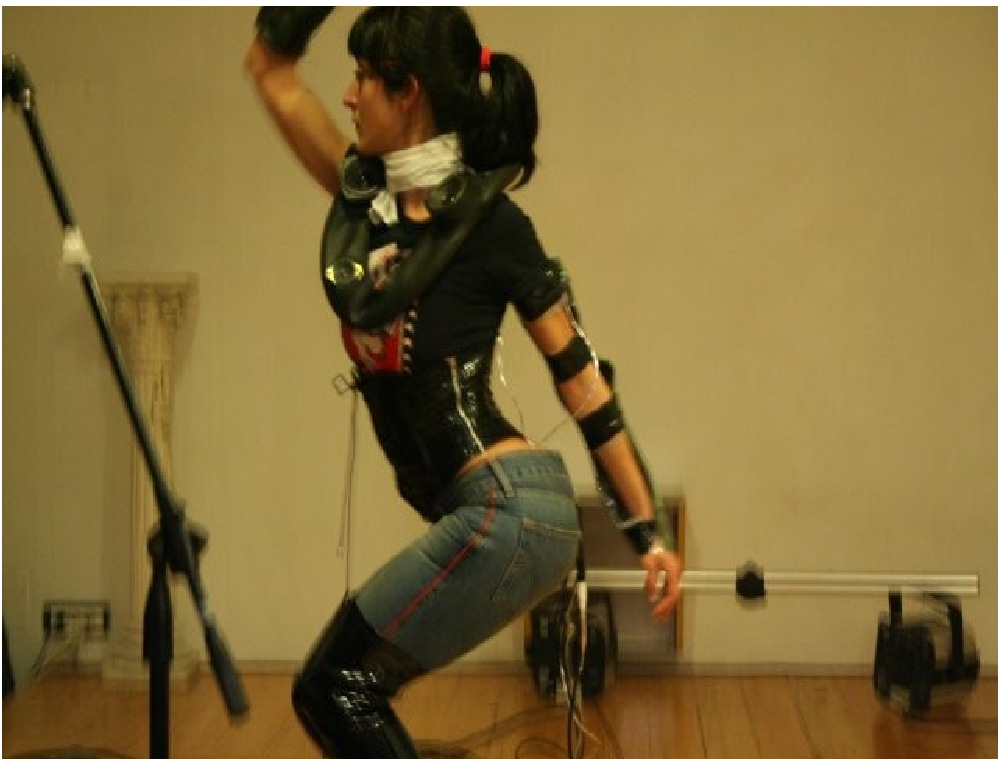 Figure 1: Iterative testing of a wearable device designed to map audience sentiment onto a performer.
Experiments & Results: Mapping the Invisible
The author highlights three major proof-of-concept projects:
1. Talkers: The Body as an Emotional Map
In this performance, audience members (live and online) expressed emotions through a web interface. These were mapped to a latex suit worn by a dancer.
- Visual/Audio: The suit featured an "audio tag cloud" where the volume of words matched the intensity of the audience's feelings.
- Physical: Audience emotions were converted into electrical stimulations on the dancer’s body, literally influencing the choreography in real-time.
2. The "O" Device
A mobile gadget that allowed users to "squeeze" emotions to peers. It used pattern analysis to recognize recurring configurations and provide feedback like, "You seem sad, are you okay?"
3. OneAvatar: Bridging Virtual and Physical Realities
This jumpsuit connected a user's physical body to their digital avatar in virtual worlds (e.g., Second Life).
- Cross-medial Loop: If the avatar was hit in the virtual leg, the human user felt an electrical pulse in their physical leg.
- Emotional Inversion: The avatar's "restlessness" in the digital world was visualized on the human wearer through ledger lights and disturbing audio frequencies.
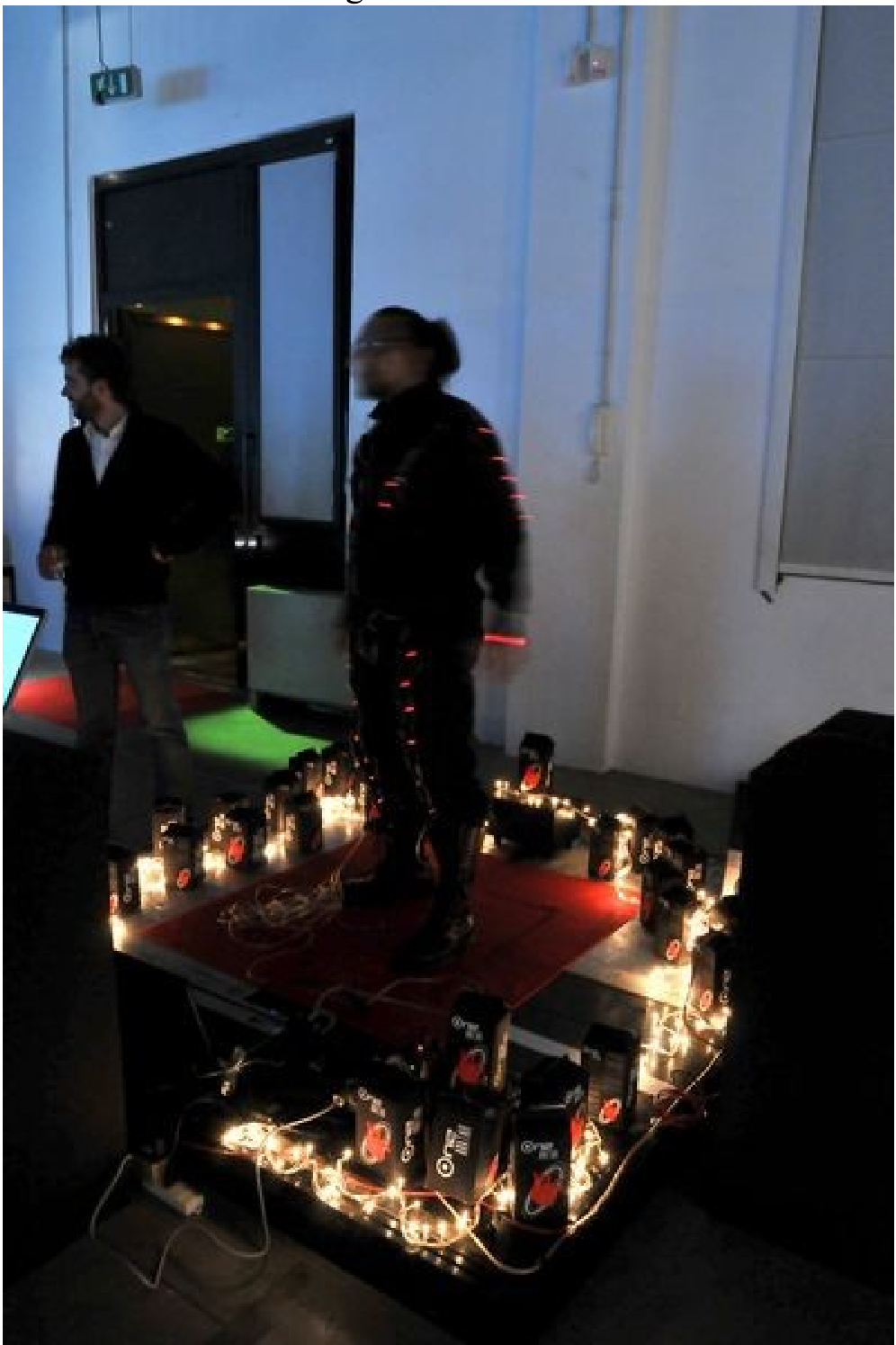 Figure 2: The OneAvatar suit (right) and the simplified Conference Biofeedback shirt (left).
Critical Analysis & Conclusion
Summary: This research successfully demonstrates that emotions can be processed as information and re-rendered as a "skin." By making the internal external, we create new cognitive processes for social communication and education.
Limitations:
- Technical Intrusiveness: Using electrical shocks/stimulation, even at low voltage, can be disorienting or physically taxing for users.
- Privacy: Turning emotions into a public "skin" raises significant privacy concerns—what happens when we can no longer hide our internal states?
Future Outlook: As technology continues to move from our pockets to our flesh, the concept of an "Emotional Skin" may become a standard layer of our social identity, potentially leading to a more empathetic—if shockingly transparent—society.