
Predictive Environmental Health: Harnessing ML to Anticipate COPD Exacerbations
Impact of Weather and Pollution on COPD-Related Hospitalizations, Readmissions, and Emergency Visits by Integrating Claims and Environmental Data to Build Human-Centered Decision Tools
This study presents a human-centered predictive framework that integrates CMS medical claims with zipcode-level environmental data (pollution and weather) to forecast COPD-related hospitalizations. Utilizing Logistic Regression, XGBoost, and Deep Neural Networks (DNN), the research achieves up to 93% accuracy in predicting hospitalization risks across New York, Pennsylvania, and Florida.
Executive Summary
TL;DR: Chronic Obstructive Pulmonary Disease (COPD) management is moving beyond the clinic. This research demonstrates that by fusing CMS medical claims with high-resolution environmental data (pollution and weather), machine learning models can predict hospitalizations with up to 93% accuracy. This transition toward "Human-Centered" tools allows clinicians to intervene before environmental triggers lead to emergency visits.
Positioning: This work serves as a practical bridge between Environmental Epidemiology and Predictive Healthcare Analytics, shifting the focus from retrospective population studies to prospective, zipcode-level clinical decision support.
The Missing Link: Why Clinical Data Isn't Enough
Current clinical workflows for COPD are largely reactive. While doctors know that age and comorbidities are risk factors, they often lack visibility into the "External Trigger" layer. The authors argue that urban living conditions—specifically exposure to , , and volatile weather—are primary drivers of acute exacerbations.
The challenge lies in the Data Silo Problem: health records live in claims databases, while environmental data lives in NOAA/EPA repositories. By breaking these silos, the researchers aimed to solve the high rate of preventable 30-day readmissions and ER visits that cost the healthcare system billions.
Methodology: Fusing Human Factors with Environmental Science
The study utilized a massive dataset of over 200,000 patient episodes across New York, Pennsylvania, and Florida. The core innovation is the feature engineering process that maps daily zipcode-level pollutants directly to patient clinical histories.
The Model Stack
The researchers compared three distinct approaches to balance interpretability with raw predictive power:
- Logistic Regression: Used as the baseline for its low variance and high transparency in clinical settings.
- Boosted Tree (XGBoost): Leveraged for its ability to handle tabular data with non-linear relationships.
- Deep Neural Networks (DNN): Deployed via Google Cloud Platform to capture the most complex patterns, despite a higher risk of overfitting.
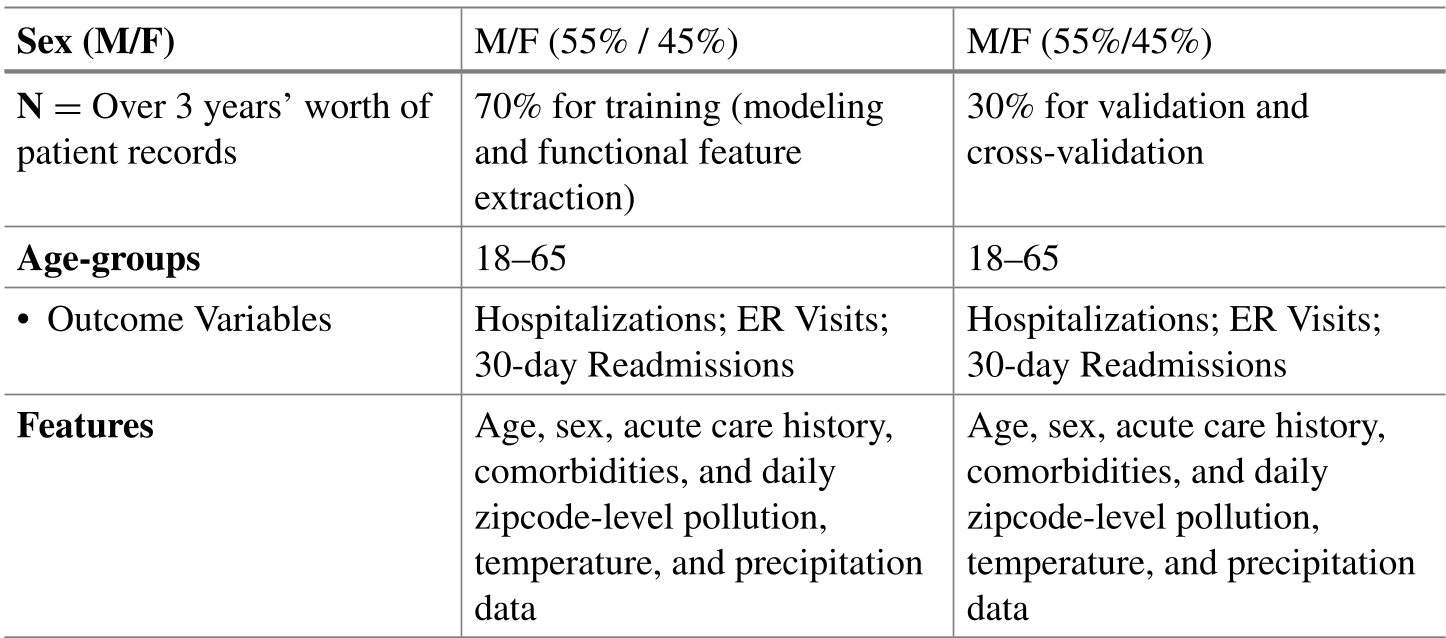 Table 1: Overview of data features and cohort selection involving 200k+ records.
Key Insights from the Results
The experiments yielded a clear hierarchy of predictability. While Hospitalization Risk was highly predictable (91-93% accuracy), 30-Day Readmission proved much more elusive (approx. 61% accuracy). This suggests that while external environment strongly triggers the initial crisis, readmissions may be driven more by post-discharge care quality and individual patient behavior.
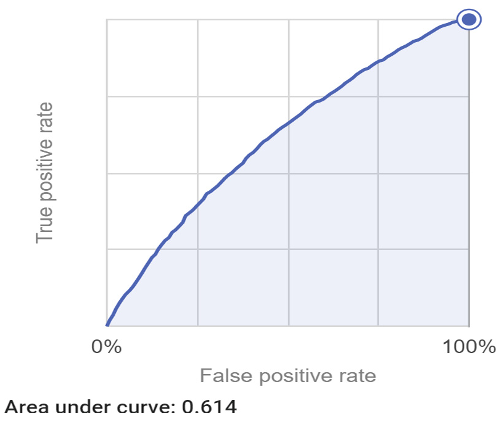 Fig 6 & 7: High AUC performance for Hospitalization and ER Admission risks in urban contexts.
Environmental Sensitivity
The study confirmed that "unusual" levels of pollutants (, , ) combined with cooler temperatures and high precipitation act as a "perfect storm" for COPD patients. The human-centered design approach ensures these findings aren't just statistics; they are translated into visual tools for case managers.
Critical Analysis & Future Outlook
Strengths: The scale of the study (200k+ patients) and the geographic diversity (NY, PA, FL) provide significant statistical weight to the findings.
Limitations:
- Socioeconomic Gaps: The current model lacks data on income levels and tobacco use, which are massive confounders in respiratory health.
- Overfitting: As noted in the paper, the DNN models showed high variance. In a real-world clinical deployment, a more stable XGBoost or ensemble approach might be preferable.
What's Next?: The authors propose expanding to the West Coast to model the impact of wildfires—a critical move as climate change increases the frequency of extreme pollution events. For the industry, this paper is a blueprint for the next generation of "Smart Care" apps that could alert a patient: "Pollution is high in your zipcode today; please ensure your rescue inhaler is nearby."
Conclusion
By integrating the "Exposome" into clinical modeling, this research provides a high-accuracy path toward reducing the burden of COPD. It proves that our health is not just a product of our biology, but a constant interaction with the air we breathe.