
WeatherUSI: Transforming Public Displays into Urban Weather Sensors
WeatherUSI: User-Based Weather Crowdsourcing on Public Displays
The paper introduces WeatherUSI, a web-based interactive public display application designed for in situ weather crowdsourcing. Integrated into the broader "Atmos ecosystem," it leverages both public displays and mobile devices to collect subjective human reports and objective sensor data to improve localized weather forecasting.
TL;DR
WeatherUSI is an interactive public display application that turns passers-by into "human weather stations." By combining subjective human estimates with mobile sensor data, the system aims to solve the problem of inaccurate weather forecasting in complex micro-climates. It bridges the gap between individual mobile use and collective public interaction.
Problem & Motivation: The Gap in Localized Forecasting
Standard meteorological models operate on a macro scale, often missing the nuances of micro-climates—localized areas where weather deviates significantly from the regional average. While mobile crowdsourcing (e.g., the Atmos app) began to address this, it lacks the high-visibility physical presence required to drive continuous engagement and allow researchers to observe crowdsourcing behavior in situ.
The authors argue that public displays are an untapped resource. No longer just static billboards, these interactive hotspots can serve as high-traffic data collection portals that validate and process urban information in real-time.
Methodology: The Atmos Ecosystem
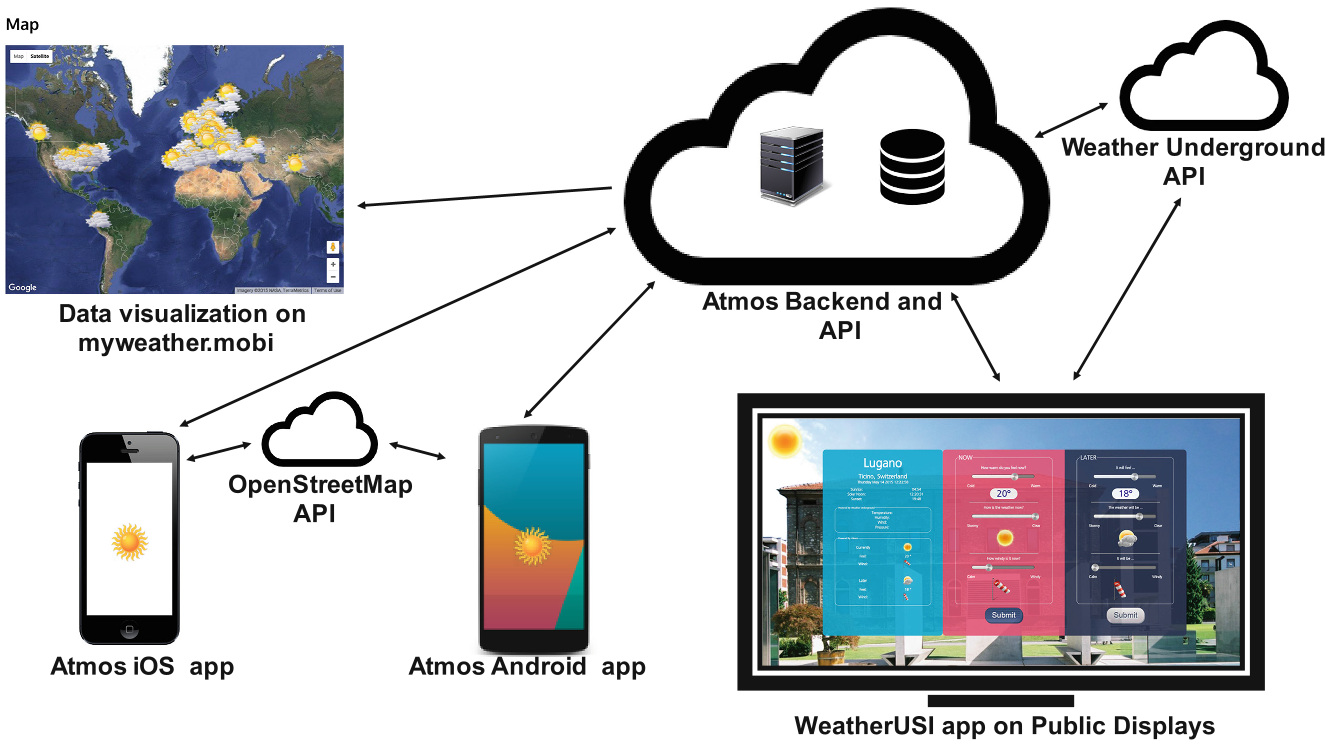
The core of WeatherUSI is its integration into the Atmos ecosystem, a hybrid architecture designed to fuse different data streams:
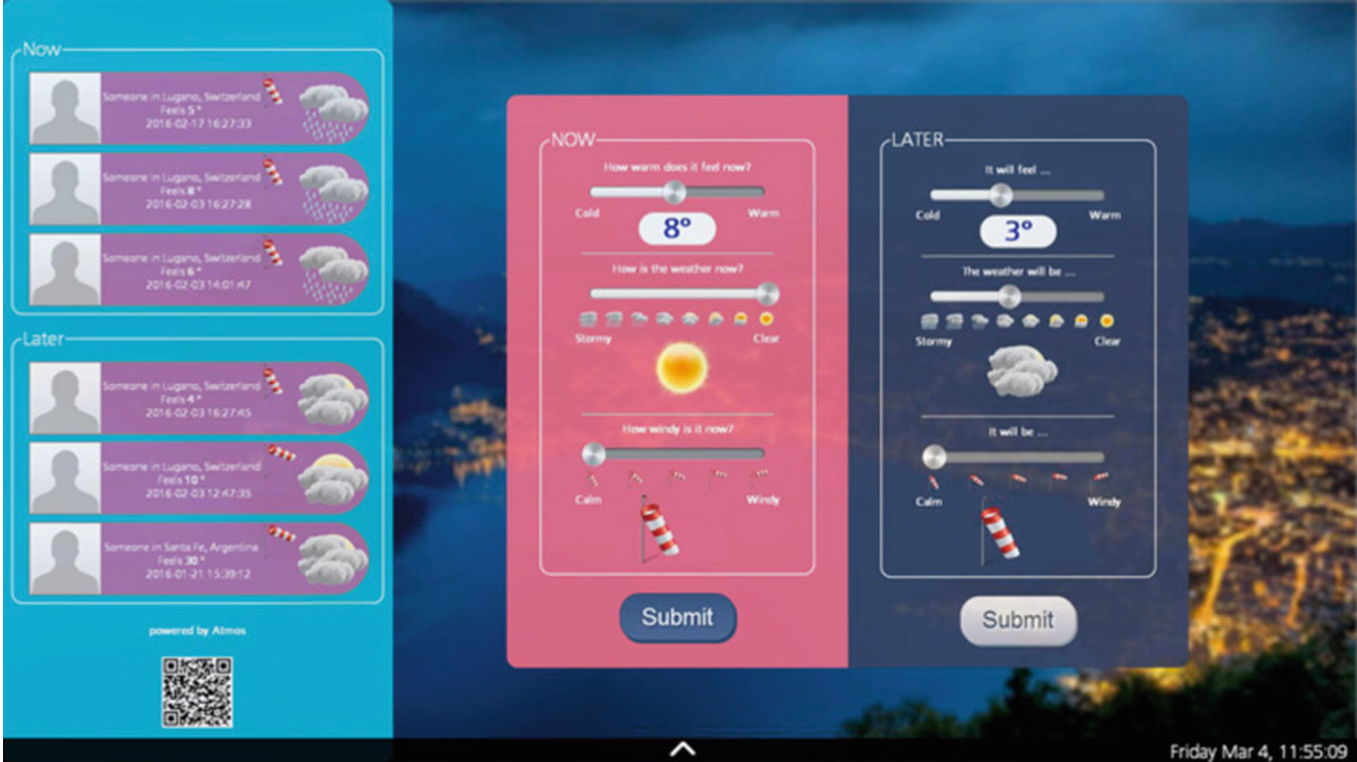
- Manual Input: Users interact with a three-bar layout to report temperature, phenomena (e.g., sunny, stormy), and wind intensity.
- Sensory Input: Mobile counterparts (Android/iOS) automatically poll onboard sensors like barometric pressure.
- Real-time Synchronization: Using WebSocket technology, the system ensures that data exchange between the backend and the display is instantaneous, providing immediate visual feedback to the user.
The researchers also integrated a gamification loop: once a user submits their prediction, the UI "flips" to show actual measurements from the Weather Underground API. This immediate comparison serves as a pedagogical and motivational tool, encouraging users to improve their estimation accuracy.
Experiments & Results: Crowdsourcing in the Wild
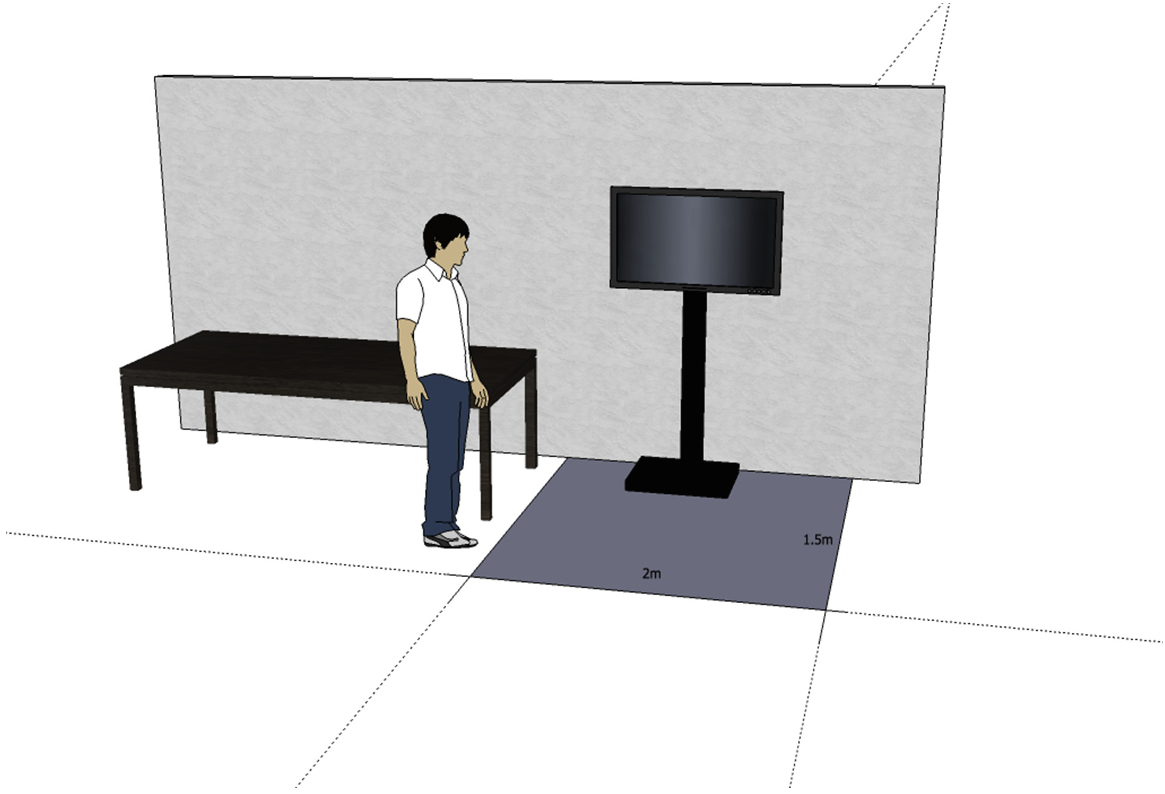
The system was deployed at the University of Lugano (USI) using 46-inch touch-enabled displays.
- Data Fusion: The backend successfully merged inputs from transient passers-by with persistent mobile app users.
- Responsiveness: The use of WebSockets proved critical for the interactive nature of the "flip" panels, maintaining a low-latency user experience that is essential for public kiosks where users spend only a few seconds.
- Heuristic Insights: Preliminary findings suggest that humans are remarkably accurate at short-term weather estimation when given the right interactive tools.
Critical Analysis & Conclusion
WeatherUSI represents a shift towards Urban Computing, where the built environment becomes an active participant in data science.
Takeaway: By combining the explicit human experience of weather (how "hot" it feels) with implicit sensor data (what the pressure actually is), the authors create a more holistic dataset than either source could provide alone.
Limitations & Future Work: While the tech stack is robust, the current model relies heavily on user altruism. Future iterations could explore more complex Machine Learning models to weight user reports based on their historical accuracy, potentially creating a "reputation score" for different sources within the crowdsourced network.