
Decoding the Digital Soul: Emotional Synchronization in Social Life Logging
Web behavior analysis in social life logging
The paper proposes a specialized web behavior model that integrates life-logging data with Natural Language Processing (NLP) to analyze user patterns. By utilizing the "Social Browser" Android app, it captures URLs, emotional tones, and categories to synchronize users into social groups based on behavioral similarities.
TL;DR
Researchers have moved beyond simple clickstream tracking to develop a Web Behavior Model that captures the "emotional pulse" of Internet usage. By combining NLP, personalized sentiment analysis (PDS), and hierarchical clustering, this study proves that our web habits don't just reveal what we like—they reveal who we are synchronized with in the social fabric.
Context: Why Self-Reporting Fails
For decades, understanding web behavior meant asking people what they did online. However, human memory is a leaky sieve. We forget the "snack culture" moments—the 30-second news checks or the mindless scrolls. This paper argues that to truly understand the "Social Life Log," we need quantitative, real-time measurements that include Emotion and Physical Context (GPS).
Methodology: The Fine Art of Mining Meaning
The authors didn't just look at where users went; they looked at how they felt.
1. The PDS Innovation (Personalized Document Similarity)
An word like "Cloud" might trigger "Relaxation" for one person but "Gloom" (Unpleasantness) for another. To solve this, the authors developed Personalized Document Similarity (PDS).
- The Formula:
- By adding a Keyword Preference Index (KPI) to standard document similarity, the model accounts for individual temperament.
2. The Multi-Layered Pattern
The model extracts six distinct features:
- Content Category: 15 domains like Politics, Game, and Health.
- Content Emotion: 9 domains based on the pleasantness-arousal circumplex.
- Link Category: Investigating the destination of hyperlinks to understand intent.
- Interests: Using LDA (Latent Dirichlet Allocation) to find hidden topics in search queries.
- Spatiotemporal Data: Duration, frequency, and GPS location.

Insights from the Data
The study monitored 79 participants for 15 days. The results painted a vivid picture of modern digital life:
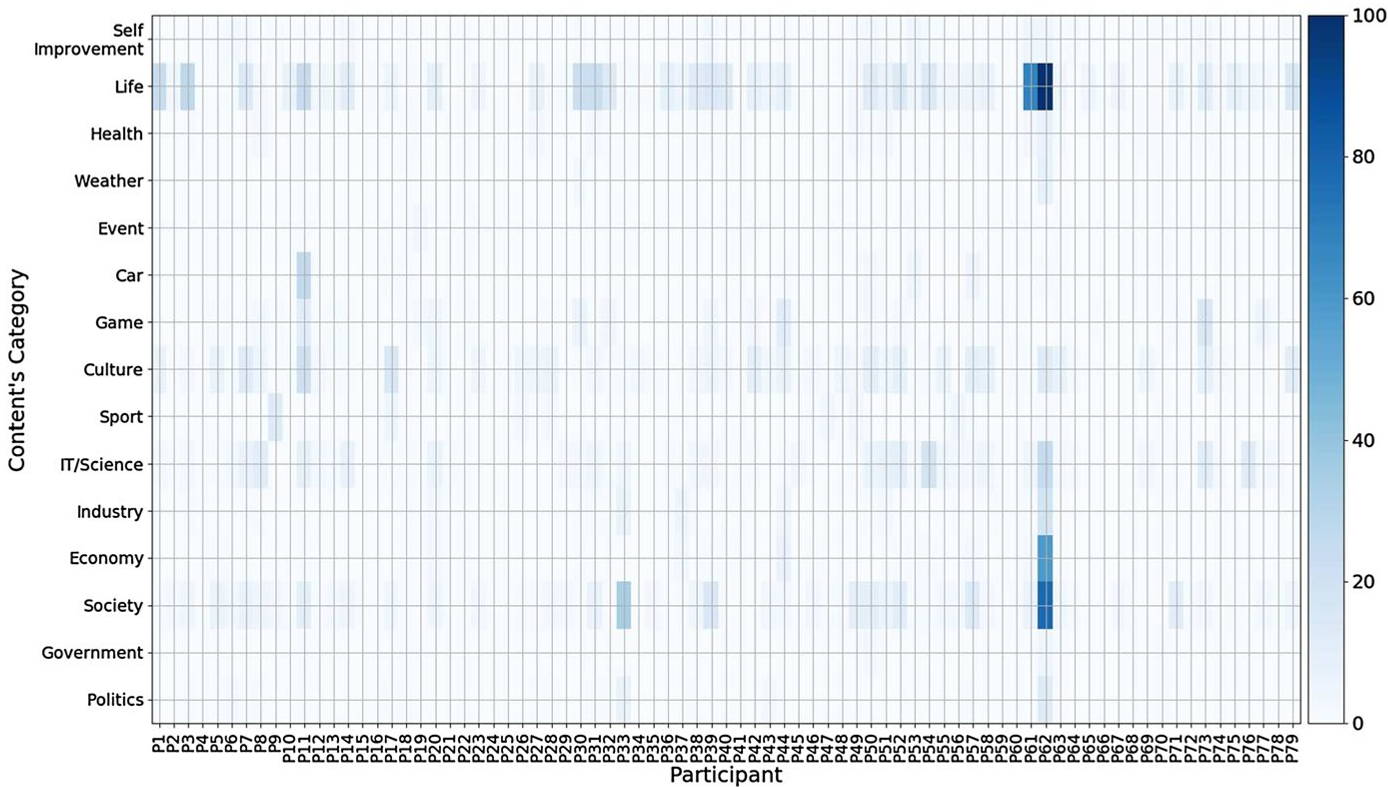
- The "Society" Hub: Most hyperlink clicks were concentrated in the "Society" category, confirming that external links are primary drivers for social awareness.
- Correction via PDS: 14.3% of emotional classifications changed when PDS was applied, proving that "one-size-fits-all" sentiment analysis is fundamentally flawed.
- Geographic Intent: LDA analysis showed clear regional patterns—users in Seodaemun-gu searched for "Seoul weather," while those in Jongno-gu focused on "micro dust."
Synchronization: Creating the Social Map
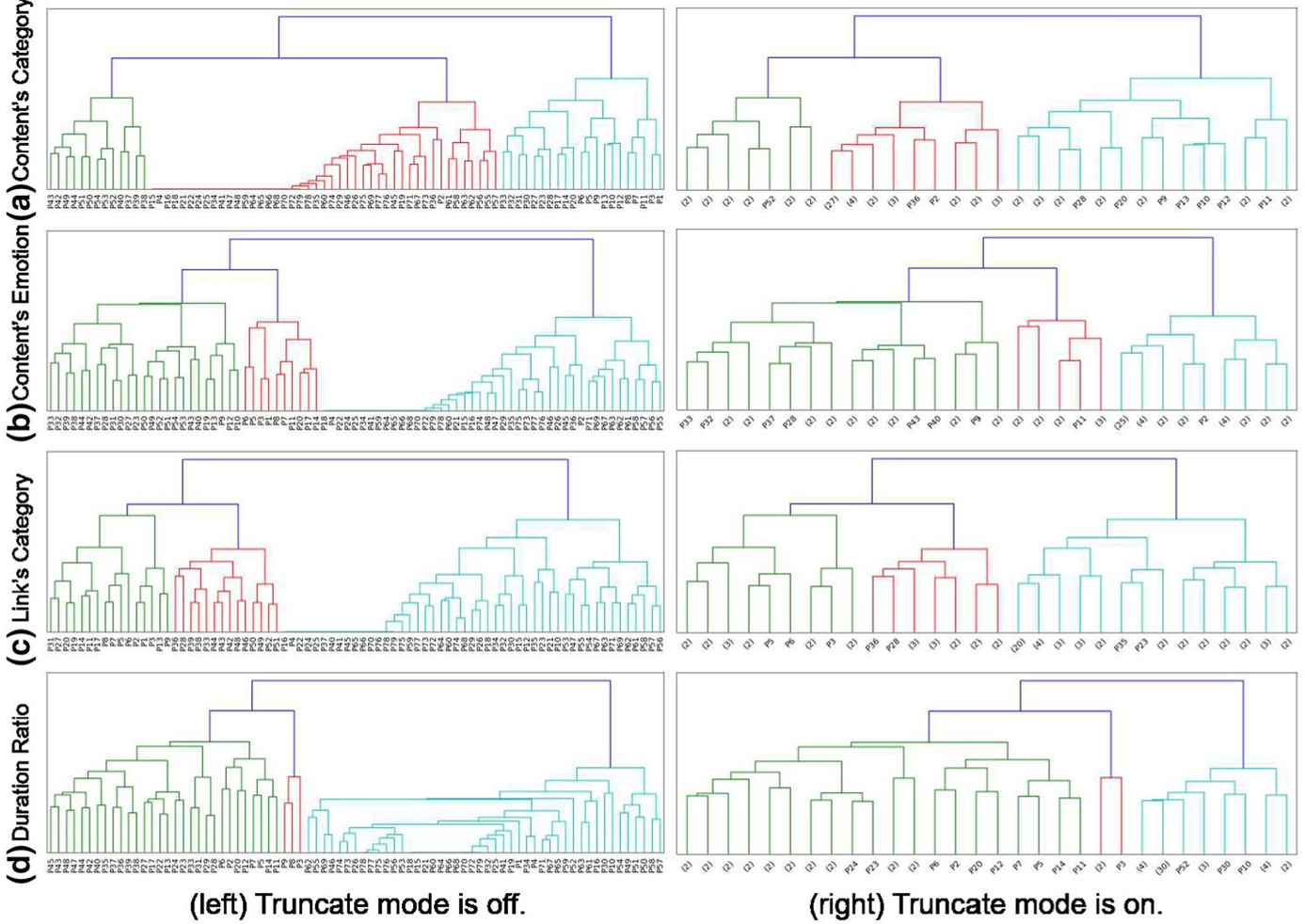
The most striking part of the research is the use of Reverse Web Distance (RWD) and Hierarchical Clustering to find "Digital Twins."
By calculating the distance between participants across all behavioral features, the authors created a Social Connectivity Circle Graph.
- Entropy as a Metric: They used Entropy to determine which groups had the "best bond." Low entropy signaled high behavioral concentration—meaning the members of that group didn't just browse similarly; they reacted to the web with the same emotional and temporal rhythm.
Future Implications & Conclusion
This research moves us closer to "Empathic Marketing." Instead of recommending a product because you clicked a link, future systems could recommend a community because your emotional consumption pattern synchronizes with theirs.
Limitations: Currently, the features are analyzed separately. The authors suggest that a unified, comprehensive behavior index is the next frontier.
Bottom Line: Your web log is more than a history of URLs; it’s a signature of your emotional state and social identity.