
Bridging Linguistics and Philosophy: Enriched WordNet with UFO Foundational Ontology
Web Semantics: Science, Services and Agents on the World Wide Web
The paper introduces a framework to semantically enrich WordNet by mapping its noun synsets to the Unified Foundational Ontology (UFO). It utilizes "Semantic Types" as an intermediary linguistic-philosophical bridge to imbue lexical data with formal meta-properties like rigidity and identity principles, achieving 93.5% accuracy in experimental validations.
TL;DR
Researchers have developed a robust framework to inject "philosophical DNA" into WordNet. By mapping WordNet's lexical synsets to the Unified Foundational Ontology (UFO) via Semantic Types, they've enabled machines to understand not just what a word is related to, but the fundamental nature of the concept it represents. The result? A 93.5% accurate mapping that can automatically generate sophisticated, well-founded domain ontologies.
The Missing Dimension: Why WordNet Isn't Enough
For decades, WordNet has been the backbone of NLP. It tells us that a "dog" is a "mammal" (Hypernymy) and a "fingerboard" is part of a "guitar" (Meronymy). However, it remains "philosophically shallow."
It cannot distinguish if a concept is:
- Rigid: Is a "Person" still a person in every possible world? (Yes).
- Anti-rigid: Is a "Student" always a student? (No, it’s a phase).
- Relationally Dependent: Does a "Husband" exist without a spouse? (No).
Without these meta-properties, AI systems often struggle with Ontology Learning, creating models that are structurally sound but logically fragile.
The Methodology: Meaning as a Bridge
The researchers didn't just manually tag 117,000 synsets. Instead, they built a bridge using Semantic Types (proposed by R.M.W. Dixon).
1. Simple vs. Complex Mappings
The core of the paper lies in its transformation rules.
- Simple Mappings: Direct 1-to-1 correspondences (e.g., the Animal supersense maps directly to the Animate semantic type).
- Complex Mappings: These require context. For instance, the Person supersense might be a Kin (if "Relative" is in its ancestor tree) or a Rank (if it refers to a professional role).
2. The UFO Connection
Once mapped to a Semantic Type, the concept is assigned an OntoUML construct. This is where the magic happens: a "Kin" synset automatically inherits the properties of a Role in UFO-A, meaning it is officially recognized by the system as anti-rigid and relationally dependent.
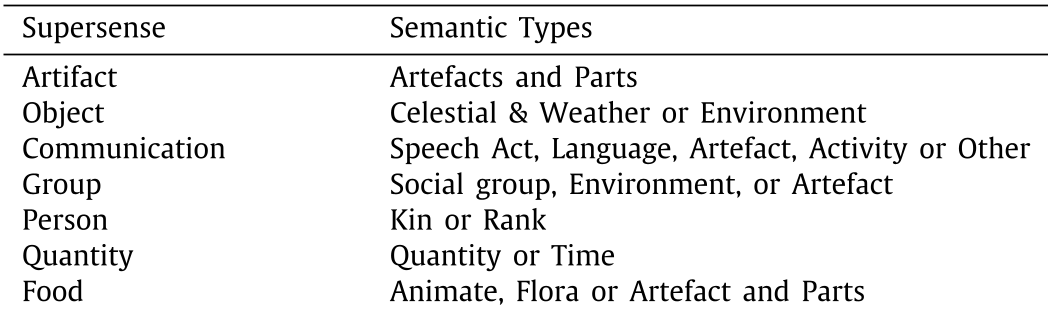 Figure 1: Complex mapping rules for noun supersenses.
Experiments: Proving the Logic
To validate this, the authors used a stratified sample of 5,163 synsets. They employed 11 evaluators across two rounds.
Key Findings:
- High Accuracy: The system achieved a 93.5% accuracy rate on agreed-upon mappings.
- The "Phenomenon" Problem: The only weak spot was the Phenomenon supersense (52.5% accuracy), largely due to the narrow definition of its mapped semantic type (Celestial & Weather), which failed to account for physics concepts like "activation energy."
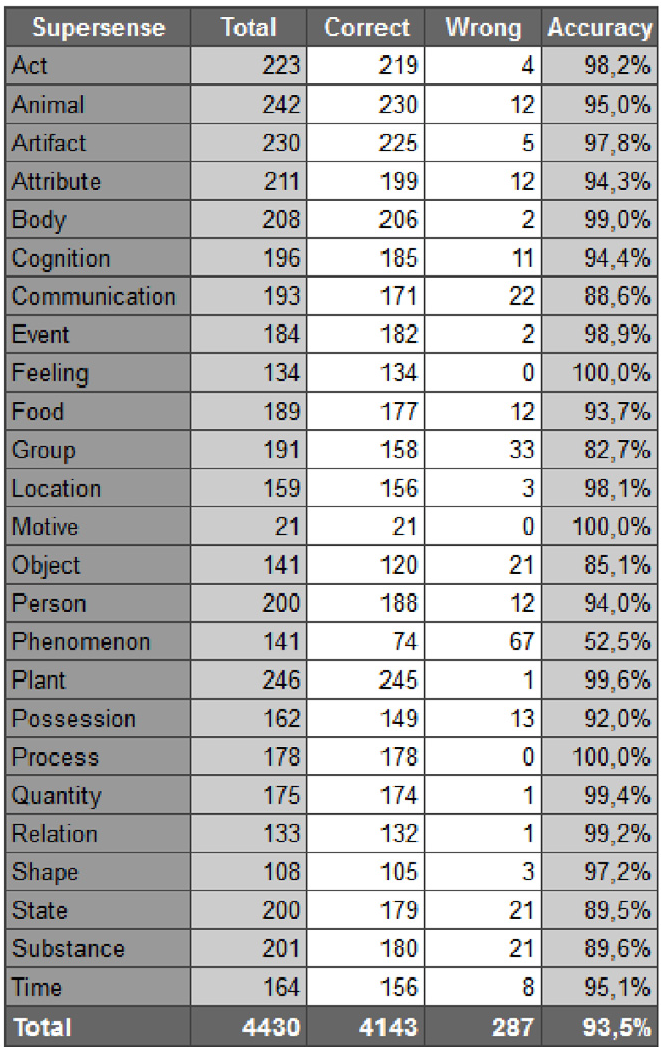 Figure 2: Accuracy per supersense strata.
Real-World Application: Automated Ontology Learning
The authors tested their enriched WordNet in an "Ontology Learning" pipeline. By processing a text description of a conference, the system didn't just extract keywords; it built a Well-Founded Ontology.
For example, it correctly identified that a "Paper" undergoes a phase change (from "Not Evaluated" to "Accepted/Rejected")—a distinction that requires the sophisticated "Phase" construct from UFO, which standard NLP tools simply cannot see.
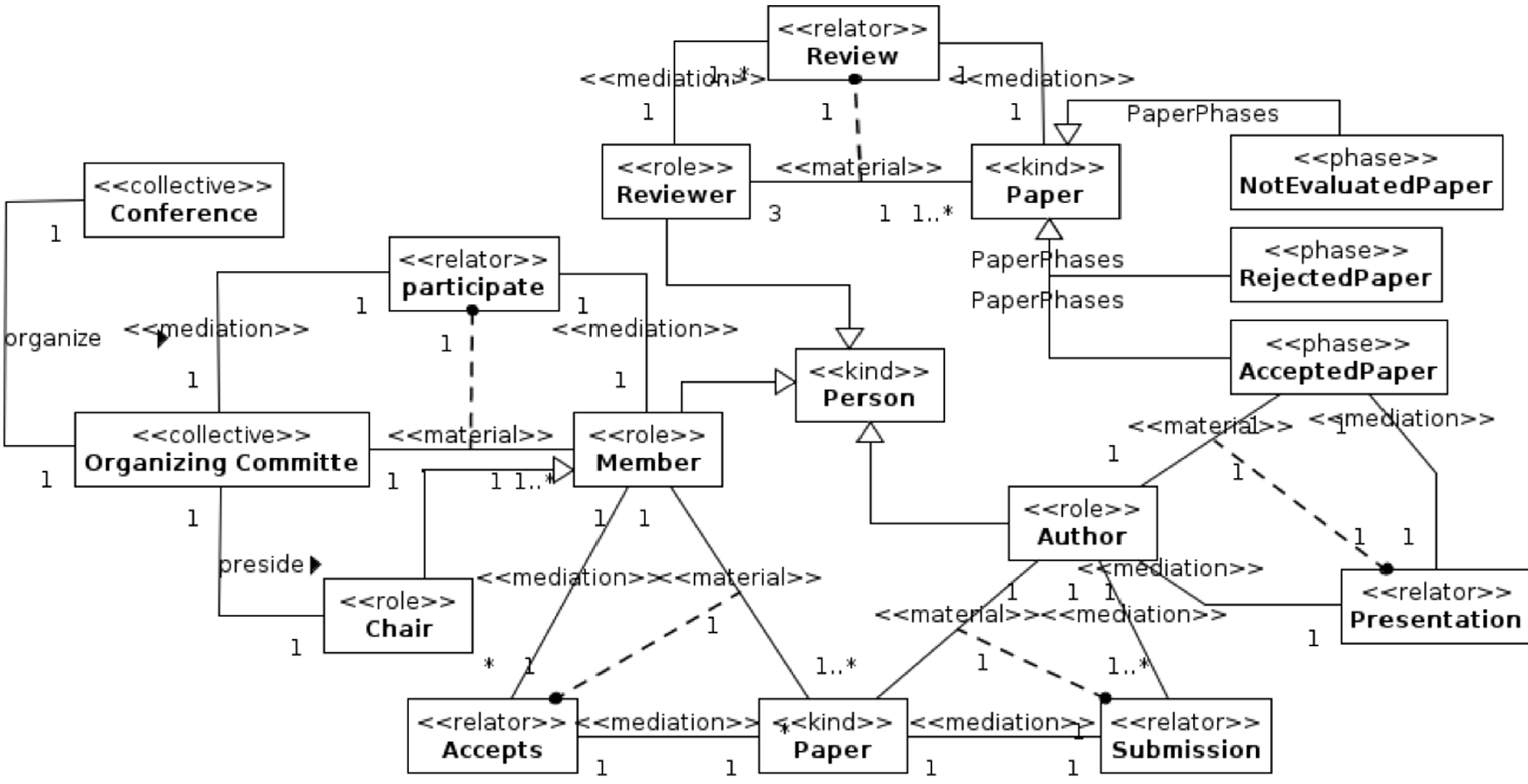 Figure 3: A well-founded domain ontology automatically generated using the enriched WordNet.
Final Insights
This paper is a significant step toward Semantic Clarity. By forcing lexical databases to adhere to foundational laws of reality (Ontology), we move away from simple pattern matching and toward true machine understanding.
Limitations: Currently, the work is focused on Nouns. The authors acknowledge that Verbs (events and processes in UFO-B) are the next frontier. As we move toward more autonomous AI agents, this kind of foundational grounding will be essential to ensure they understand the "rules" of the objects they interact with.
Takeaway: If you are building a knowledge graph or an reasoning engine, don't just use WordNet for its synonyms—use it to define the essence of your data.