
WebDigital: Bridging Expert Knowledge and Automation in Digital Marketing Strategy
WebDigital: A Web-based hybrid intelligent knowledge automation system for developing digital marketing strategies q
WebDigital is a hybrid knowledge automation system designed to formulate digital marketing strategies by integrating Monte Carlo simulation, fuzzy logic, and expert "IF-THEN" rules. Developed using a client-server architecture with PHP and MySQL, it achieves SOTA-level decision support by automating intelligent reasoning across global time zones and geographical barriers.
TL;DR
WebDigital is a pioneering Web-based hybrid intelligent system designed to automate the complex process of digital marketing strategy formulation. By combining Monte Carlo simulation, fuzzy logic, and expert systems, it transforms high-level marketing theories into actionable, data-driven advice while accounting for the inherent uncertainties of the digital landscape.
Background & Motivation: The Complexity of the "Digital"
Formulating a sound digital marketing strategy is no longer a matter of simple intuition. The landscape is characterized by extreme volatility, where variables like search engine algorithms, email conversion rates, and global pricing transparency interact in unpredictable ways.
The authors identify a critical gap: while expert systems existed for traditional marketing, there was a distinctive lack of a hybridized, web-enabled platform specifically tailored for digital-first strategic planning. WebDigital was built to provide a "second opinion" that is objectively mathematically sound yet qualitatively rich.
Methodology: The Hybrid Intelligence Engine
The core innovation of WebDigital lies in its multi-technique integration, ensuring that no single dimension of decision-making is left to chance.
1. Stochastic Modeling (Monte Carlo)
To handle "stochastic behavior"—essentially the randomness of market factors—the system uses Monte Carlo simulations. Users input pessimistic, most likely, and optimistic values, and the system runs thousands of iterations to determine probable outcomes.
2. Handling Ambiguity (Fuzzy Logic)
Marketing involves "fuzzy" concepts like "High Brand Loyalty" or "Moderate Competition." WebDigital uses trapezoidal membership functions to quantify these linguistic variables, allowing the computer to reason with human-like concepts.
3. Knowledge Automation (Inference Engine)
The system uses forward reasoning (data-driven). It takes user facts, passes them through a knowledge base of "IF-THEN" rules (adapted from industry-standard models like McDonald’s 4-box matrix), and outputs strategic recommendations.
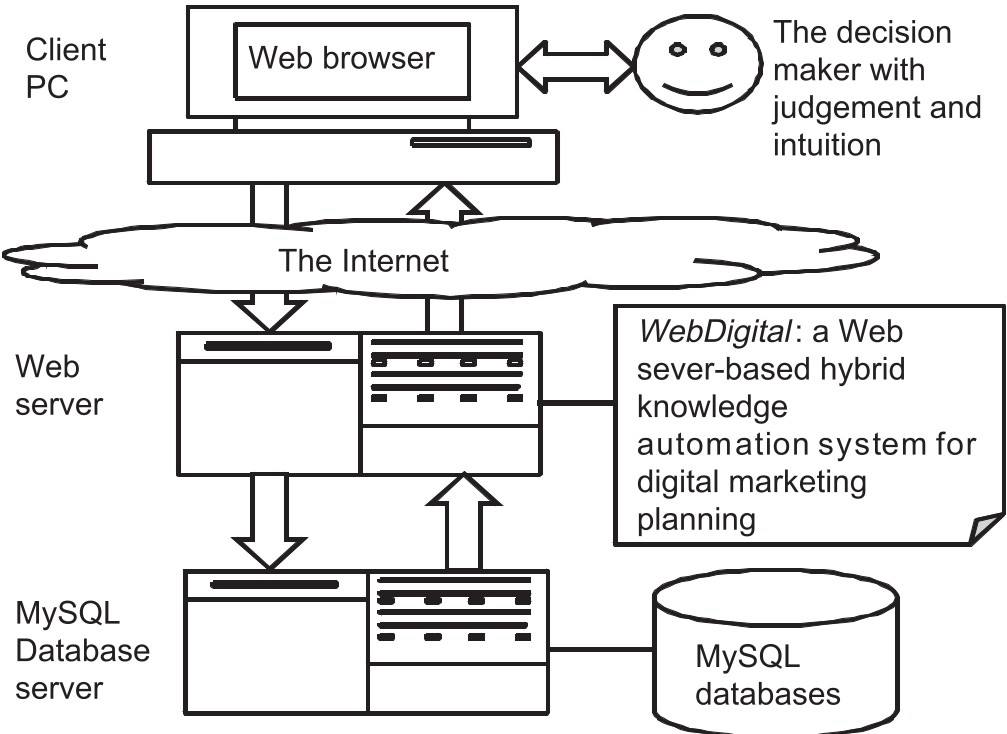 Figure 1: The WebDigital System Architecture showcasing the integration of user interface, database, and inference components.
Experiments & Results: Real-World Validation
The system was tested by a panel of experts, including marketing directors and managing directors. The evaluation focused on two pillars: Efficiency and Effectiveness.
- Efficiency: The system scored exceptionally high in "Overcoming geographical barriers" and "Speed of decision-making." Because it is Web-based, it allows global teams to synchronize strategies instantly.
- Effectiveness: Users highlighted the system's ability to help them "think strategically" and "couple analysis with intuition."
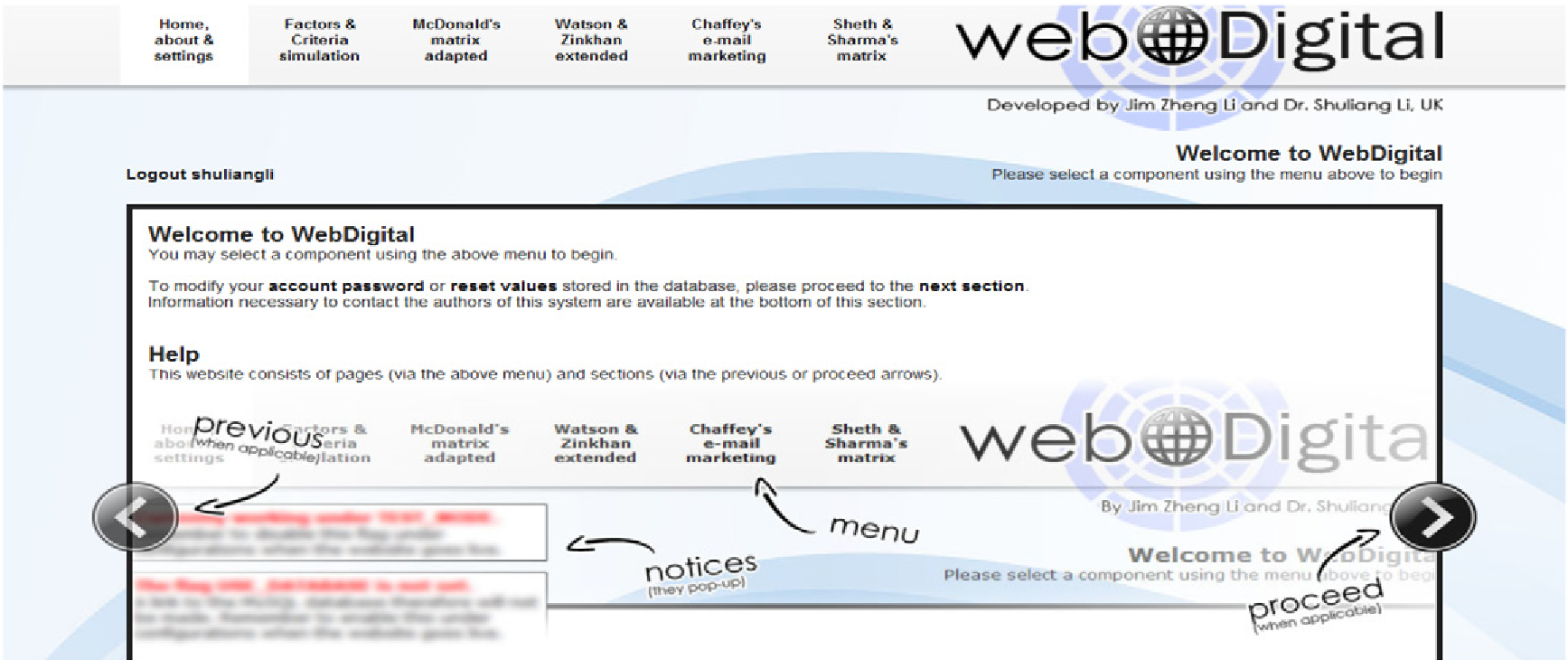 Figure 2: User interface for Monte Carlo simulation inputs, allowing for pessimistic, most likely, and optimistic value entries.
Comparative Performance
While traditional planning might take weeks of manual synthesis, WebDigital provides an automated "Directional Policy Matrix" within minutes, enriched by degrees of confidence derived from fuzzy logic processing.
Critical Insight: Why This Matters
The true value of WebDigital is not in replacing the marketer but in augmenting them. By automating the "Theory-to-Practice" translation—taking academic models and applying them to simulation results—it ensures that strategy is grounded in both empirical data and established marketing science.
Limitations & Future Work
While robust, the 2011-era system acknowledges a need for more visual reporting (e.g., exporting to Excel) and the inclusion of more real-world case studies to refine the rule base. In today's context, the "Next Gen" version of this work would likely involve integrating generative AI to further personalize the "IF-THEN" rules.
Conclusion
WebDigital stands as a landmark in Knowledge Automation. It proves that by hybridizing different AI methodologies, we can create decision-support tools that are resilient to uncertainty and capable of delivering professional-grade strategic advice on a global scale.