
WeCrowd: Revolutionizing Mobile Crowdsourcing via the WeChat Ecosystem
WeCrowd: A WeChat based mobile crowdsourcing platform
This paper introduces WeCrowd, a lightweight mobile crowdsourcing platform built as a WeChat "Public Account" mini-program. By leveraging the existing WeChat ecosystem, the platform enables seamless task publishing and execution without requiring additional app installations, achieving significant improvements in user engagement and task completion speed.
TL;DR
WeCrowd is a lightweight crowdsourcing platform that bypasses the "app fatigue" of traditional mobile systems by living inside WeChat. By treating crowdsourcing as a social hobby rather than a chore, it achieves significantly faster task completion and higher user retention through zero-install friction and gamified social rewards.
Problem & Motivation: The "App Barrier" in Crowdsourcing
Most mobile crowdsourcing research assumes that if you build an app, the crowd will come. However, the reality of the mobile experience is plagued by installation friction, battery drain, and storage anxiety. Users are increasingly reluctant to download a dedicated app for micro-tasks that pay only a few cents.
The authors observed that WeChat already owns the "fragmented time" of millions. Their insight was simple: Instead of bringing the user to the task, bring the task to the user's favorite social environment.
Methodology: The WeCrowd Architecture
WeCrowd is structured into three primary modules: Task Publish (Web), Mobile Module (WeChat), and Desktop Module.
1. The WeChat Advantage
By using the WeChat Public Account API, WeCrowd solves the compatibility issue (iOS/Android) and removes the setup process entirely. It leverages "Lucky Money" (Hongbao) for instant, gamified payments, which participants found more "exciting" than traditional Bank/PayPal transfers.
2. Quality Control (The Accuracy Formula)
To maintain data integrity, the authors implemented a dynamic test mode. If a worker’s accuracy falls below a threshold, they are excluded. The accuracy is calculated as: This Laplacian-smoothed approach prevents early-stage volatility in worker scoring.
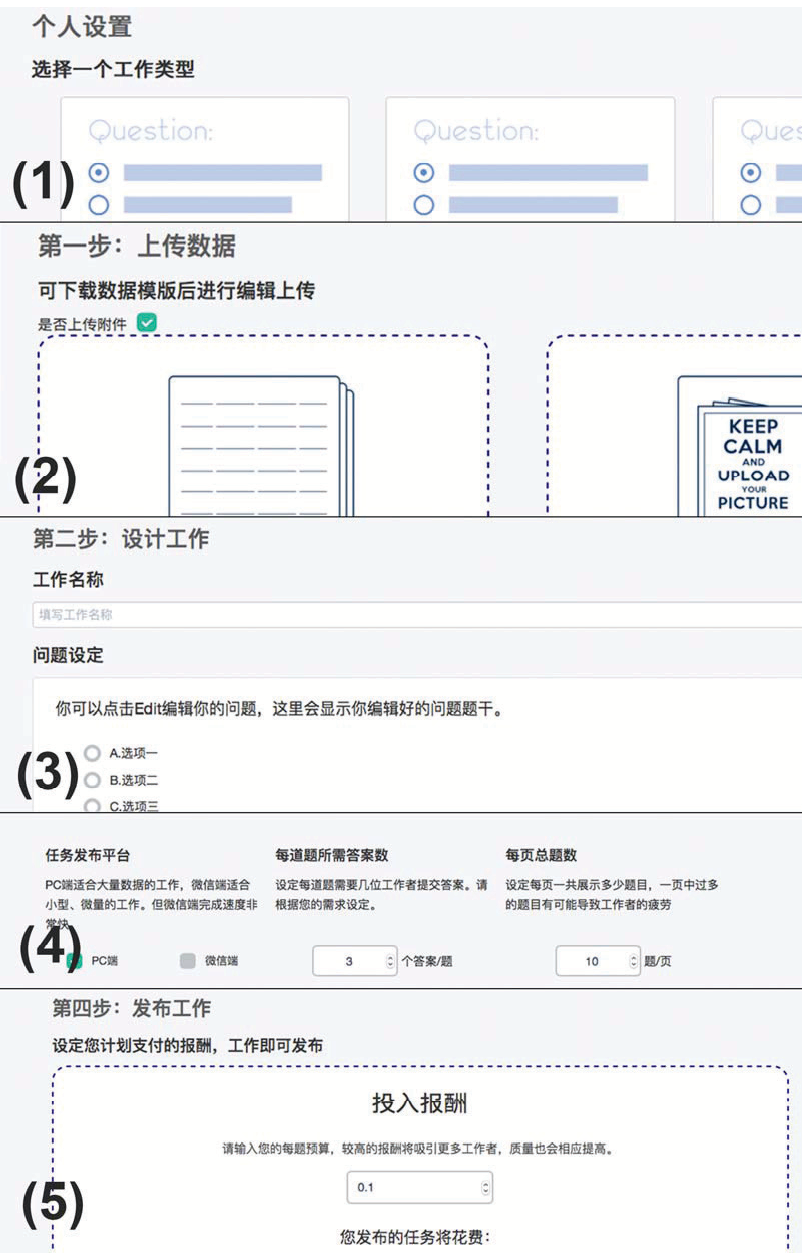 Fig 1: The overarching architecture of the WeCrowd platform.
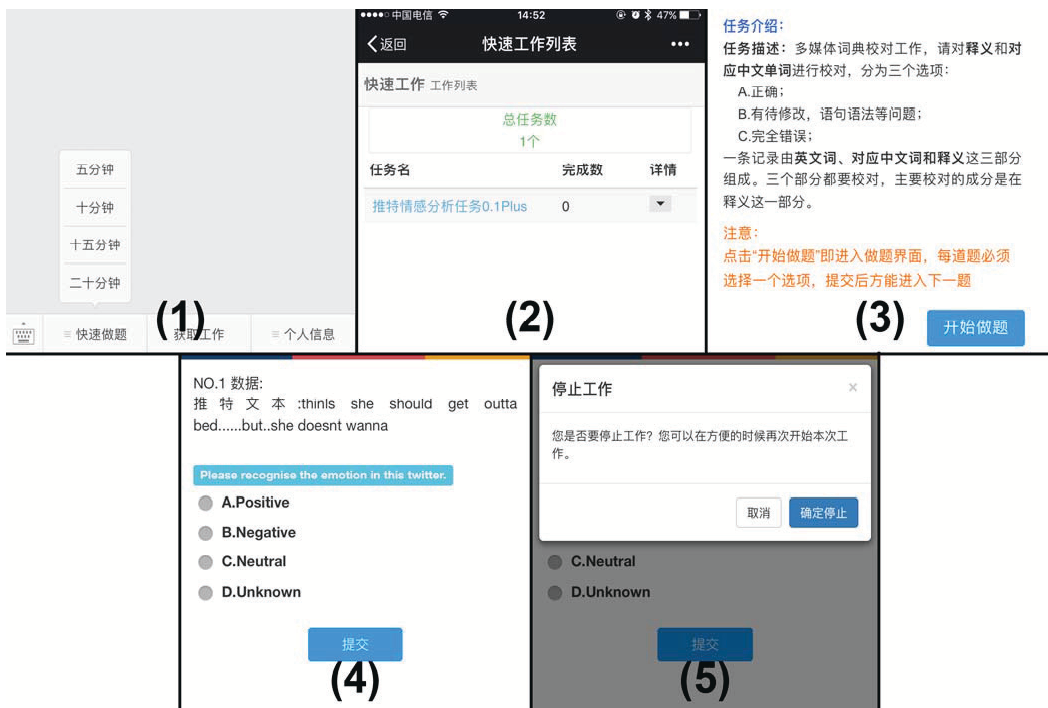 Fig 2: The mobile worker UI flow, from task selection to countdown-based execution.
Experiments & Results: Speed vs. Quality
The researchers conducted a head-to-head comparison between desktop and mobile environments using a sentiment analysis dataset (600 tweets).
- Efficiency: The mobile group (Group A1) finished the tasks in 0.47 hours, whereas the desktop group took 1.77 hours. This proves that mobile users are highly responsive when the task is accessible within a social app.
- The Psychological Factor: Interestingly, Group A3 (strict quality control) struggled with completion. Participants reported that technical alerts were "terrifying," causing them to drop out. This suggests that psychological safety is just as important as technical monitoring.
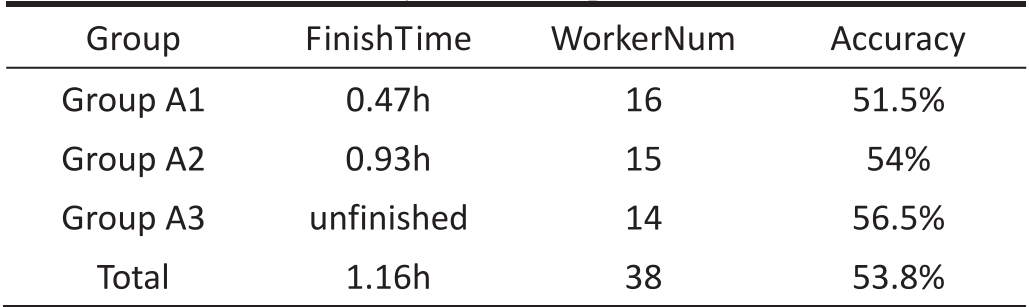 Table 1: Mobile group results showing the impact of different quality control settings on finish time and accuracy.
Critical Insight: Crowdsourcing as a Social Hobby
The most profound takeaway is the shift in user motivation. In WeCrowd, participants didn't just work for money; they worked because it was:
- Interesting: The "Lucky Money" mechanic turned payment into a game.
- Social: Users were 86% more likely to join a task if a friend shared it on their "Moments" feed.
- Competitive: Workers naturally started competing with each other and the countdown timer.
Conclusion
WeCrowd demonstrates that system friction is the enemy of the crowd. By embedding crowdsourcing into the social fabric of WeChat, the authors turned "mechanized brain work" into a social pastime. While the platform still needs improvements in handling complex media and sophisticated worker tagging, it provides a blueprint for the next generation of "zero-install" mobile labor markets.
Future Outlook: Could this model be extended to large-scale AI RLHF (Reinforcement Learning from Human Feedback) tagging? Integrating specialized data labeling into super-apps might be the key to scaling human-in-the-loop systems.