
XGBoost + Word2vec: Elevating Weibo Sentiment Analysis Beyond Traditional Baselines
Research on Weibo Emotion Classification Based on Context
The paper introduces a Weibo sentiment classification framework that combines Word2vec for semantic feature extraction and XGBoost for robust ensemble learning. It achieves SOTA-level results on the NLPCC dataset, significantly outperforming traditional SVM baselines in both binary (subjective vs. objective) and multi-class emotion tasks.
TL;DR
This research presents a robust pipeline for sentiment classification on Weibo. By moving away from rigid dictionaries and basic SVMs, the authors implement a Word2vec + XGBoost framework. The results are striking: a near-perfect accuracy in multi-class sentiment tasks (99.56%), proving that ensemble tree methods remain a powerhouse for structured word vector data.
Background & Motivation
With over 770 million internet users in China (as of the paper's context), Weibo has become the primary arena for public opinion. However, analyzing this data is notoriously difficult because:
- Short Text Sparsity: Weibo posts are brief, providing limited context.
- Informal Language: Use of slang, emojis, and unconventional grammar makes dictionary-based methods obsolete.
- Prior Work Issues: Traditional models like SVM often fail to capture the "semantic proximity" between words, treating them as isolated features rather than contextual entities.
Methodology: The Core Pipeline
The authors propose a two-stage architecture: Semantic Mapping and Gradient Boosting.
1. Semantic Embedding with Word2vec
Instead of using One-Hot encoding (which leads to the "curse of dimensionality"), the model uses Word2vec. This maps words into a continuous latent space where words with similar meanings are geographically close.
- CBOW/Skip-gram: These neural networks learn word representations by predicting a word from its context or vice-versa.
2. The Decision Power of XGBoost
The extracted vectors are processed by XGBoost (Extreme Gradient Boosting). Unlike standard Gradient Boosting, XGBoost:
- Uses Taylor expansion of the loss function to improve precision during optimization.
- Incorporates regularization terms () directly into the objective function to penalize model complexity.
- Supports parallel computing, making it significantly faster for large-scale social media datasets.
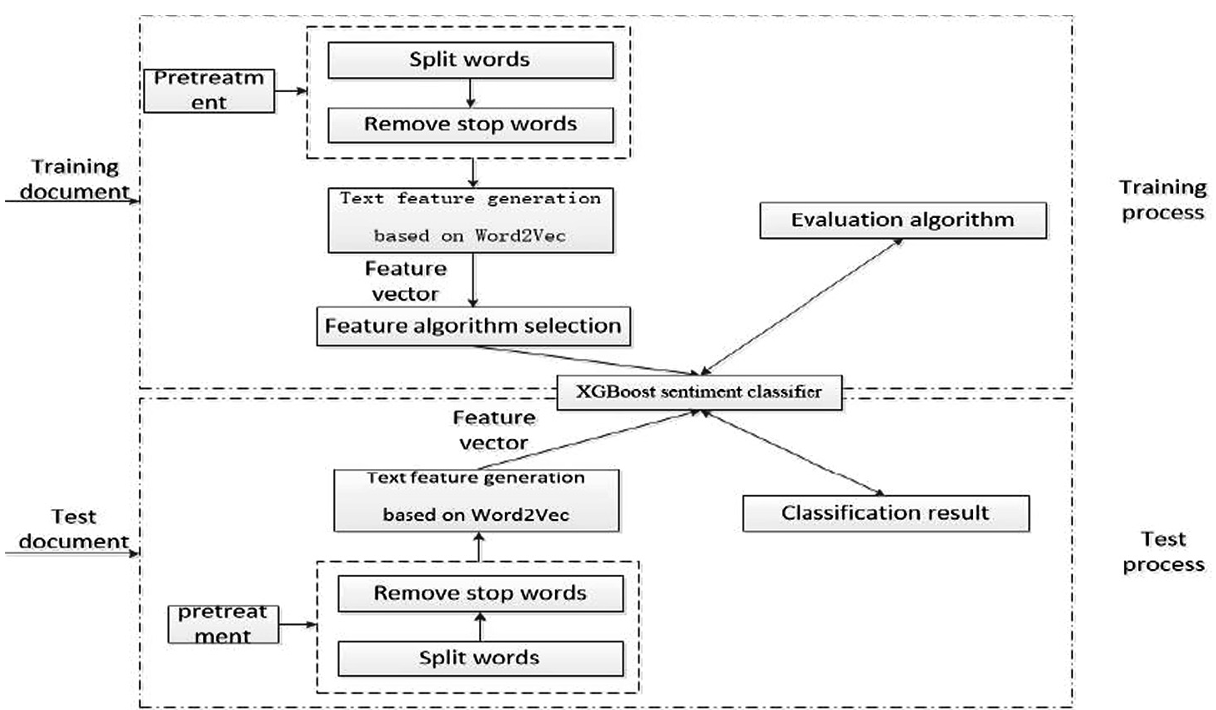 Figure 1: The proposed sentiment classification process including preprocessing, Word2vec training, and XGBoost classification.
Experimental Showdown: XGBoost vs. SVM
The study utilized the NLPCC 2013/2014 datasets to test two scenarios:
- Binary Classification: Subjective (Emotional) vs. Objective (Neutral).
- Multi-class Classification: Categorizing emotions into Happy, Delight, Sadness, and Evil.
Performance Metrics
The gap between contemporary ensemble methods and traditional machine learning is massive:
| Model | Precision (Subj/Obj) | Accuracy (4-Class) | AUC |
|---|---|---|---|
| XGBoost | 0.9698 | 0.9956 | 0.9695 |
| SVM | 0.7253 | 0.5625 | 0.7284 |
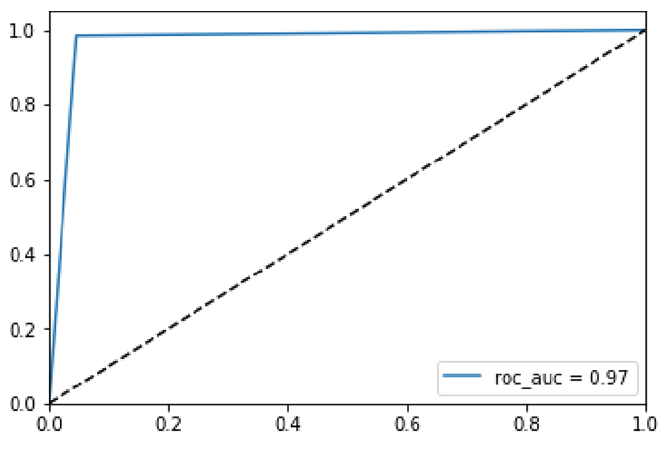 Figure 3: While XGBoost shows a clean diagonal (high hits), the SVM confusion matrix reveals significant leakage and misclassification in Weibo data.
Critical Insight: Why Does This Work?
The success of this approach lies in the Inductive Bias of XGBoost. While SVM looks for a global hyperplane to separate data, XGBoost builds a series of additive trees. For social media text—where a single "trigger word" (detected via Word2vec) might drastically shift the sentiment—decision trees are more adept at capturing these non-linear, conditional logic patterns.
However, there is a trade-off: Training Time. XGBoost took ~4025 seconds compared to SVM's ~282 seconds. The extra computation is the price paid for a ~24% jump in precision.
Conclusion & Future Outlook
This paper demonstrates that for domain-specific tasks like Weibo analysis, the combination of dense vector embeddings and ensemble trees provides a much-needed accuracy boost for public opinion monitoring.
Limitations: The model is computationally expensive. Future research could investigate distillation techniques or lighter boosting frameworks (like LightGBM) to reduce training overhead while maintaining the high sensitivity required for real-time sentiment tracking.
Takeaway: If you are dealing with short-text classification and the target labels are complex, stop using SVM. Moving to a vector-based ensemble approach is no longer an option; it is a necessity for SOTA performance.