
WhatsApp in the Assembly: How Digital Tools are Redefining Political Boundaries
“WhatsApp in Politics?!”: Collaborative Tools Shifting Boundaries
This study investigates the integration of digital collaborative tools (WhatsApp, Google Docs, etc.) within the participatory constitution-writing process in Valais, Switzerland. By interviewing 15 members of the Constituent Assembly, the researchers provide a fine-grained understanding of how "mundane" ICT transforms political boundaries and collective legislative work.
TL;DR
What happens when you give 130 elected officials (most without a political background) the task of rewriting a state constitution? They don't just use specialized voting software; they turn to WhatsApp and Google Docs. This paper by Verma et al. explores a "constitutional moment" in Valais, Switzerland, revealing how everyday apps are not just tools, but environments that reshape the very boundaries of political power, privacy, and strategy.
Context: The State as a Shared Document
Politics has always been defined by boundaries: who is in power vs. who is not, and what happens "backstage" vs. what is visible to the public. In the Swiss canton of Valais, a new constitution is being written in a bottom-up fashion. Interestingly, 95 of the 130 members are "militia" politicians—citizens with regular jobs who dedicate only 10% of their time to this mandate. This creates a unique pressure for asynchronous, remote, and highly efficient communication.
The Problem: The Mundane vs. The Disruptive
Most academic focus on "Digital Democracy" looks at grand disruptions—the Arab Spring, e-voting, or massive online petitions. This study argues we are missing the mundane reality of political work. The real friction isn't in the "big" tech; it's in how a 70-year-old lawmaker manages a Facebook thread or how a political party coordinates a rebuttal in real-time while the cameras are rolling.
Methodology: Deciphering the "Boundary"
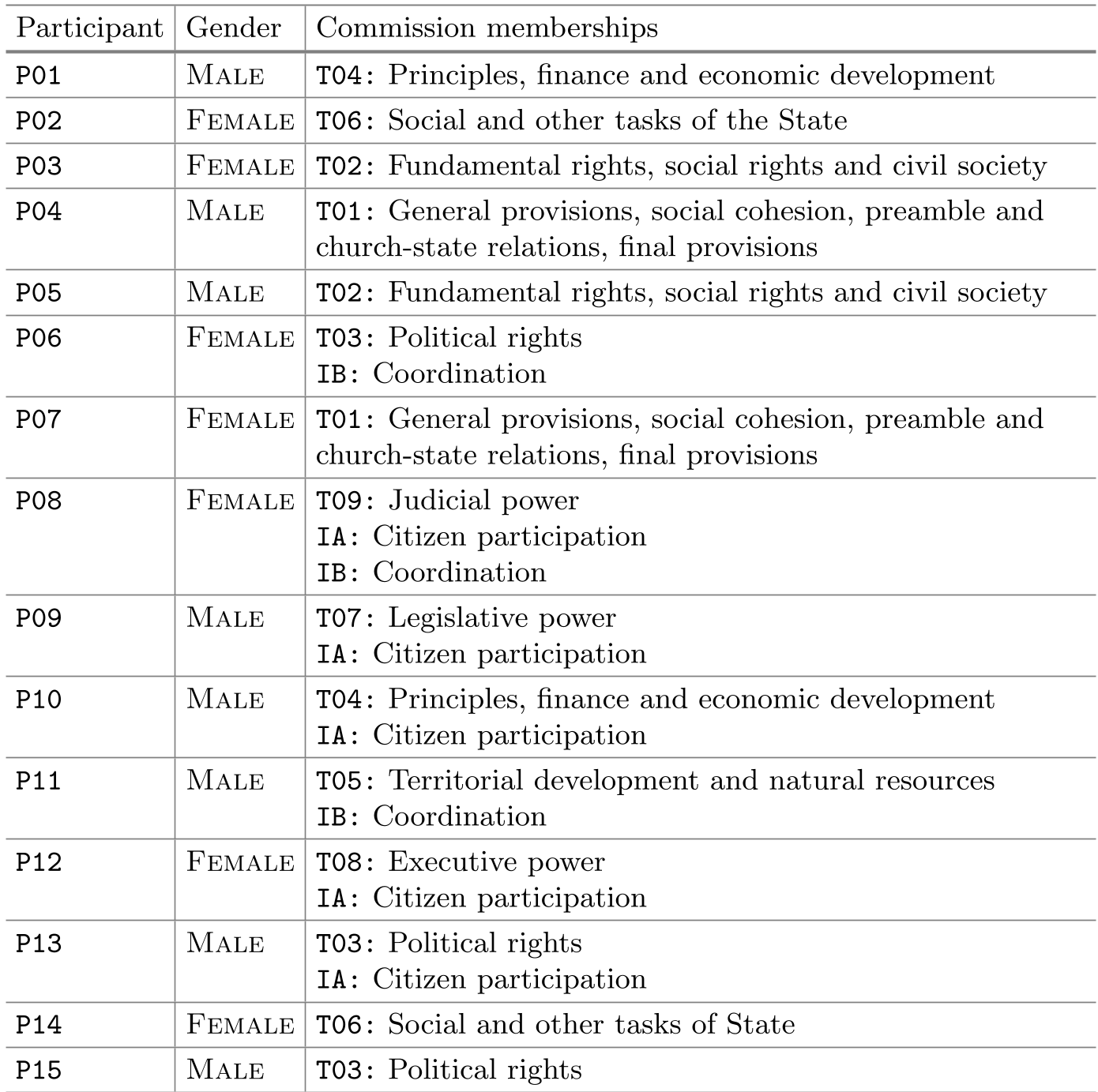
The researchers used a qualitative interview-based approach to look at how technology makes boundaries (ideological, social, and professional) more or less permeable. They looked at 15 members across various commissions to see where the digital meets the constitutional.
Core Insight 1: "Silent Lateral Communication"
One of the most fascinating findings is the emergence of Silent Lateral Communication. During plenary sessions—broadcast live on TV—lawmakers use WhatsApp on their laptops to coordinate. While a speaker has their 5-minute window, colleagues are "backchanneling" to refine arguments or negotiate with other parties.
"The use of smartphones... is not perceived well by the public... but since WhatsApp is also available on our laptops, we frequently use it to coordinate in real time." (P05)
This selectively permeates the boundary between the formal public protocol and the informal strategic negotiation.
Core Insight 2: The Novice-Expert Divide
The transition to "digital" is not uniform. The study mapped participants on a "Physical to Digital" scale, showing a wide disparity in comfort levels.
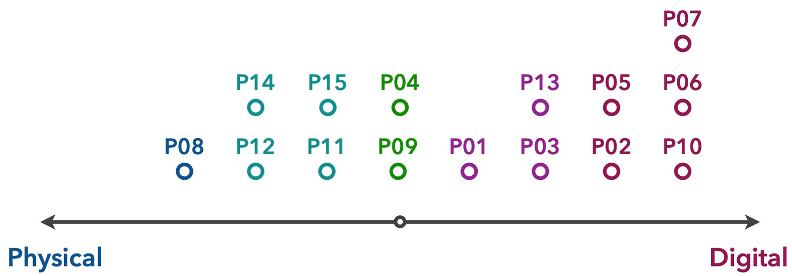
This disparity leads to "Peer Pressure." Tech-savvy members force the use of Google Docs for efficiency, while others struggle with "catching-up fatigue." This creates an invisible barrier where those who don't contribute to the "live" document during the week find themselves at a disadvantage during face-to-face meetings.
Core Insight 3: Privacy Blind Spots
For many new politicians, the boundary between the Private and Public persona on Facebook is a minefield. The study noted "awareness blind-spots" among elderly members who didn't realize that a "private" post could be treated as a public statement by a journalist. This has led to a culture of self-censorship and the adoption of "seamful" practices (like having two separate profiles).
Critical Analysis & Conclusion
The paper concludes that technology acts as both an Instrument (a means to write the text) and an Environment (a condition that changes the pace of politics).
Takeaways for the Future:
- Selective Permeability: Politics thrives on the ability to have private negotiations that lead to public outcomes. Digital tools must respect this.
- Design for Frictions: Instead of trying to make everything "seamless," tools for politics should make boundaries (like privacy settings) more "seamful" and explicit to prevent scandals.
- Asynchronicity is King: In a world of part-time "militia" politics, the ability to "catch up" via thread-based communication (WhatsApp/Docs) is more valuable than synchronous video calls.
The Valais experiment shows that the future of democracy might not be a custom-built "DemocracyOS," but rather the strategic and messy appropriation of the apps already in our pockets.