
Who Falls for Online Political Manipulation? Unmasking the Spreaders of the 2016 Russian Troll Campaign
Who Falls for Online Political Manipulation?
This study investigates the 2016 US presidential election interference by Russian "troll farms" on Twitter, proposing a machine learning framework to identify "spreaders"—users who rebroadcast troll content. By analyzing a dataset of 43 million tweets, the authors developed models achieving a state-of-the-art AUC score of 96% in predicting susceptibility to manipulation.
TL;DR
Researchers from the Information Sciences Institute (USC) have developed a highly accurate (96% AUC) machine learning model to predict which Twitter users will amplify content from foreign state-sponsored trolls. By analyzing 43 million tweets from the 2016 US election, the study reveals that political ideology, bot-like behavior, and specific account activity metrics are the "smoking guns" of susceptibility to manipulation.
Background: From Democracy to Deception
The utopian vision of social media as a tool for democratization has shifted toward a darker reality: a battlefield for "information warfare." The 2016 US election serves as a landmark case where the Russian Internet Research Agency (IRA) used "troll farms" to sow discord. While much research focuses on identifying the trolls, this paper asks a more strategic question: Who are the spreaders that give these trolls their reach?
The "Anatomy" of a Spreader: Methodology
The researchers identified 221 Russian troll accounts within their massive 43.7-million-tweet dataset. They then tracked the 40,224 users who retweeted these trolls (the "spreaders"). To understand what makes a spreader, they extracted five categories of features:
- Metadata: Followers, friends, and account age.
- Linguistic (LIWC): Analytical tone, emotional triggers (anger, anxiety), and word counts.
- Engagement: Retweet h-index, mention stability, and reply frequency.
- Bot Likelihood: Scores from the "Botometer" tool.
- Political Ideology: Calculated via label propagation based on the media outlets (e.g., Breitbart vs. Huffington Post) users shared.
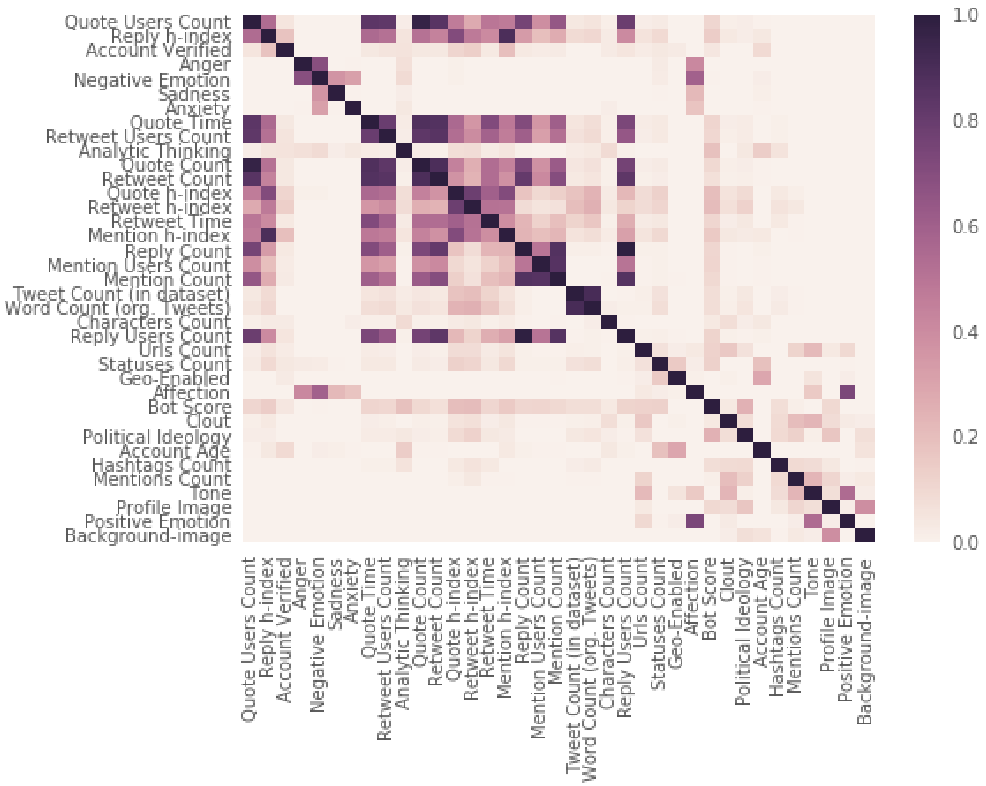 Figure 1: While engagement metrics correlate with each other, political ideology and bot scores provide independent, high-value signals.
Why the Model Works: Predictive Insights
The study utilized Gradient Boosting, which outperformed other classifiers. The most striking discovery was the hierarchical importance of features.
The Ideology Factor
Political ideology was the single most predictive feature. The data showed a distinct asymmetry: conservative-leaning accounts were significantly more likely to retweet the identified Russian troll content during the 2016 cycle.
The "Bot-Spreader" Hybrid
Interestingly, spreaders scored higher on the "Botometer" than non-spreaders across almost all subclasses (network, metadata, and content). This suggests that the "users" falling for manipulation are often either semi-automated accounts (cyborgs) or exhibit bot-like hyper-activity.
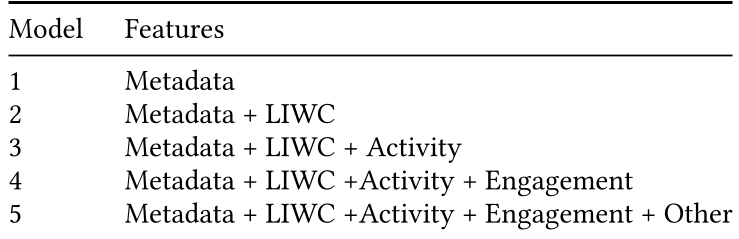 Table 7: Note the performance jump (AUC 89% to 96%) when Bot Scores and Ideology (Model 5) are added.
Experimental Results: The Path to 96% Accuracy
The researchers used Partial Dependence Plots to move beyond the "black box" and understand the direction of the influence:
- Upward Trends: Conservative ideology, high tweet volume (statuses), and high bot scores all increased the probability of being a spreader.
- Downward Trends: Having many followers or an older, established account actually decreased the likelihood of falling for troll content.
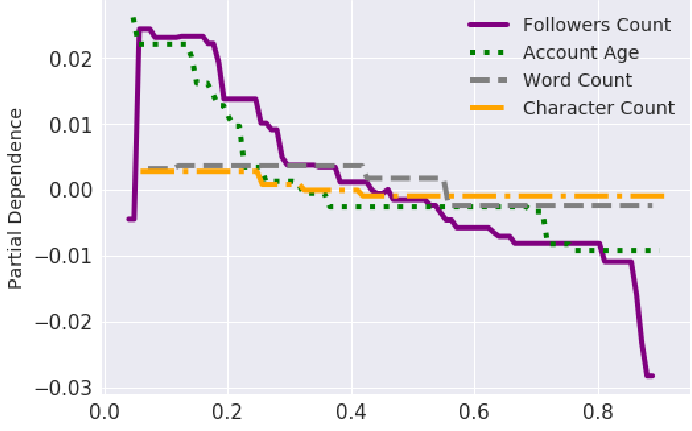 Figure 4: The ROC curve demonstrates the near-perfect classification achieved when combining behavioral and ideological data.
Deep Insight: Beyond Just "Bots"
The most profound takeaway is that vulnerability is not random. Spreaders tend to be users with high activity but low "social capital" (fewer followers) and recent account creation dates. The study suggests that foreign manipulation campaigns don't just broadcast into a void; they find fertile ground in specific ideological clusters that are already primed for inflammatory messaging.
Limitations & Future Work
The study focuses on the 2016 Twitter landscape. As platform algorithms change (e.g., X's current recommendation engine) and AI-generated content (LLMs) becomes the norm, the linguistic "LIWC" markers used here may need significant updates. However, the core methodology—identifying the "victims" to contain the "virus"—remains a cornerstone for future digital defense.
Conclusion
By achieving 96% AUC, this paper proves that political susceptibility on social media is highly predictable. For policymakers and platform moderators, this offers a roadmap: don't just hunt the trolls—target the vulnerabilities in the network that allow the trolls to go viral.