
Who Should Be My Friends? Decoding Social Balance through Game Theory
Who Should Be My Friends? Social Balance from the Perspective of Game Theory
This paper introduces "Balance Games," a game-theoretical framework to model the evolution of friendships and enmities in social networks. By mapping Structural Balance Theory onto multi-stage games, it proves that the emergence of balanced or stable networks depends strictly on the agents' "patience" (discount factor).
TL;DR
Why do some social circles eventually become harmonious while others remain locked in "factions"? This paper frames social evolution as a Balance Game. It reveals that if we are "patient" (valuing long-term peace), we reach a fully balanced state. If we are "impatient" (avoiding immediate social effort), we settle for a weaker state called "stability," where tension still exists but no one is willing to fix it.
Problem & Motivation: The Gap in Balance Theory
Since the 1940s, Structural Balance Theory has suggested that "the enemy of my enemy is my friend." While empirically observed, the theory rarely explains why individuals make these changes.
The authors argue that network evolution is the result of rational choices. They identify a critical tension: changing a relationship (making an apology or breaking a bond) has a Cost of Change. Without a game-theoretic lens, we cannot explain why some networks stay "unbalanced" despite the inherent tension.
Methodology: The Mechanics of Balance Games
The authors define a network as a signed graph where agents gain utility based on the configuration of their triads (groups of three).
1. The Valuation Function
An agent 's value in network is: A triad is balanced if it has an even number of negative edges (e.g., three friends or one pair of friends with a mutual enemy).
2. The Decision Logic
At each step, a random agent can change one relationship or "pass." Every change costs 1 unit. The total utility is the discounted sum of all future valuations.
 Figure 1: Conceptual visualization of agent-based transitions in a network.
Two Paths: Balance vs. Stability
The paper makes a brilliant distinction between two mathematical end-states:
Path A: The Patient Agent (High )
If agents highly value future rewards, they are willing to suffer a temporary drop in valuation to reach a global optimum.
- Finding: For a sufficiently high discount factor, all Pareto optimal strategies finalize in a Balanced Network (all triads are balanced).
- Intuition: I’ll be your friend today, even if it makes my other friends uncomfortable temporarily, because I know eventually we will all be part of a stable clique.
Path B: The Impatient Agent (Low )
If agents are "short-sighted," they only move if the immediate next step increases their valuation.
- Finding: If , the network reaches a Stable Network.
- The "Stability" Catch: A network is stable if every pair of friends has more "mutual ties" than "anti-mutual ties." However, a stable network can still be unbalanced (containing triads where everyone hates everyone).
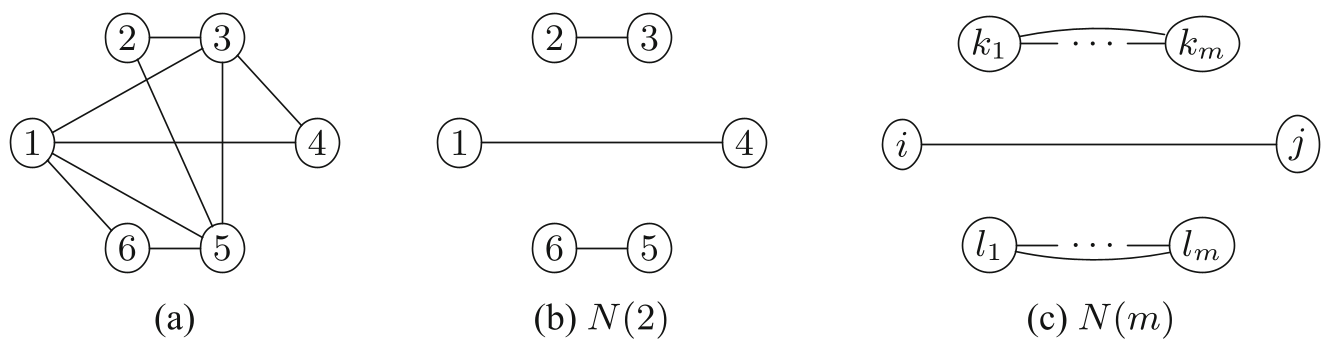 Figure 2: Examples of networks that are "stable" (no individual wants to move) but mathematically "unbalanced" (tension remains).
Experimental Analysis: Why "N(m)" Matters
The authors analyze a specific structure (two large hostile cliques and a small neutral party).
- The Struggle: For the neutral agents and to join a clique, they must pass through a "valley of death" where their valuation drops as they build friendships one by one.
- Result: If (clique size) is large, the "patience" required to bridge this gap approaches 100% (). This explains why large-scale social polarization is so hard to break—the "social cost" of the transition is too high for individuals to bear alone.
Critical Insight & Conclusion
The core takeaway is that Social Balance is a coordination problem.
- Takeaway: Achieving a "perfect" social network doesn't just require everyone to want peace; it requires them to have a long-term horizon and the willingness to pay an immediate "cost of change."
- Limitations: The model assumes a "complete graph" (everyone knows everyone). In real-world sparse networks, the path to balance might be even more complex.
This work bridges the gap between social psychology and formal verification, moving us closer to a "calculus of society" where we can predict whether a community will harmonize or fracture based on its members' patience and the cost of social effort.