
The Social Media Paradox: Why Reward Trumps Punishment in Digital Cooperation
Why Do People Use Social Media? Agent-Based Simulation and Population Dynamics Analysis of the Evolution of Cooperation in Social Media
This paper investigates the evolution of cooperation in social media using an agent-based simulation and population dynamics analysis. It proposes the "Meta Reward Game," an extension of the metanorms game, to explain why users voluntarily contribute content despite incurring personal costs.
TL;DR
Why do we spend hours creating content for free? This paper argues that social media survives not by punishing the "lurkers," but through a sophisticated web of Meta Rewards. By modeling interactions as a variation of the Public Goods Game, the researchers prove that rewarding those who reward others is the secret sauce for long-term community survival.
Contextual Positioning
While traditional game theory (like Axelrod’s Norms Game) suggests that punishment is the most efficient way to maintain a cooperative society, social media operates on a fundamentally different logic. You can't "punish" someone for not tweeting. This paper shifts the academic focus from "The Stick" to "The Carrot," specifically examining the Meta Reward—the feedback on feedback that keeps digital ecosystems thriving.
Problem & Motivation: The Free-Rider Dilemma
In any public goods scenario, "free-riders" (lurkers who consume but don't produce) gain the most utility at the lowest cost.
- The Stick doesn't work: Digital platforms lack the social friction to effectively punish non-participants.
- The Carrot is expensive: If rewarding others is more costly than the benefit received, the system collapses into a "Desert of Ego."
The authors sought to find the specific mathematical conditions under which voluntary participation becomes an Evolutionarily Stable Strategy (ESS).
Methodology: The Meta Reward Game
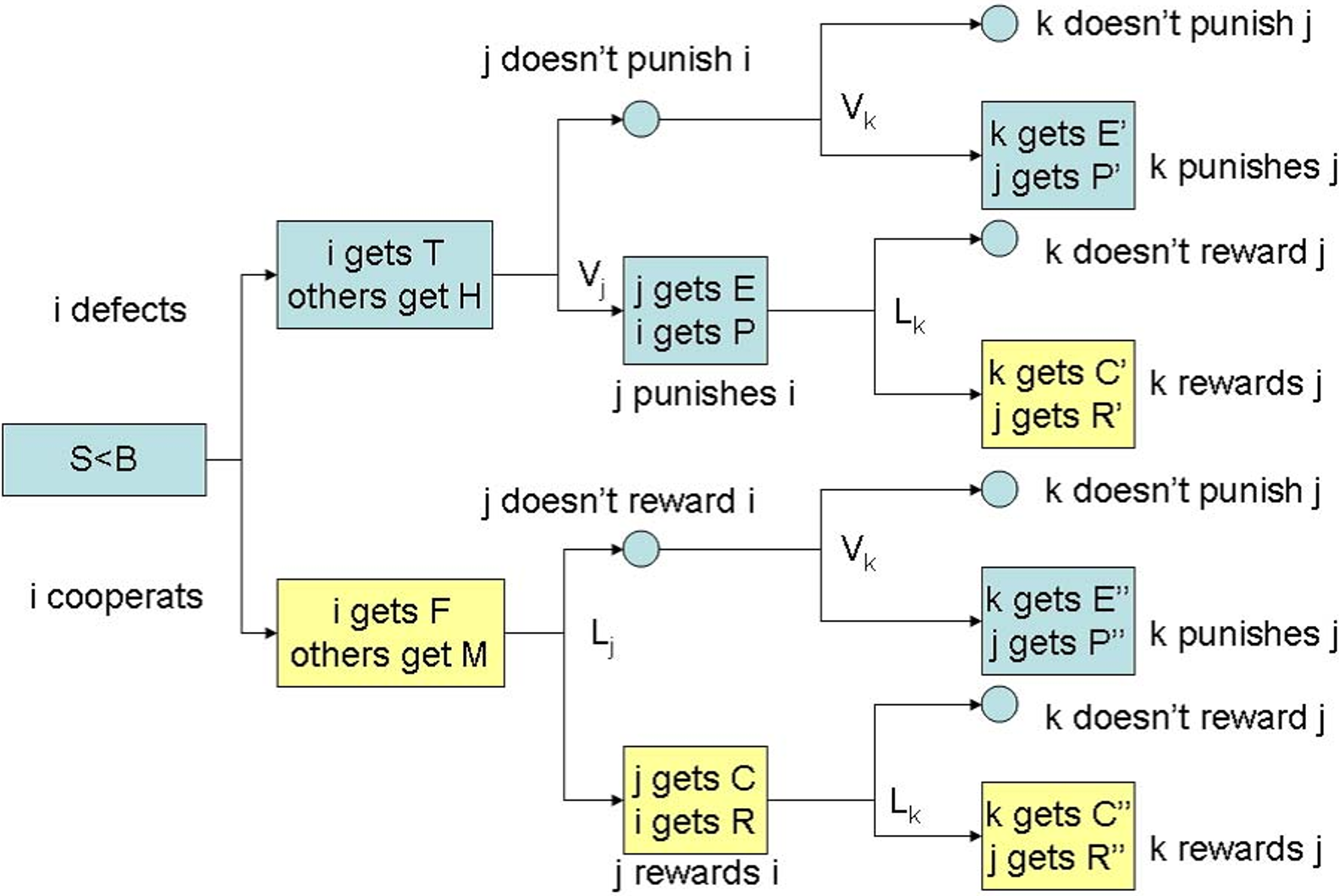
The researchers extended the General Metanorms Game to include two layers of positive reinforcement:
- Direct Reward: Agent B comments on Agent A’s post.
- Meta Reward: Agent C comments on Agent B’s comment.
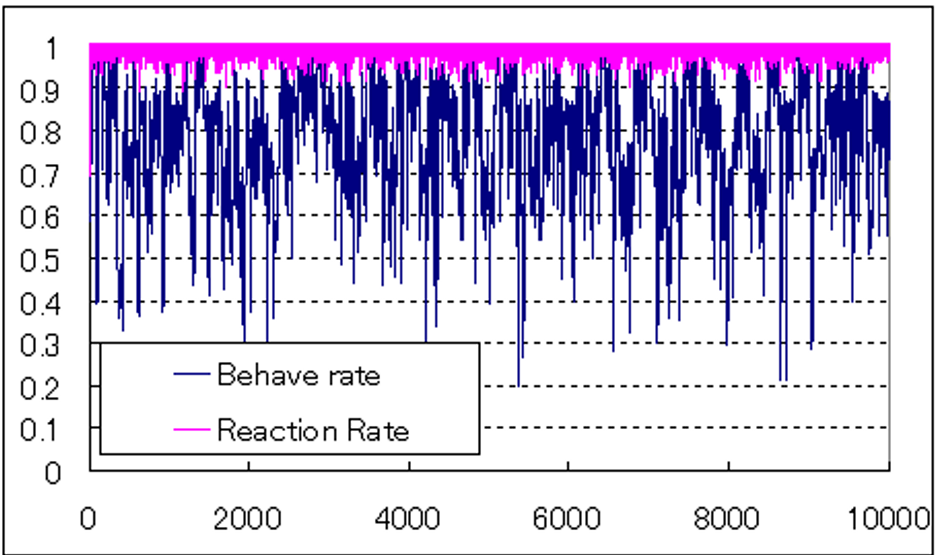
This creates a recursive incentive structure. They tested this through an Agent-Based Simulation using a Genetic Algorithm (GA) where agents’ strategies (probabilities of posting and commenting) evolved over 10,000 generations.
Experiments & Results: Strategy Survival
The most striking finding was the comparison between the Meta Punishment Game and the Meta Reward Game.
- Collapse of Punishment: In long-term simulations (N=20 to 100), the meta-punishment model eventually saw a collapse in cooperation. Once the cost of monitoring others becomes too high, agents stop punishing, which then allows defectors to take over.
- Stability of Reward: The Meta Reward model maintained high cooperation rates across generations. The crucial discovery was the r > c threshold: as long as the benefit of being rewarded () is greater than the cost of giving a reward (), cooperation flourishes.
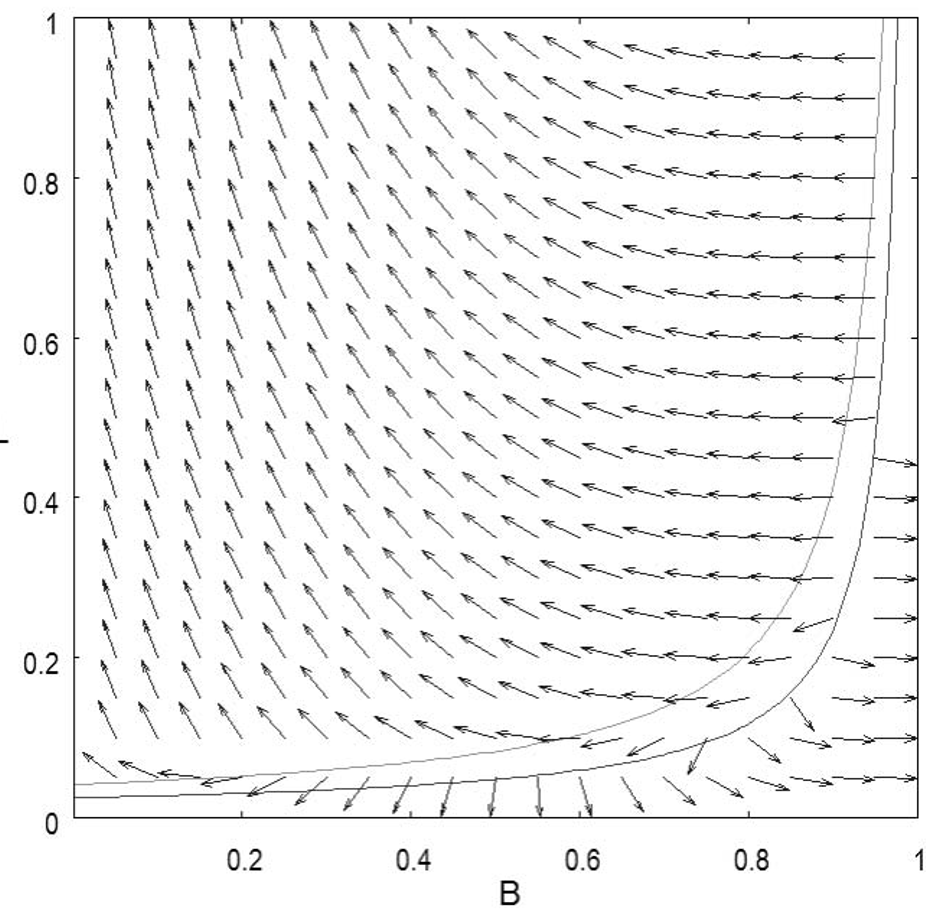
The population dynamics analysis (vector diagrams) confirmed these results. In the Meta Punishment model, the stable equilibrium is (0,0)—no one cooperates. In the Meta Reward model, the dynamics naturally pull toward (0,1)—full cooperation and consistent rewarding.
Critical Insight & Conclusion
Takeaway for Product Design
The success of platforms like Facebook or Instagram can be mathematically attributed to their low-cost reward mechanisms (the "Like" button). By reducing the cost of rewarding (), they ensure the condition is always met, triggering an evolutionary drive for users to provide free content.
Limitations
- Homogeneity: The mathematical analysis assumes a homogeneous population, which doesn't account for the "trolls" or "influencers" seen in real-world heterogeneous networks.
- Network Topology: The study uses a per-to-peer perfect graph; real social networks are "scale-free," which might change how rewards propagate.
Future Outlook
This work lays a foundation for the algorithmic design of incentives. Future research could look into how AI-driven "bots" could act as meta-rewarders to cultivate cooperation in fledgling online communities.