
Empowering the Edge: A Wi-Fi Direct Framework for Decentralized Social Networking
A Wi-Fi Direct Based P2P Application Prototype for Mobile Social Networking in Proximity (MSNP)
This paper introduces a decentralized P2P framework for Mobile Social Networking in Proximity (MSNP) using Wi-Fi Direct technology. It proposes a functional Android prototype that enables infrastructure-free data exchange, featuring localization, chat, and an intermittent file-sharing system to circumvent the limitations of centralized social networks.
TL;DR
This paper addresses the "infrastructure trap" of modern social media by proposing a decentralized Mobile Social Networking in Proximity (MSNP) framework. By utilizing Wi-Fi Direct, the authors successfully demonstrate a peer-to-peer (P2P) system that allows users to chat, share files, and discover neighbors without an internet connection, drastically reducing data costs while enhancing privacy.
Context: The Proximity Paradox
Modern social networking is fundamentally centralized. Even if you are standing five meters away from a friend, your messages and photos must travel to a remote server and back to reach them. This creates a "Proximity Paradox" where physical closeness is ignored by digital architecture, leading to:
- Privacy Risks: Centralized servers act as honeypots for personal data.
- Network Congestion: Large media transfers burden carrier infrastructures.
- Connectivity Dependency: Social features fail in campus basements, event spots, or remote areas.
Methodology: High-Speed P2P via Wi-Fi Direct
The core insight of the paper is moving beyond the obsolete "Ad-hoc" mode. The authors adopt Wi-Fi Direct, which embeds a "Soft AP" into devices. Unlike Bluetooth, which is capped at 3Mbps (2.0) or 24Mbps (3.0), Wi-Fi Direct supports the full bandwidth of 802.11g/n protocols while maintaining superior indoor/outdoor ranges.
1. Framework Architecture
The proposed framework consists of five distinct layers, bridging the gap between raw Wi-Fi signals and social applications:
- Wi-Fi Direct Networking: Handles peer discovery and "Social Channel" (1, 6, 11) scanning.
- Socket Transmission: Encapsulates P2P data flow.
- Application Services: Includes Google Geocoding for localization and a smart file-sharing component.
2. Solving Discovery and Privacy
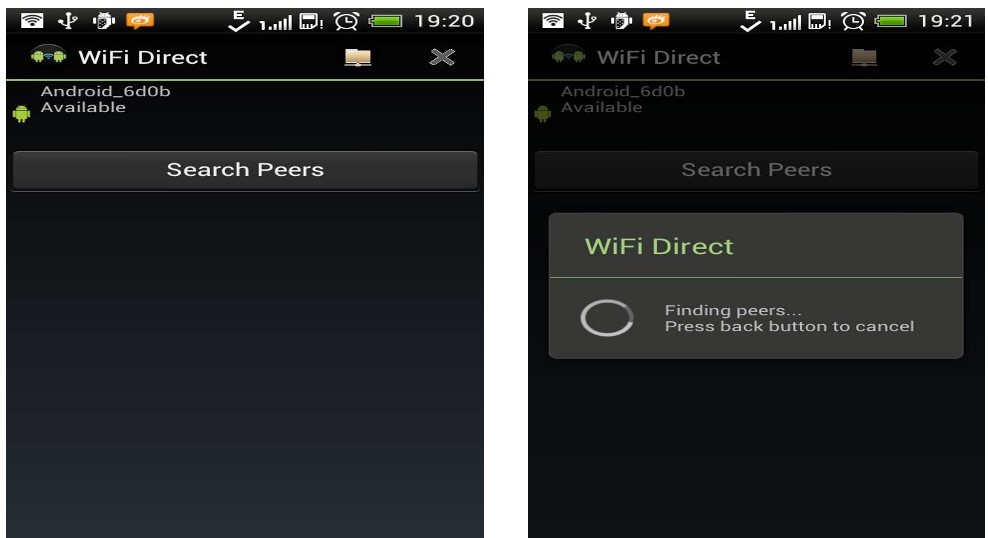
A critical challenge in P2P is knowing who to connect to before the connection is made. The authors discuss the transition to Pre-association Service Discovery, allowing apps to broadcast their intent (e.g., "I am a gaming peer") before a formal handshake.
To protect users, the paper introduces an Incremental Three-Stage Privacy Mechanism:
- Proximity Stage: Anonymous discovery.
- Elastic Stage: Interaction via messaging/calls with disposable identities.
- Social Stage: Voluntary revelation of full identity and permanent contact info.
Experimental Prototype & Results
The authors implemented the prototype on Android devices. One of the most impressive technical features is the intermittent file sharing. Recognizing that P2P connections in proximity are often fleeting, the system:
- Slices media files into 256K pieces.
- Uses Hash tables to track which pieces are owned by which peer.
- Automatically resumes transfer when the device re-enters range.
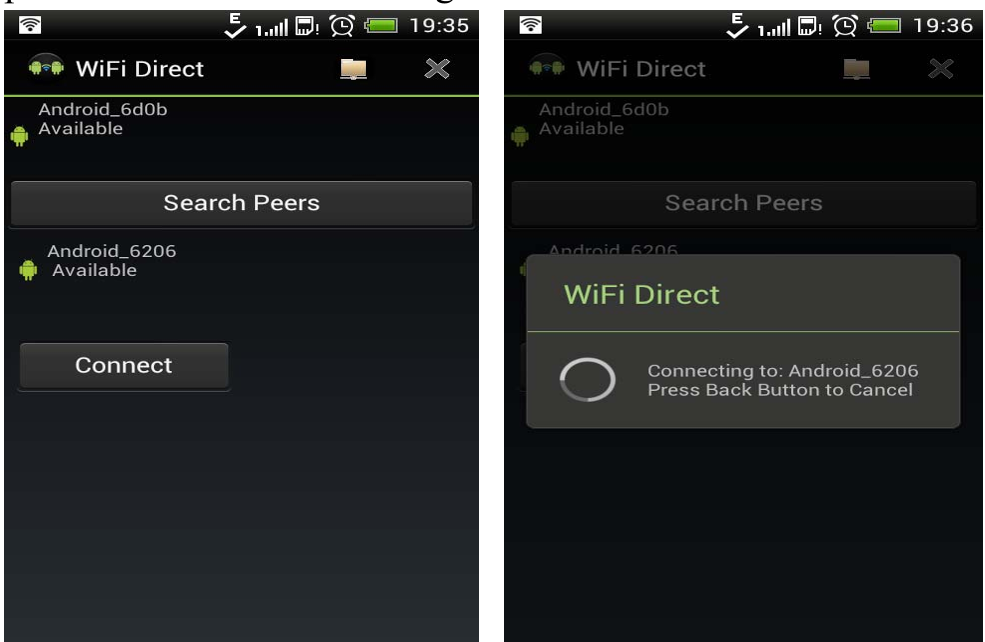
In the screenshot above, the device "Android_6dob" successfully discovers and initiates a connection with "Android_6206" using the framework's discovery module.
Media Exchange Performance
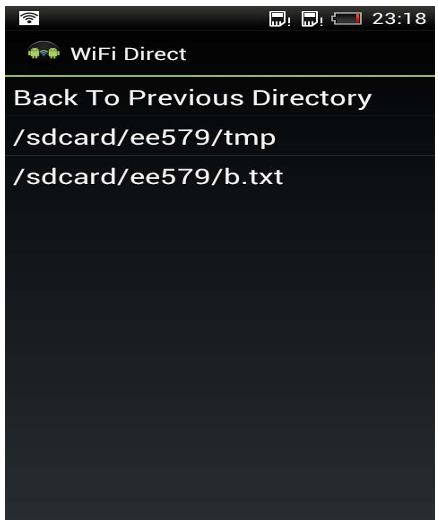
The system proves highly efficient for "crowd-sourced" content distribution. If one peer has a.txt and another has b.txt, the framework automatically synchronizes the folders upon detection.
Critical Insight & Future Outlook
This work highlights a shift toward "Edge Socialization." While Facebook and LinkedIn dominate global identity, they often overlook the hyper-local interactions that happen in physical communities.
Limitations: The paper notes that while Wi-Fi Direct is powerful, energy consumption and the need for manual "accept/refuse" prompts in older Android APIs can hinder the seamless "magic" of a background social network.
Future Impact: As LTE Direct and 5G-Sidelink evolve, the principles established in this Wi-Fi Direct prototype—specifically the intermittent transmission and the tiered privacy model—will be foundational for the next generation of infrastructure-less social applications.