
Beyond GPS: Bridging Social Streams and Wireless Proximity with SpotEx
Wireless Networks Sensors and Social Streams
The paper introduces SpotEx, a framework that utilizes mobile phones as proximity sensors via Wi-Fi and Bluetooth to integrate social network streams with physical context. It defines a novel "network proximity" check-in mechanism that discovers hyper-local content and social connections without relying on GPS or permanent infrastructure.
TL;DR
This research presents SpotEx, a system that transforms smartphones into proximity sensors using Wi-Fi and Bluetooth signatures. By moving away from latitude/longitude coordinates and toward "Network Proximity," the authors create a context-aware browser that discovers hyper-local social media content and enables real-time connection among people in the same physical space.
The Problem: The Localization Gap
Current location-based services (LBS) face a significant "indoors" problem. GPS fails inside malls, conference centers, and transit hubs. While current social networks like Facebook and Foursquare allow "check-ins," these are often manual, static, and lack the granularity needed for true hyper-local interaction.
The authors argue that the context of a user isn't just a point on a map; it's the ecosystem of people and objects around them. Existing methods fail to capture this "relational" proximity effectively.
Methodology: SpotEx and Network Proximity
The core innovation lies in treating Wi-Fi and Bluetooth not as connectivity tools, but as presence sensors.
1. The Proximity Service Model
The system uses a rule-based expert system. A "Point" in their stream is defined by a triplet:
- Where: Defined by Wi-Fi fingerprints (SSID, BSSID, RSSI).
- When: A temporal timestamp.
- What: The topic or content extracted from social streams (e.g., a Twitter hashtag).
2. The Logic Engine
SpotEx employs a middleware that manages "productions" (IF-THEN rules). For example:
IF VISIBLE('mycafe') AND RSSI > -60db AND TIME_BETWEEN(13,14) THEN {Show Daily Special Coupon}
3. Mobile Phones as Mobile Beacons
Unlike static sensor networks, this model supports mobile hotspots. A user can turn on their phone's hotspot, and the system treats it as a moving information bubble.
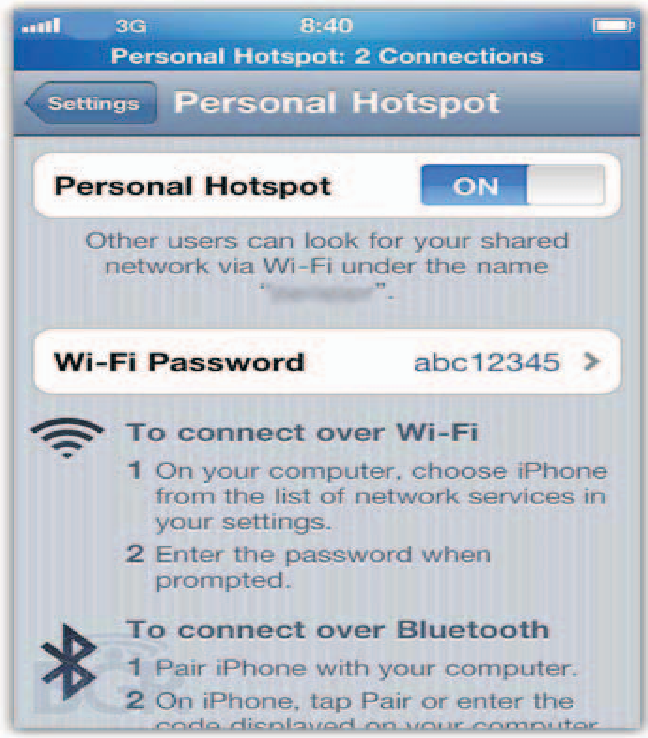 Figure 1: Using a mobile Wi-Fi access point as a dynamic location marker.
External Check-ins: A New Social Paradigm
The paper introduces "External Check-ins." Instead of posting a location update to Twitter, the application links your Twitter ID to your current Wi-Fi fingerprint in an external temporal database.
Why is this better?
- Privacy: The check-in is transient and doesn't clutter your permanent social wall.
- Discovery: It allows you to see the "social footprint" of strangers physically near you, enabling spontaneity that filtered social graphs usually block.
- Granularity: It works perfectly in multi-story buildings where GPS would show everyone stacked on the same coordinate.
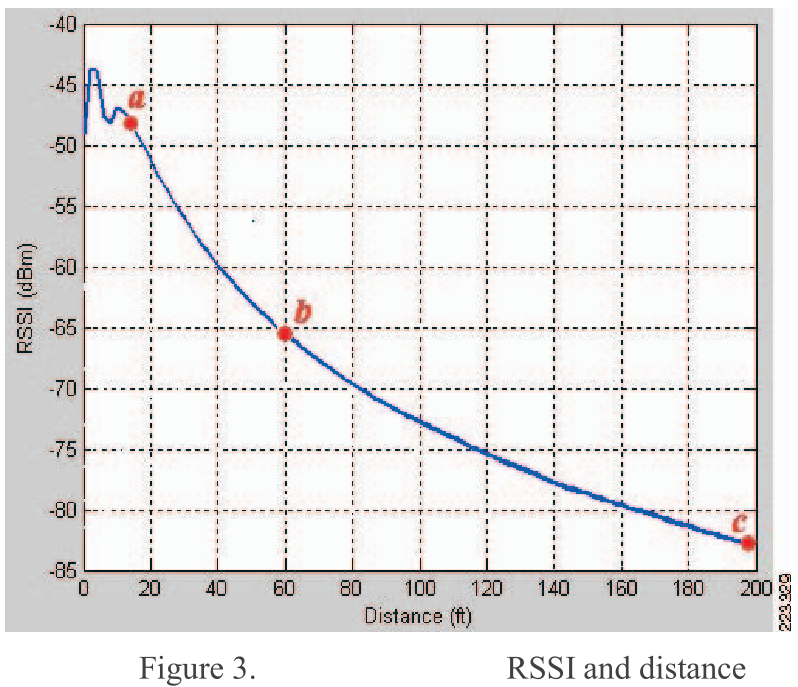 Figure 2: The relationship between RSSI and distance used to determine physical proximity.
Critical Analysis & Conclusion
Takeaway
SpotEx successfully shifts the focus from global positioning to local context. It proves that the "browser" metaphor can be applied to physical spaces—where walking into a room "loads" the local page of content and social interactions associated with that space.
Limitations
- Battery Consumption: Constant Wi-Fi scanning for fingerprints can be taxing on mobile hardware.
- Fingerprint Stability: Wi-Fi environments are dynamic; if an access point is moved or signal interference occurs, the rules may fail.
- Scale: The "temporal database" approach requires a critical mass of users to be truly effective for social discovery.
Future Prospect
With the rise of 5G and more advanced Bluetooth Low Energy (BLE) standards, the "Network Proximity" model is more relevant than ever. It paves the way for a "Physical Web" where every object and person becomes an identifiable, interactive node in a seamless hyper-local network.