
Beyond the Mirage: Solving Accuracy Inflation in EEG Emotion Recognition
Within-stimulus emotion recognition may inflate the classification accuracies based on EEG signals
This paper investigates the "accuracy inflation" phenomenon in EEG-based emotion recognition, where models achieve high performance by learning stimulus-specific rather than emotion-specific features. To address this, the authors propose a Cross-Stimulus (CS) evaluation framework and employ SVM-Recursive Feature Elimination (SVM-RFE) to extract robust, generalized emotional indicators.
TL;DR
Is your AI actually recognizing "Happiness," or is it just recognizing the movie Inside Out? Recent research reveals a critical flaw in EEG emotion recognition: Within-Stimulus Inflation. When models are trained and tested on segments of the same video, they exploit stimulus-specific artifacts rather than emotional states. This paper exposes this gap and demonstrates that using SVM-Recursive Feature Elimination (SVM-RFE) can double cross-stimulus accuracy, moving us toward truly generalized Brain-Computer Interfaces (BCI).
The Problem: The Invisible "Cheat Sheet"
In the quest for high accuracy, many EEG studies inadvertently allow "data leakage" through stimulus-locked information. If a subject watches a specific video clip, their brain processes the visual colors, the audio frequency, and the narrative structure. If the model sees any part of that same video during training, it learns these emotion-irrelevant features to identify the sample.
The authors found that while a model might boast a 93.3% accuracy under these conditions, its performance crashes to 46.2% the moment it encounters a new video, even if that video is intended to evoke the exact same emotion. This suggests that the high scores in many papers are a "mirage" of stimulus recognition rather than emotion classification.
Methodology: Stripping the Noise
To combat this, the researchers established a rigorous comparison between two strategies:
- Within-Stimulus (WS): Samples from the same video are split between training and testing.
- Cross-Stimulus (CS): A video used for testing must never have been seen during training.
The core of their solution is SVM-Recursive Feature Elimination (SVM-RFE). Instead of using all 180 PSD features or 12 Brain Asymmetry (BAY) indices, the algorithm iteratively removes features that contribute the least to separating the emotional classes. This forces the SVM to find the "shared denominators" of an emotion across different visual contexts.
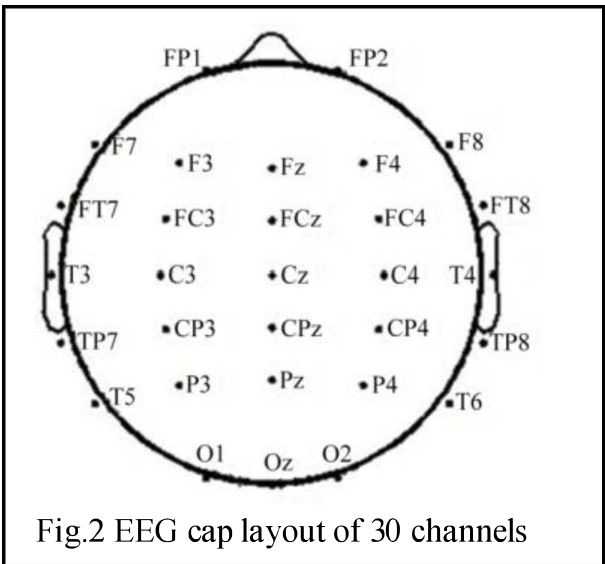 Figure 1: The experimental design utilized 30-channel EEG and a 5-class emotion induction (Happy, Neutral, Tense, Sad, Disgust).
Experimental Insights & Results
The drop in performance from WS to CS was staggering across all 12 subjects. However, the intervention of RFE proved vital.
- Baseline CS (PSD): 46.22%
- Optimized CS (PSD + RFE): 68.89%
By pruning the feature set, the researchers filtered out "content noise." Interestingly, the "Tense" state emerged as the most robustly recognized (82.6% accuracy), while "Disgust" proved the most difficult. The authors attribute this to "cognitive avoidance"—subjects naturally look away or suppress their mental representation of disgusting stimuli, leading to inconsistent EEG patterns.
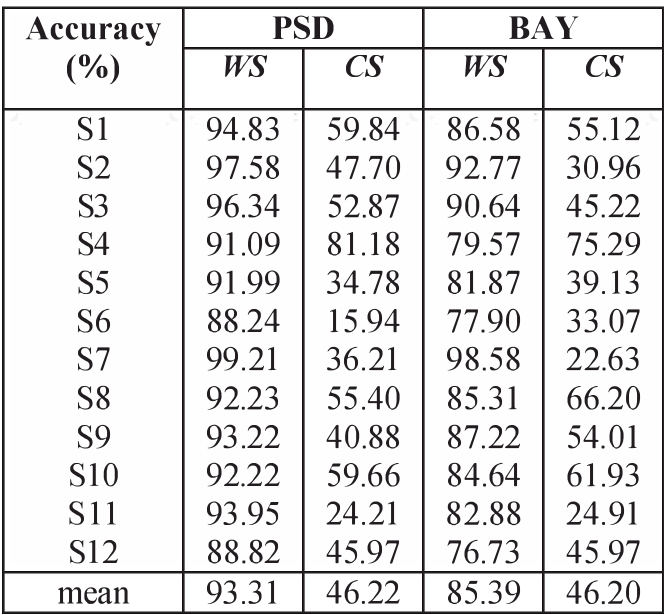 Table 1: The stark contrast between Within-Stimulus (WS) and Cross-Stimulus (CS) accuracy highlight the inflation effect.
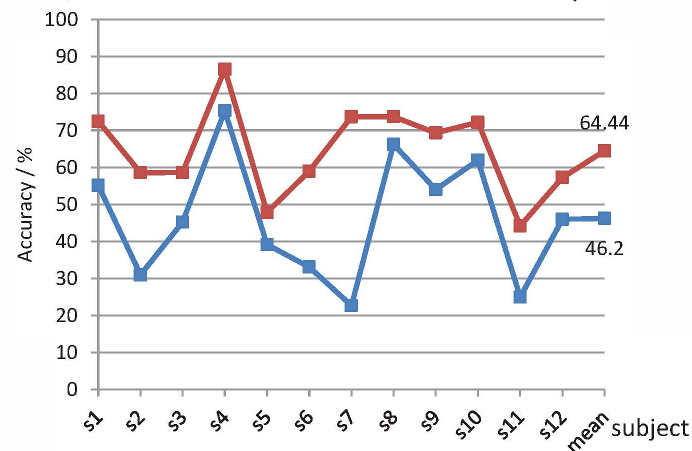 Figure 2: Accuracy improvement curves as the number of selected features varies, peaking long before the full feature set is used.
Critical Analysis & Conclusion
This paper serves as a "reality check" for the BCI community. It proves that a model's ability to handle unseen stimuli is the only true measure of its utility.
Key Takeaways:
- Feature Relevancy > Feature Quantity: More features often lead to more overfitting on the specific video clip.
- Biological Validity: Asymmetry Index (BAY) and specific PSD bands remain the most robust markers, but they must be selected carefully.
- Future Directions: While 68% for a 5-class problem is a strong step forward, future work should integrate Domain Adaptation (transfer learning between subjects and stimuli) to push accuracies toward the 80%+ required for medical or commercial applications.
Ultimately, this work moves EEG emotion recognition out of the "controlled lab" environment and one step closer to real-world devices that can understand your feelings regardless of what you are watching.