
Work Design as Strategy: Navigating the Knowledge-Based Network Organization
Work Design in Knowledge-Based Network Organizations: Facilitating Supply Chain Knowledge Flows via Network Entrepreneurship
This paper introduces a social network-based typology of "work design networks" to facilitate knowledge flows in knowledge-based organizations. It proposes a transition from traditional operational work design to a strategic "network entrepreneurship" approach, emphasizing agility, adaptability, and collective alignment.
TL;DR
In the modern economy, work is no longer a static set of tasks within a single firm; it is a dynamic flow of knowledge across global "spider webs" of organizations. This paper argues for a shift from Traditional Work Design (operational/sequential) to Network Entrepreneurship-Oriented Work Design (strategic/network-based). By leveraging social network theory, the authors provide a framework to build networks that are inherently agile, adaptable, and aligned.
Background: From Job Description to Network Strategy
For decades, work design was synonymous with "job design"—structuring tasks within a hierarchy. However, as 75% of economic activity shifts toward managing intellectual assets, work has become geographically dispersed and cross-boundary. The authors position work design at a strategic level, elevating it from a supporting function to a key element of competitive strategy.
The Core Problem: The Failure of the Sequential Chain
Traditional models assume a linear progression: Product Design → Process Design → Supply Chain Design. This "serial" view creates a rigid structure that cannot handle rapid shifts in supply and demand.
- The Pain Point: Modern organizations suffer from "network inertia"—they are stuck with old partners and redundant information, making them unable to innovate or react to market "structural shifts."
- The Insight: Work design should be the "creative destruction" of old ties. It is the process of creating and repeatedly re-creating networks of relationships.
Methodology: The Work Design Network Typology
The authors propose a 2x2 matrix to categorize how organizations approach work design, based on two social network dimensions:
- Diversity (Range): The number of different social systems (suppliers, consultants, customers) involved.
- Relationship Strength: The duration, frequency, and reciprocity of communication.
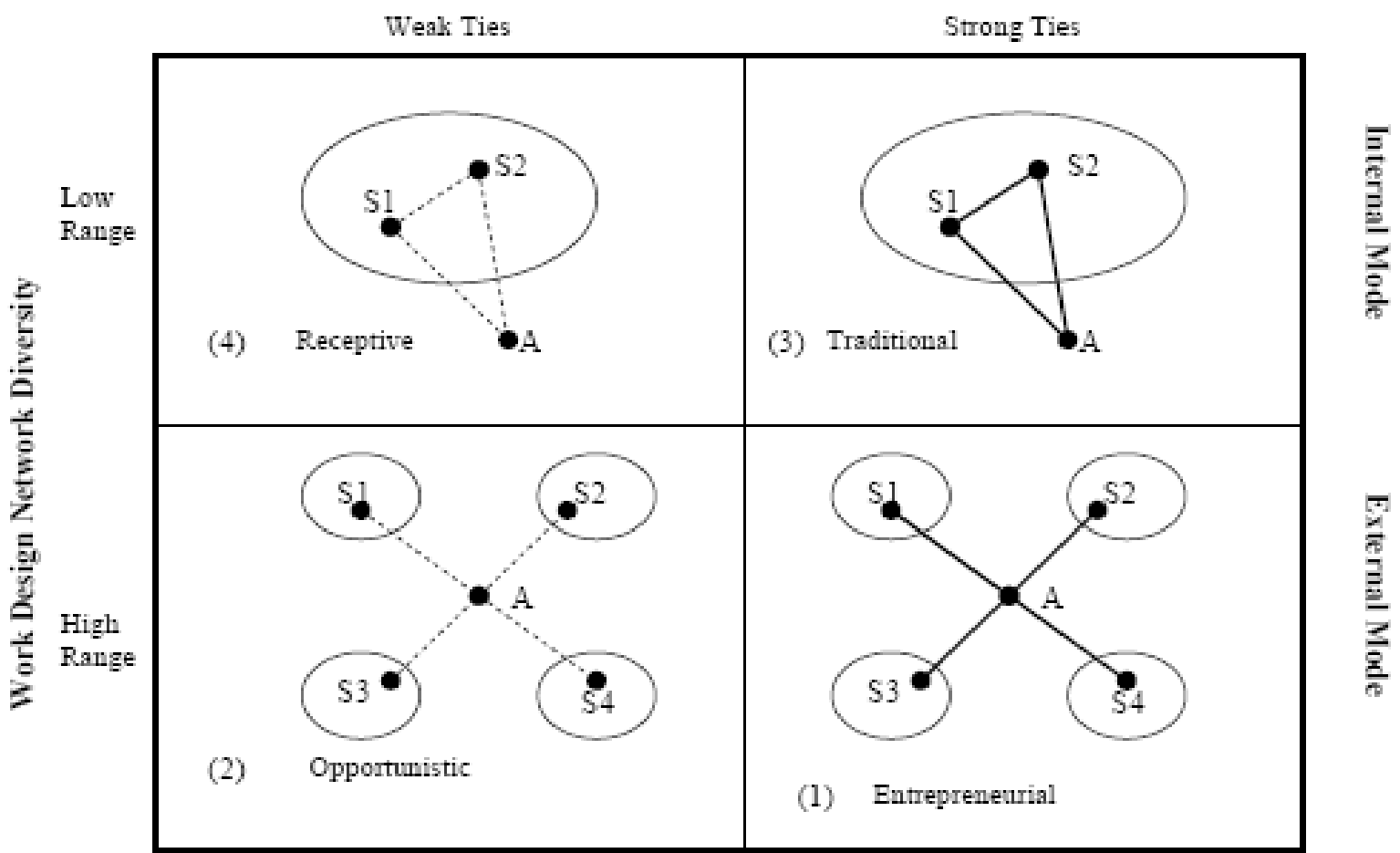
The Four Archetypes:
- Entrepreneurial (High Diversity, High Strength): The "Gold Standard." Bridges structural holes to get diverse info but maintains strong ties to ensure partners are motivated to act.
- Opportunistic (High Diversity, Low Strength): Access to many sources, but lacks the trust to execute quickly.
- Traditional (Low Diversity, High Strength): The "Clique." Strong trust but redundant, "echo-chamber" information.
- Receptive (Low Diversity, Low Strength): Passive and insular; highly vulnerable to disruption.
The Mechanics of Agility, Adaptability, and Alignment
How do these networks actually improve performance? The paper breaks this down into three dimensions:
1. Agility (Cognition)
Agility requires Cognitive Learning. By maintaining high "Common Architecture Knowledge," all participants—from purchasing managers to engineers—understand how their specific "component" fits into the larger value chain, allowing for rapid pivots.
2. Adaptability (Structure)
Adaptability is about the Network Structure. The authors argue that networks rich in "Structural Holes" (weak or non-redundant ties) are easier to reshape. An entrepreneurial network proactively bridges these holes.
3. Alignment (Affect)
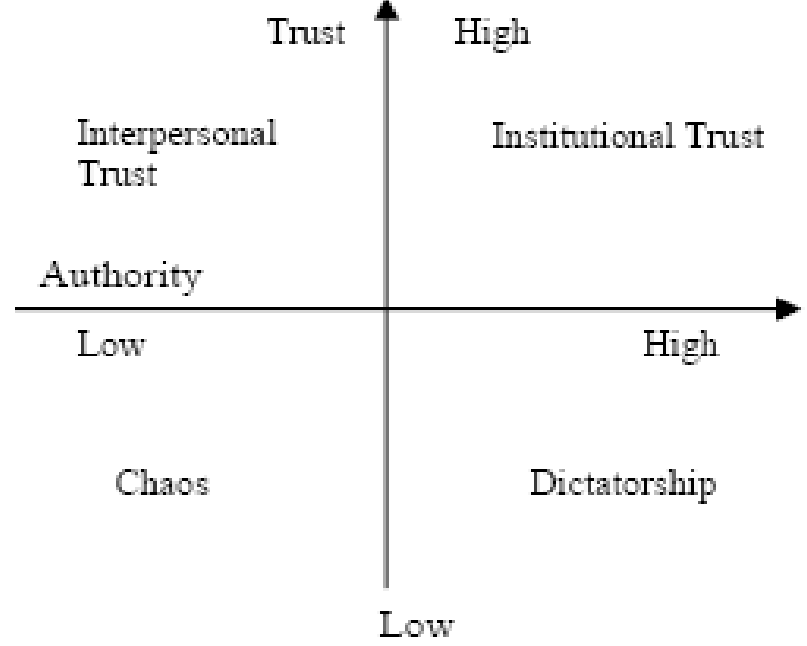
Without a central hierarchy, how do you ensure everyone works toward the same goal? The answer is Trust. The paper distinguishes between Institutional Trust (rules/contracts) and Interpersonal Trust (direct experience).
Experimental Insights: Internal vs. External Models
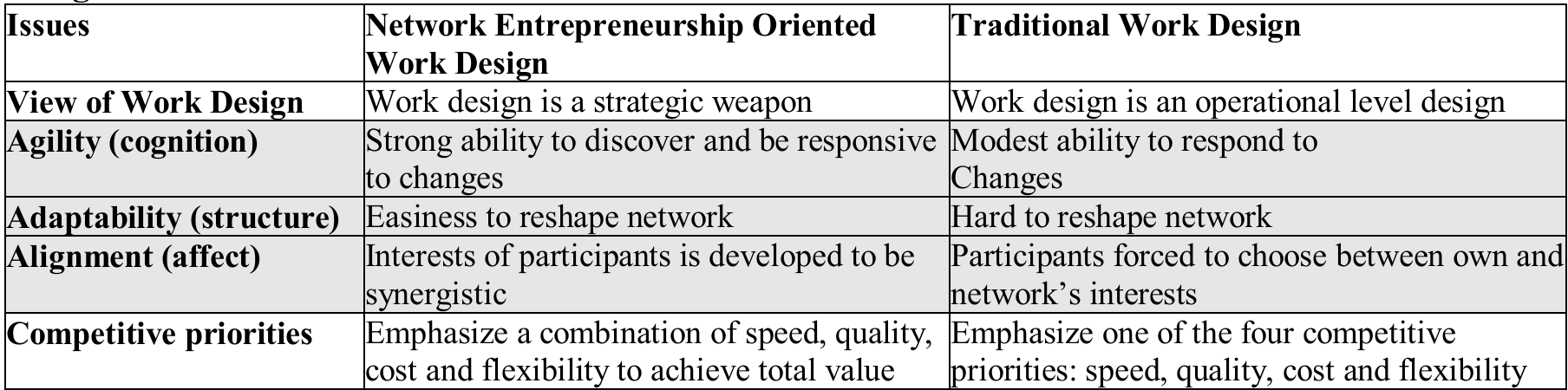
The authors compare the "Internal Work Model" (Traditional/Receptive) against the "External Work Model" (Entrepreneurial/Opportunistic).
| Issue | Network Entrepreneurship Oriented | Traditional Work Design |
|---|---|---|
| Agility | High ability to discover changes | Modest ability to respond |
| Adaptability | Easy to reshape network | Hard to reshape network |
| Alignment | Synergistic interests | Forced choice between interests |
Critical Analysis & Conclusion
Takeaway
The ultimate goal of a knowledge-based organization is to foster Network Entrepreneurship. This isn't just about being "flexible"; it's about the proactive and strategic management of social capital to ensure that knowledge flows are never restricted by organizational boundaries.
Limitations & Future Work
While the typology is robust, the paper is primarily conceptual. Future research needs to explore the "cost of maintenance" for Entrepreneurial networks—maintaining diverse, strong ties across organizational boundaries is resource-intensive. Additionally, the role of digital transformation and AI in automating these "knowledge flows" remains a fertile ground for exploration.
Final Thought: If your work design is still confined to an organization chart, you are operating in the 20th century. Prosperity in the 21st century belongs to the "Spider Webs."