
Decoding the Invisible Workspace: A Framework for Workflow-Supported Social Networks
Workflow-supported social networks: Discovery, analyses, and system
The paper introduces a theoretical and systematic framework for "Workflow-supported Social Networks" (WSNs). It utilizes Information Control Nets (ICN) and XPDL-based models to discover planned social relationships and analyze organizational workloads, achieving automated discovery, SocioMatrix generation, and centrality visualization.
TL;DR
Modern enterprises are increasingly "process-driven," yet the human interactions within these processes often remain opaque. This paper presents a dual framework (theoretical and systematic) to discover and analyze Workflow-supported Social Networks (WSNs). By transforming workflow definitions (like XPDL) into social graphs, the authors provide a mathematical way to measure "Workload Centrality," revealing which employees are critical hubs and which are bottlenecks.
Background: Beyond Control Flows
For decades, Workflow Management Systems (WFMS) have been treated as mechanical "if-then-else" engines. However, the authors argue that these are fundamentally "people systems." Every time a task passes from Actor A to Actor B, a social link is formed. Understanding these links is crucial for Business Analytics and Intelligence (BAI).
The paper distinguishes between two types of discovery:
- Enacted Discovery: Mining logs after the work is done (post-mortem).
- Planned Discovery: Analyzing the workflow model itself to predict social structures (the focus of this paper).
Methodology: From Activity to Actor
The core of the paper lies in the transition from an Information Control Net (ICN) to a SocioMatrix.
1. The Discovery Phase
The authors use a formal 8-tuple definition of an ICN. By mapping activities to roles, and roles to actors, they generate a directed graph where arcs represent "work-sharing relationships."
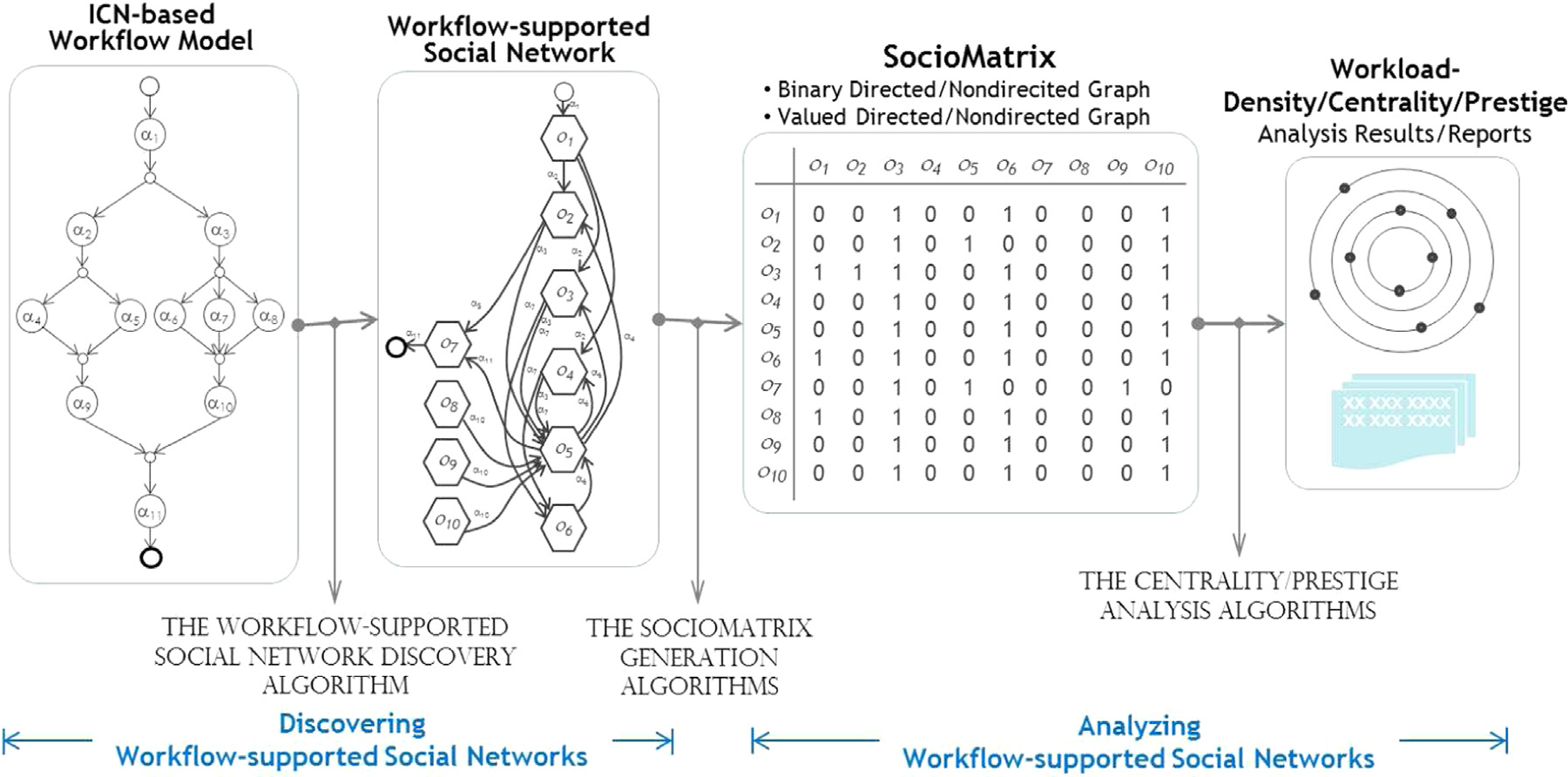 Fig 1: The framework's workflow from raw model discovery to final centrality analysis.
2. The Analytical Phase: Workload Centrality
Standard Social Network Analysis (SNA) equations often fail in workflows because they don't account for the unique nature of task assignments. The authors propose several refined metrics:
- Actor-Workload Centrality (): Measures the sum of an actor's ties, including tasks shared with themselves.
- Normalized Workload (): Standardizes the score to allow comparison across networks of different sizes.
- Group-Workload Centrality (): An index (0 to 1) indicating if work is evenly dispersed or highly hierarchical.
Experimental Validation: The "Hiring" Case Study
The researchers tested their system on a typical enterprise "Hiring" workflow involving 17 participants.
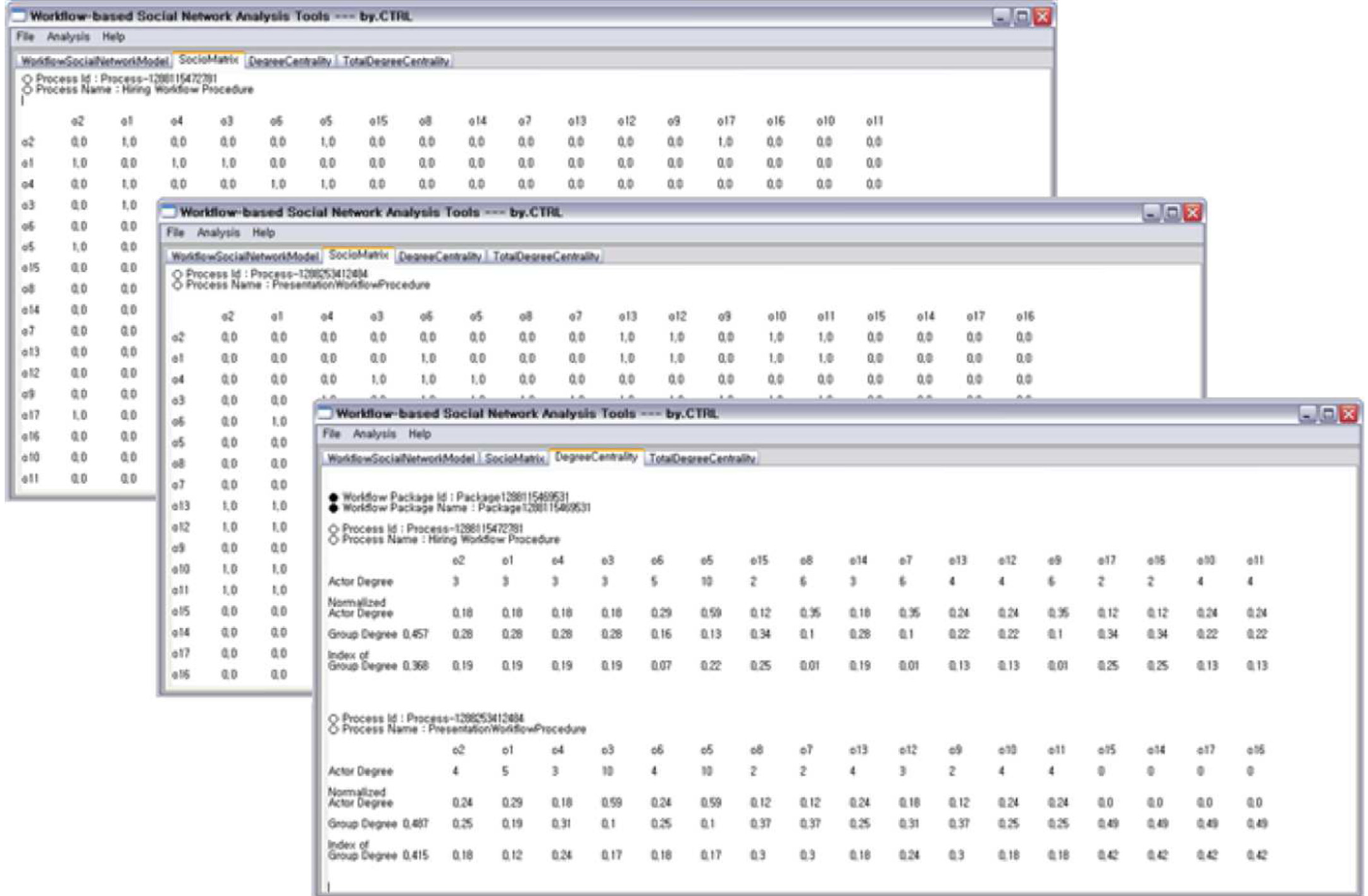 Fig 2: SocioMatrices generated from the XPDL package, showing interaction densities between actors.
By visualizing the results in a "Radiational View," they pinpointed Actor o5 as the organizational nexus. While most actors had low normalized workloads, o5 carried a disproportionate burden (), signaling a potential single point of failure in the business process.
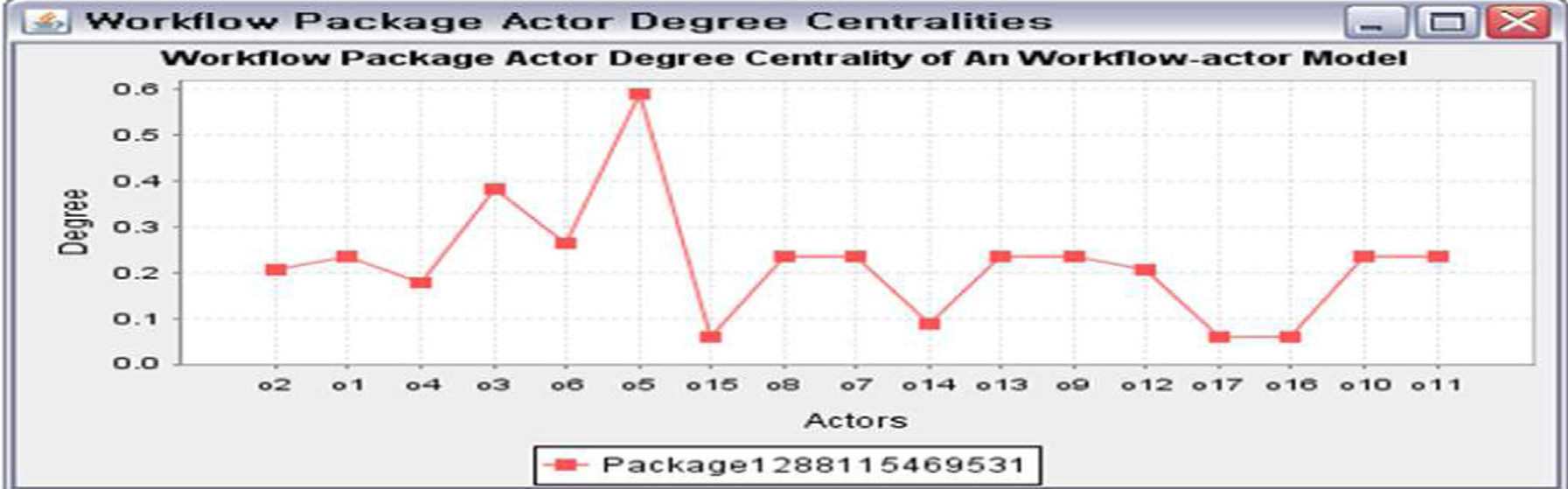 Fig 3: Graphical reports showing individual and integrated workload centralities across multiple procedures.
Critical Insight & Conclusion
The significance of this work lies in its predictive power. By analyzing the "Planned" network from an XPDL package before it is even executed, organizations can perform "Self-Service Analytics" to rebalance roles.
Limitations: The current framework primarily focuses on planned structures. As the authors admit, the actual execution (Enacted) might differ due to human behavior. Future extensions into "Betweenness Centrality" (who controls the flow of information) and "Prestige" (who is the manager vs. subordinate) will be essential to complete this social map of the modern enterprise.
Ultimately, this research proves that in the age of BAI, your workflow diagram is more than just a map of tasks—it's a hidden blueprint of your organization's social DNA.