
Beyond Differential Privacy: Securely Measuring Node Bridgeness via Zero-Knowledge Privacy
Zero-Knowledge Private Computation of Node Bridgeness in Social Networks
The paper introduces a novel "bridgeness" measure to quantify a node's influence in connecting distinct communities and proposes a privacy-preserving mechanism using Zero-Knowledge Privacy (ZKP). It demonstrates the practical application of ZKP for sharing social network statistics while overcoming the limitations of Differential Privacy in correlated graph data.
TL;DR
Quantifying the influence of "linchpin" nodes—those that bridge different communities—is vital for social network analysis but poses massive privacy risks. This paper proposes a mechanism to release Bridgeness scores using Zero-Knowledge Privacy (ZKP). Unlike standard Differential Privacy, ZKP accounts for the correlated nature of graphs, ensuring that the "evidence" of a connection remains hidden while maintaining high statistical utility.
The "Evidence" Problem in Social Graphs
In a standard database, removing one person changes a count by exactly one. In a social graph, removing one edge between "Alice" and "Bob" might result in dozens of "mutual friend" triangles disappearing.
Standard Differential Privacy (DP) fails here because its noise is calibrated to a sensitivity of 1. If an adversary sees a change of 10 triangles, they can easily infer the missing edge. The authors argue that we need a privacy definition that protects not just the edge, but the evidence of its existence.
Methodology: Bridgeness and ZKP
The authors define Bridgeness () as the fraction of actual triangles formed by a node between two groups and over all possible triangles.
1. Mathematical Reformulation
To apply ZKP, the authors transform the bridgeness count into an average of boolean attributes. A node has a property if it completes a triangle with node and group member . This allows the use of concentration inequalities to bound the error.
2. Calibrating the Noise
The core of ZKP is the Sample Complexity (). It measures how well a function can be estimated by looking only at a small sample () of the graph.
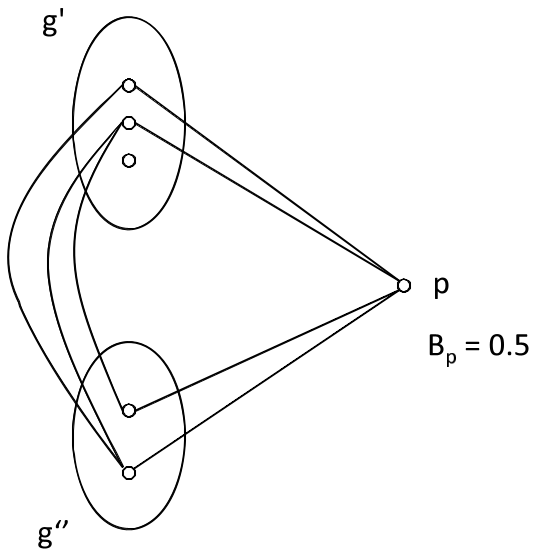 Figure 1: The conceptual framework of Zero-Knowledge Privacy involving an Adversary and a Simulator.
The scale of the Laplace noise () is determined by: Where:
- is the -Sensitivity ().
- is the sampling error (derived via Hoeffding’s inequality).
- is the desired privacy level.
Experimental Insights
The authors evaluated the noise scale against the product of group sample sizes ().
- Scale Invariance: The mechanism is particularly effective for massive databases. As (sample size) increases, the required noise decreases significantly.
- Practical Utility: In a 10-million-node graph, 75% of the time, the absolute noise added to the bridgeness fraction is less than 0.28, which is highly practical for identifying high-influence nodes.
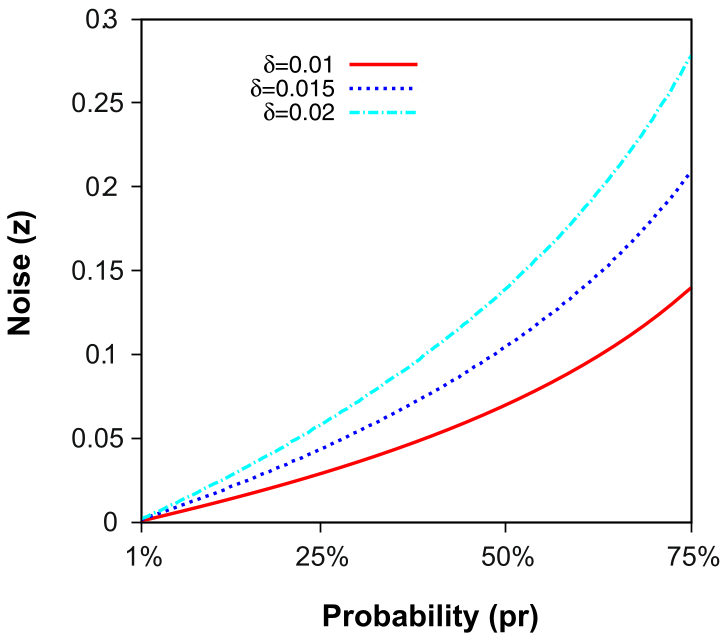 Figure 2: Relationship between cumulative probability and maximum absolute noise across different sampling errors.
Critical Analysis & Conclusion
This work highlights that ZKP is not just a theoretical curiosity but a practical necessity for graph data. By treating privacy as an "indistinguishability from sampling" problem, researchers can release complex structural metrics without letting the "ripples" of individual connections give away the secret.
Limitations: The current approach assumes disjoint groups; overlapping communities would complicate the sensitivity analysis. Furthermore, while the noise is database-independent, the utility still relies on having a "large enough" to keep small.
Future Work: This framework opens the door to privately computing other local indices like clustering coefficients or eigenvector centrality in a way that respects the interconnected reality of social data.